Trupeer Blog
Creating Training Videos in Hindi: Best Practices for Indian Enterprise Teams
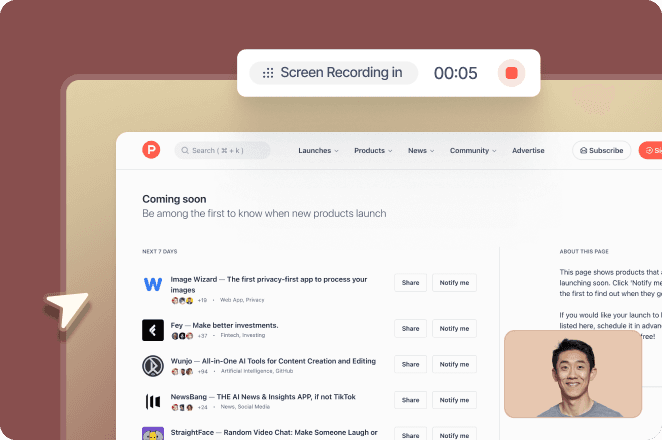
Imagine you’re leading a training and development team in a large enterprise in India, and you’re tasked with delivering effective training content in Hindi. This isn't just about translating from English to Hindi; it’s about crafting videos that resonate with a diverse workforce, ensuring accessibility and comprehension across different regions. With over 600 million Hindi speakers in India, training videos in Hindi can significantly broaden your reach and effectiveness.
In fact, organizations that tailor their training programs to local languages see a 30% increase in employee engagement.
This is crucial for companies operating in a multilingual country like India, where language can be a barrier or a bridge. Creating effective Hindi training videos requires understanding cultural nuances, using the right technology, and a keen focus on clarity and engagement. As we explore the best practices for developing these videos, you’ll discover actionable strategies to enhance your training effectiveness. When SOPs come into the same conversation, a Scribe alternatives comparison helps clarify the scope.
Why does creating Hindi training videos for Indian enterprise teams matter?
Training videos in Hindi are crucial for Indian enterprises aiming to engage and educate their workforce effectively. English, while widely spoken in business environments, isn't the first language for a significant portion of the Indian workforce. This language barrier can lead to misunderstandings, reduced productivity, and an overall lack of engagement. When your training material is in Hindi, you're not just speaking your team’s language; you’re respecting and acknowledging their cultural identity. This cultural alignment builds a more inclusive work environment, promoting better learning outcomes.
Also, Hindi training videos are critical in industries where operations span rural and urban areas. For instance, in sectors like manufacturing, retail, or logistics, employees may have varying degrees of English proficiency. Training videos in Hindi address this gap, ensuring that all employees have equal access to information and training. The impact of this is significant, leading to fewer errors, improved compliance with safety protocols, and enhanced operational efficiency. By using the training videos use case, companies can create a cohesive learning strategy that aligns with their diverse workforce needs.
What are the benefits of creating Hindi training videos?
Implementing Hindi training videos offers numerous advantages that can transform your learning and development strategy.
Enhanced Engagement. Training content in the native language increases understanding and retention. Employees are more likely to engage with material they fully comprehend, leading to higher participation rates.
Broader Reach. By using Hindi, you can connect with a larger segment of your workforce. This is particularly beneficial for enterprises with operations across India, where regional language proficiency varies.
Improved Compliance. Training videos in Hindi ensure that safety protocols and regulatory information are clearly understood, reducing the risk of non-compliance and associated penalties.
Cost Efficiency. Creating videos in Hindi can reduce the need for additional language-specific training sessions, saving time and resources. A single best client training video can serve multiple teams.
Better Learning Outcomes. Employees who learn in their native language achieve better results. This leads to improved job performance and a direct impact on the organization’s bottom line.
Cultural Sensitivity. Using Hindi acknowledges and respects cultural differences, building a more inclusive and supportive work environment. An AI video platform can help maintain consistency and quality across all training materials.
Which Trupeer features help you create Hindi training videos?
Trupeer offers a range of features that make creating effective Hindi training videos straightforward and efficient.
AI screen recording with auto-zoom and click detection
This feature allows you to capture on-screen actions with precision, automatically zooming in on areas of interest and detecting clicks. This is particularly useful for creating software tutorials or process demonstrations where clarity is key. The auto-zoom ensures that viewers focus on the most critical parts of the screen, reducing confusion and enhancing understanding. By using the best ai training video generator, you can produce high-quality content that engages and educates effectively.
AI voiceover in 65+ natural voices, adjustable pace and tone
With Trupeer's AI voiceover capabilities, you can provide narration in Hindi using natural-sounding voices. The ability to adjust pace and tone ensures that the delivery matches the content's complexity and the audience's comprehension level. This flexibility is crucial for tailoring the narration to suit different sections of the video, keeping the audience engaged and informed.
AI avatars / talking-head video
Integrating AI avatars into your training videos can add a personal touch that resonates with viewers. Whether you choose from Trupeer's stock library or create custom avatars, this feature allows for a consistent and relatable presentation style. The avatars can be used to introduce segments, explain complex concepts, or provide summaries, making the content more engaging and accessible.
AI translation into 65+ languages with lip-sync
Trupeer's advanced translation capabilities ensure your training videos can be easily translated into Hindi and other languages. The lip-sync feature maintains a natural appearance, making it easier for viewers to follow along. This is particularly important when presenting complex technical content, as it ensures that the translation does not distract from the learning experience. The auto-generated documentation can also be translated to support multilingual teams.
Viewer engagement analytics, drop-off, and heatmaps
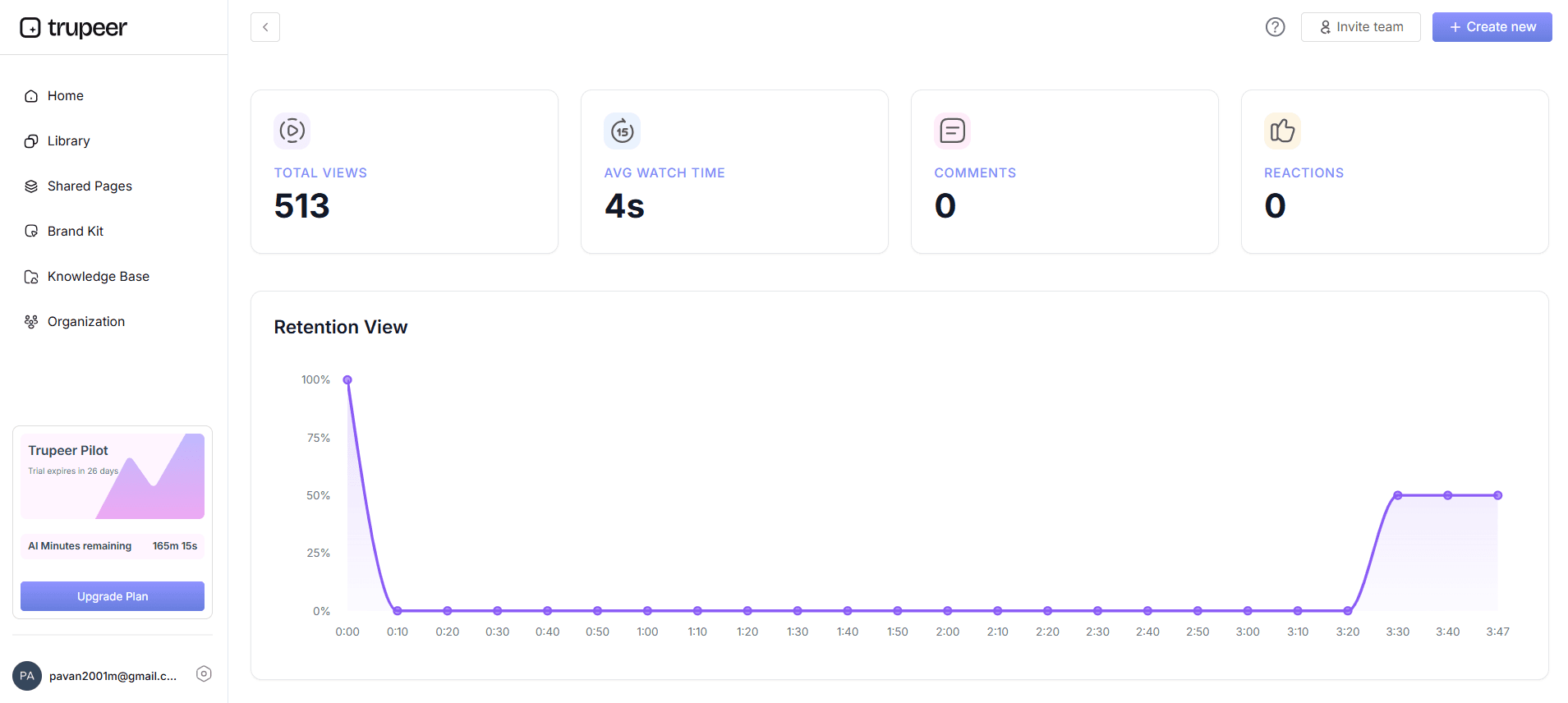
Understanding how your audience interacts with the training content is crucial for continuous improvement. Trupeer's analytics tools provide insights into viewer behavior, highlighting which parts of the video are most engaging or where viewers tend to drop off. This data-driven approach allows you to refine your content, ensuring it remains effective and engaging. also, Trupeer's AI-searchable knowledge base can help teams quickly locate and revisit key video segments.
How do you create Hindi training videos step by step with Trupeer?
Step 1: Capture Your Screen
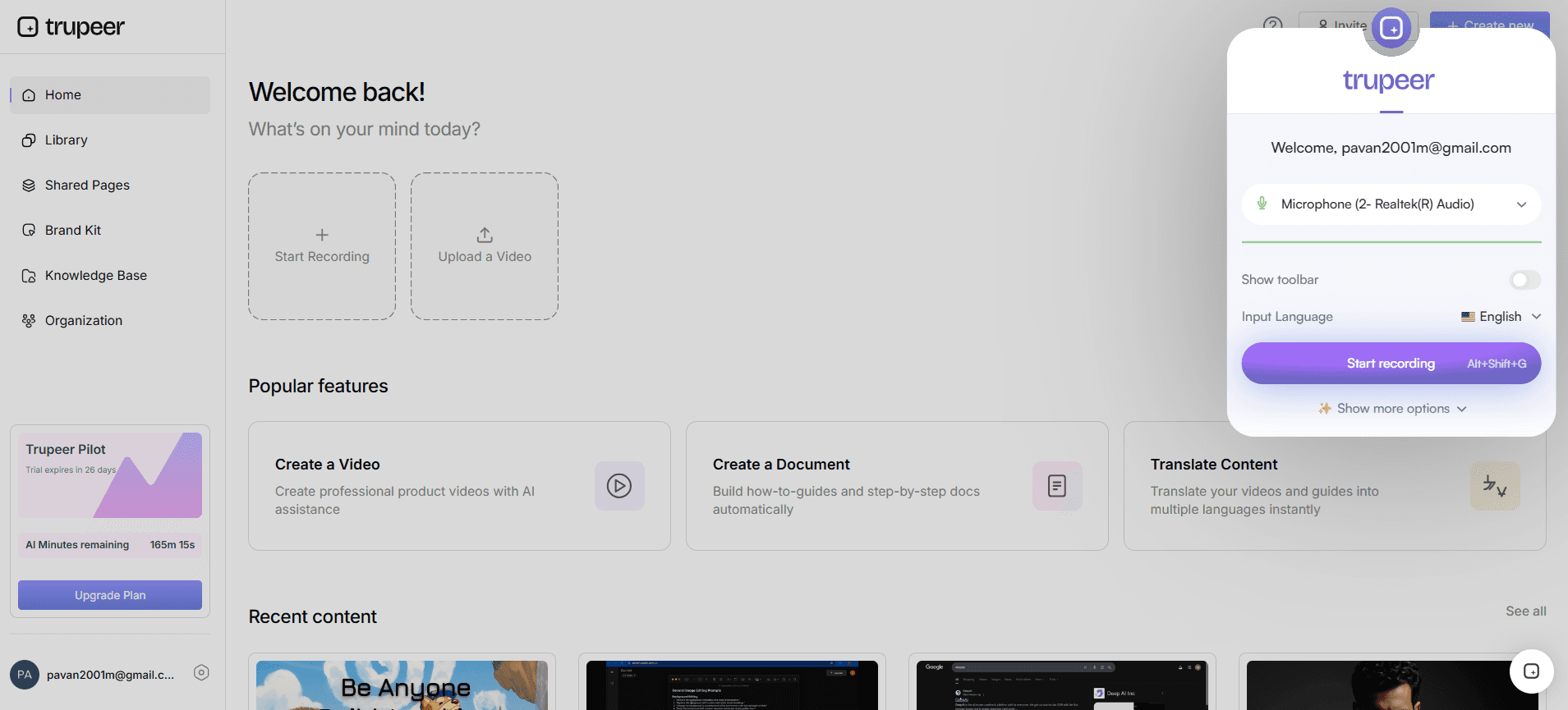
Begin by using Trupeer’s AI screen recording with auto-zoom and click detection. Open the Trupeer desktop app or browser-based recorder, then select “Record Screen”. This feature automatically highlights clicks and zooms into active areas, ensuring clarity. For instance, if you're demonstrating a software process, Trupeer will focus on the cursor movements and clicks, making it easier for viewers to follow. This step typically takes as long as your video content requires, from a few minutes for short demos to over an hour for comprehensive tutorials. Ensure your screen resolution is set to the recommended 1920x1080 for the best results.
Step 2: Add AI Voiceover
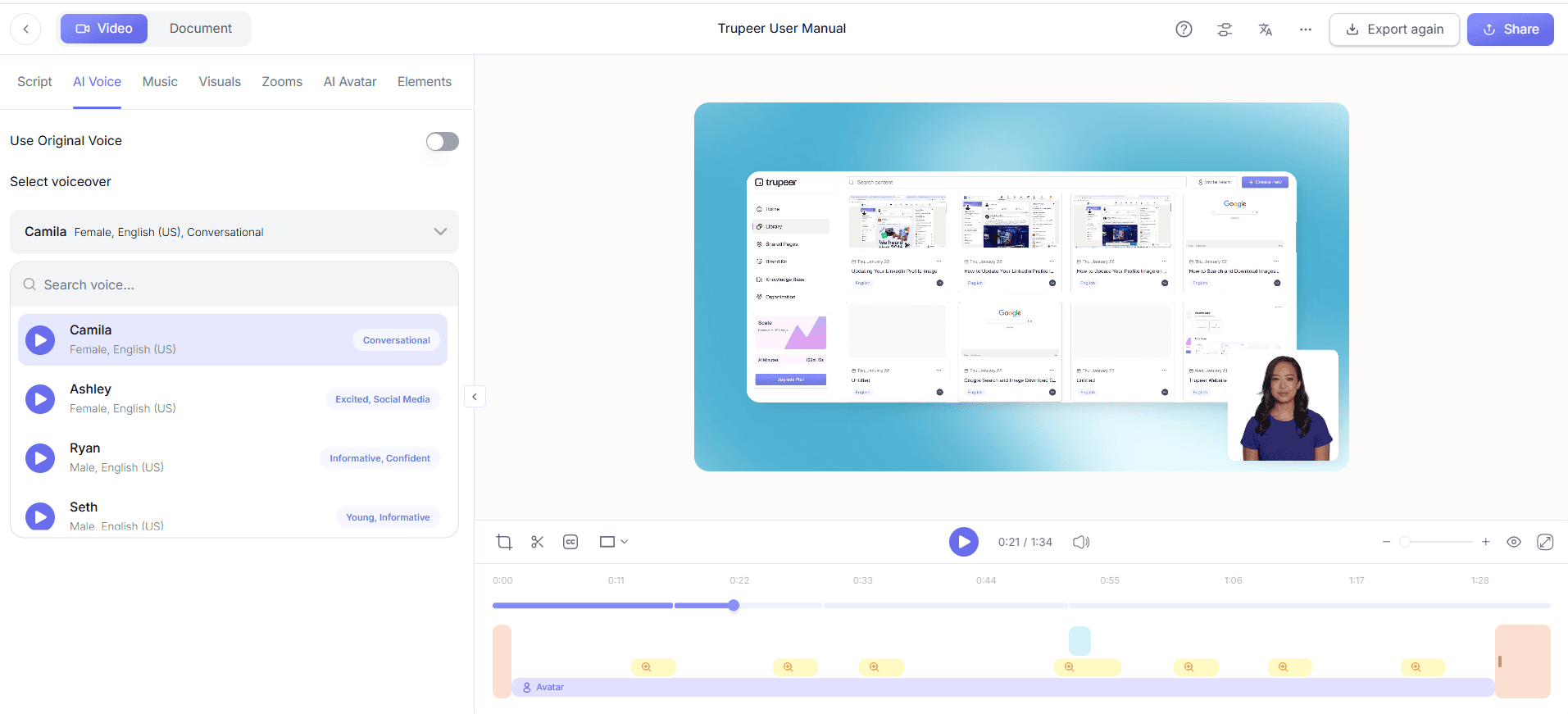
After recording, enhance your video with Trupeer's AI voiceover capabilities. Choose from over 65+ natural voices and select Hindi as the language. You can adjust the pace and tone to suit your audience, which is especially useful for complex subjects that require slower narration. Click “Add Voiceover,” upload your script, and let Trupeer handle the rest. This process usually completes within a few minutes, depending on the length of your script. Ensure your script is concise and clear to maximize comprehension and engagement. Teams weighing tools often start with a Loom alternatives comparison before standardizing on a workflow.
Step 3: Integrate AI Avatars
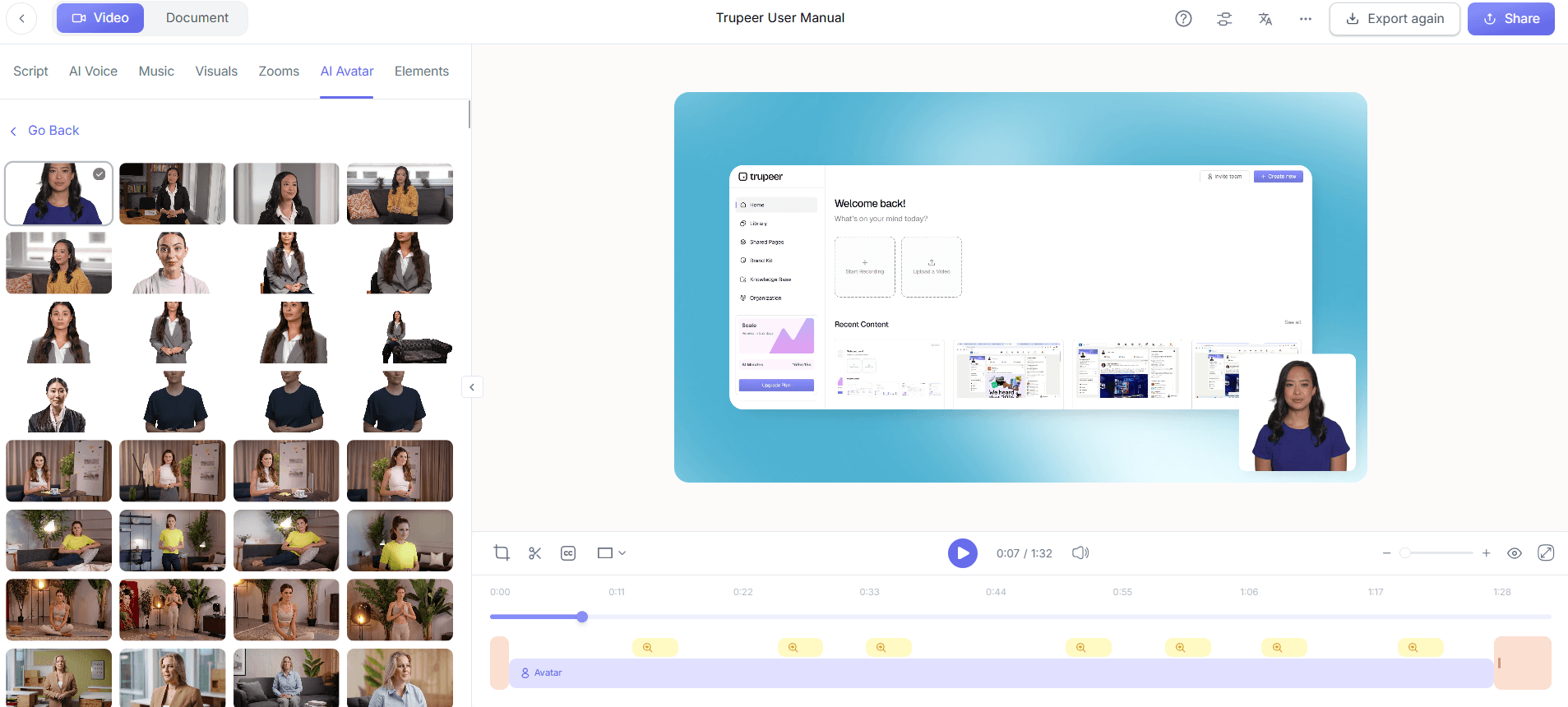
To personalize the training, insert AI avatars using Trupeer’s library or create custom avatars. Navigate to the “Avatars” section and choose an avatar that best matches your content’s style. Avatars can introduce topics, provide summaries, or offer tips, making the video more engaging. Upload the avatar and sync it with your script. This step is quick, typically under 10 minutes. Ensure the avatar's expressions and gestures align with the narration to maintain consistency and engagement.
Step 4: Translate and Lip-Sync
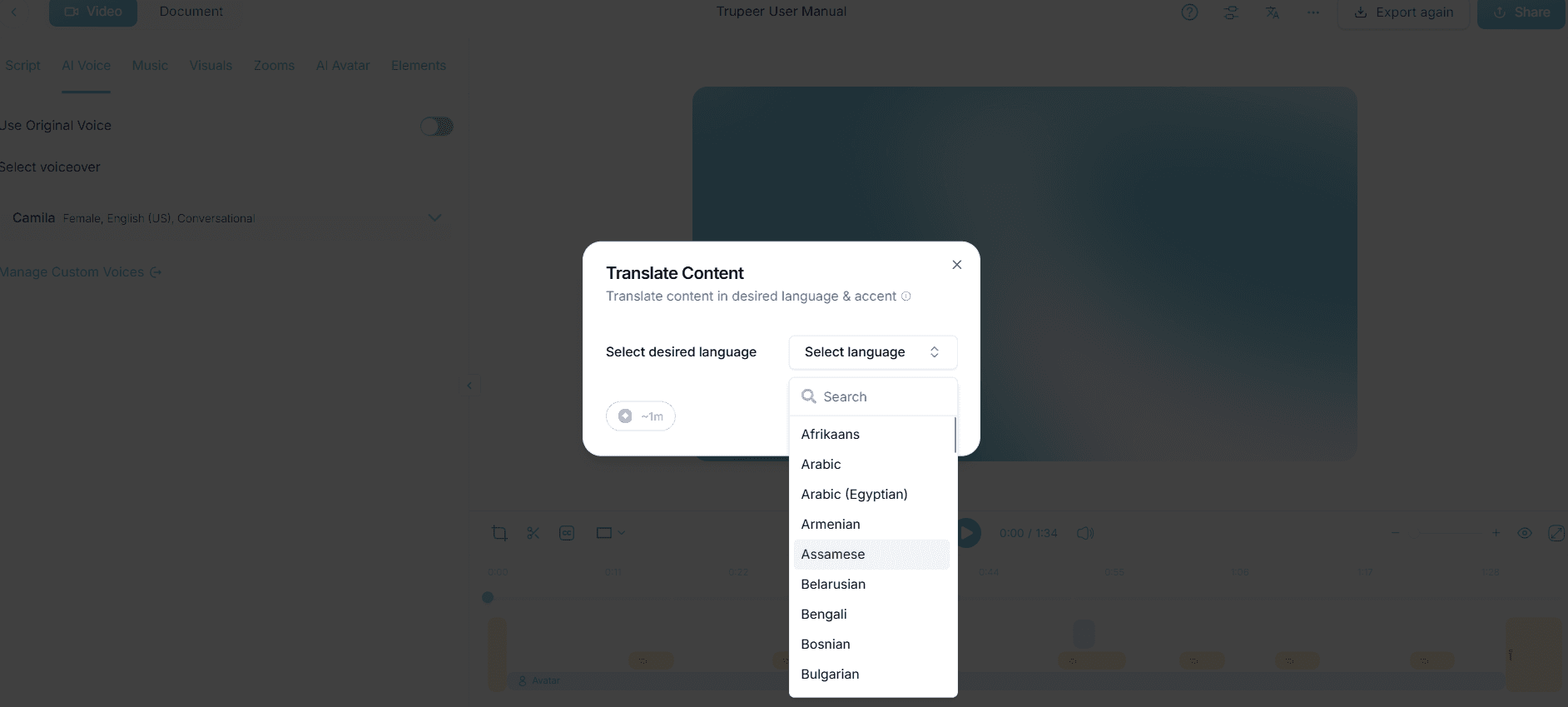
For multilingual accessibility, use Trupeer’s AI translation into 40+ languages. Select Hindi and apply lip-sync to ensure the avatar’s mouth movements are natural. Click “Translate,” and Trupeer will generate the Hindi version, matching lip movements with the dubbed audio. This step takes approximately 15 minutes, depending on video length. Monitor the translation for technical terms that may require manual adjustment to ensure accuracy and clarity.
Step 5: Generate Documentation
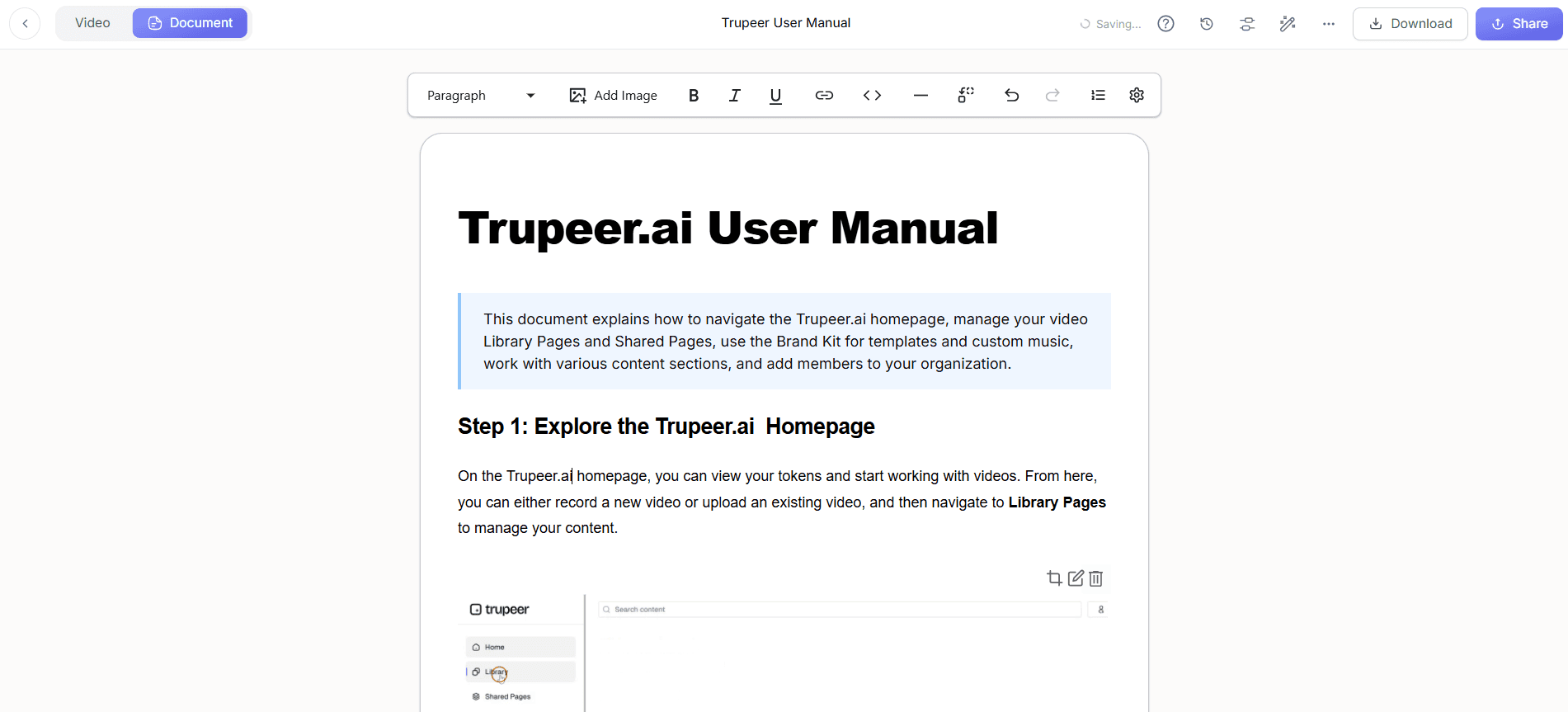
Enhance your training with automatic SOP generation from your recording. In the Trupeer dashboard, select “Generate SOP.” Trupeer converts video content into an editable document, which you can export as HTML, PDF, or SCORM. This is essential for creating supporting materials that reinforce video content. This step usually takes under 10 minutes. Review the generated document for accuracy and completeness, making adjustments where necessary to ensure it aligns with your training objectives.
Step 6: Analyze Viewer Engagement
After publishing your video, use Trupeer’s analytics tools to measure engagement. Navigate to “Analytics” to access viewer heatmaps and drop-off rates. These insights help identify which parts of the video are most engaging and where viewers lose interest. Adjust future content based on these insights to enhance effectiveness. Reviewing analytics typically takes about 20 minutes but provides invaluable data to refine your training strategy. Use these insights to iterate and improve your training videos continuously.
What tips help you create effective Hindi training videos?
Creating impactful Hindi training videos involves several strategic considerations that enhance engagement and comprehension.
Understand Your Audience. Tailor content to the specific cultural and linguistic nuances of your audience. This ensures relatability and improves retention.
Keep It Concise. Focus on essential points to avoid overwhelming viewers. Shorter, focused videos maintain attention and facilitate better learning outcomes.
Engage with Visuals. Use images, diagrams, and animations to explain complex ideas. Visuals can bridge language gaps and enhance understanding.
use Consistent Branding. Employ brand kits and templates to maintain a professional look. Consistency builds trust and aids in brand recognition.
Test with a Sample Audience. Conduct pilot tests to gather feedback before full-scale deployment. This helps identify areas for improvement early on.
Include Interactive Elements. Encourage viewer interaction through quizzes or Q&A segments. This builds engagement and reinforces learning.
use Analytics. Use Trupeer's engagement analytics to refine content. Metrics on viewer behavior can highlight strengths and areas for revision.
For a deeper look, our guide on best training video software covers the adjacent playbook.
Trupeer also ships a enterprise training video platform that handles this step without extra setup.
Frequently asked questions
How can I ensure accurate translation in Hindi training videos?
Trupeer offers AI-powered translation that supports 40+ languages, including Hindi, ensuring high accuracy. The translation process involves selecting the target language and applying lip-sync technology for natural video presentation. This ensures that the translated content maintains its original meaning and context. For technical terms, it’s advisable to manually review and adjust translations to ensure technical accuracy. Using a video translation platform ensures consistency across all training materials, enhancing comprehension and engagement.
What are the best practices for scripting Hindi training videos?
When scripting Hindi training videos, clarity and simplicity are key. Use short sentences and avoid jargon or complex terminology that may confuse viewers. Incorporate language that resonates culturally with your audience to increase relatability. Ensure that the script aligns well with the visual elements for a cohesive experience. Review the script with native speakers to catch nuances that may not be obvious to non-native speakers. This approach ensures that your video is both informative and engaging, facilitating better learning outcomes.
Does Trupeer support interactive elements in training videos?
Yes, Trupeer allows the integration of interactive elements like quizzes and feedback forms within training videos. This capability enhances engagement by prompting learners to actively participate rather than passively watch. Interactive elements can be added at key points to reinforce understanding and retention. The platform supports various formats for interaction, which can be customized to align with your training objectives. This feature not only boosts engagement but also provides instant feedback on learner comprehension.
Is it possible to update training videos without re-recording them?
Absolutely, Trupeer’s auto-updating documentation tied to the underlying recording allows you to make updates without needing to re-record. This feature is particularly useful for minor changes or updates in procedures that don’t warrant a full video overhaul. Simply update the documentation, and it will automatically sync with the video content. This ensures your training materials remain current and relevant, saving time and resources. It’s an efficient way to keep your training content aligned with evolving business needs.
Why is using AI important in creating Hindi training videos?
AI technology simplifies the creation process, ensuring efficiency and quality. With AI, you can automate tasks such as translation, voiceover generation, and analytics, which would otherwise require significant manual effort. AI enables precise language translation, ensuring that the content is culturally relevant and accurate. It also provides insights into viewer engagement, which can be used to refine and enhance future videos. The use of AI not only saves time but also enhances the overall effectiveness of the training program.
Related Blogs