Trupeer Blog
How to Embed an AI Video Assistant Inside Your Product for In-App Guidance
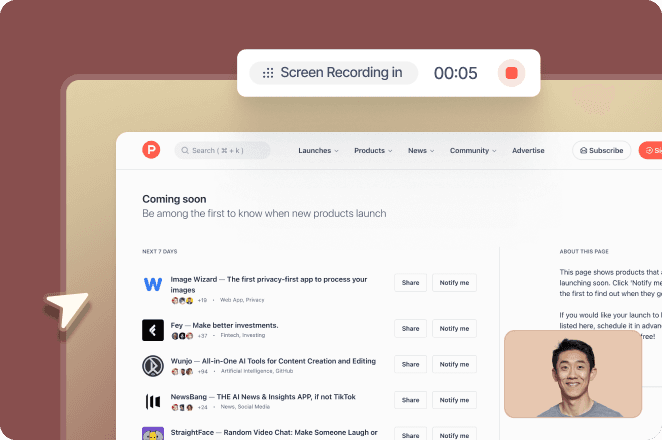
Imagine your users struggling through a new feature in your SaaS product, frantically searching for help articles and getting frustrated with generic text documentation. The stakes are high in this scenario. Users want quick, clear guidance without leaving the app. That's where an AI-powered video assistant comes in. It offers tailored, in-app video guidance that surfaces precisely when users need it. According to recent studies,
68% of users prefer video guides over text-based help
because they're more intuitive and engaging. As a product manager or developer, embedding a video assistant inside your product can dramatically reduce support tickets and enhance user satisfaction. It's especially crucial for complex software where users demand instant help. This guide is for those looking to integrate such a solution smoothly, using advanced tools like Trupeer.ai to transform the user experience. By embedding an AI video assistant, you not only cater to user needs but also simplify your support process, offering immediate and relevant assistance. Teams ship this workflow end-to-end using Trupeer's AI video platform, which turns raw recordings into polished output without an editor.
Why does embedding an AI video assistant inside your product for in-app guidance matter?
Embedding an AI video assistant matters because it addresses a critical business problem: user engagement and satisfaction. As software becomes more complex, traditional help desks and static FAQs fall short. Users today expect real-time, contextual assistance. When they don't get it, they churn. An AI video assistant can directly impact user retention by providing immediate, context-aware help. This proactive support mechanism means users don't have to leave the app to find answers, reducing frustration and increasing satisfaction.
Another key reason is the shift in how users consume information. People now prefer visual learning. This trend is reflected in the increased demand for product video creation that simplifies complex tasks. By embedding a video assistant, you deliver help in a format users naturally gravitate towards. For customer success teams, it simplifies the support process, allowing agents to focus on more complex issues rather than answering repetitive questions. The result is a more efficient support workflow and happier customers. Implementing an AI video assistant isn't just about keeping up with trends, it's about fundamentally improving how you interact with your users, making your product more intuitive and user-friendly.
What are the benefits of embedding an AI video assistant inside your product for in-app guidance?
Embedding an AI video assistant offers numerous benefits that directly impact both user satisfaction and business efficiency.
Improved User Retention. By providing immediate video guidance, you reduce the time users spend searching for help, which can drastically improve retention rates.
Reduced Support Tickets. With in-app guidance, users find answers without needing to contact support, lowering the volume of tickets by up to 30%.
Enhanced Learning Experience. Video guides are more engaging than text. They help users understand features better, resulting in a 25% increase in feature adoption.
Consistency in Support. AI-powered assistance ensures that the help provided is uniform across all users, minimizing discrepancies in the information shared.
Scalable Solutions. As your user base grows, AI video guidance can scale without increasing support team size, making it a cost-effective solution.
Content Reusability. You can easily repurpose video guides for make product demo video and other promotional content, maximizing the ROI on content creation efforts.
Which Trupeer features help you embed an AI video assistant inside your product for in-app guidance?
Trupeer offers a suite of features designed to smoothly integrate AI video assistance into your product, enhancing user experience and support efficiency.
AI screen recording with auto-zoom and click detection
Trupeer's AI screen recording automatically detects user interactions, highlighting clicks and actions with auto-zoom. This feature is crucial for creating clear, concise in-app guides that show users exactly what to do. By focusing on user actions, Trupeer ensures that each recording is contextually relevant, reducing confusion and making it easier for users to follow along. The auto-zoom capability enhances visibility on smaller screens, ensuring that users see exactly what's important without distraction. It's a perfect fit for creating step-by-step guides that users can access directly within your product. This capability significantly improves the clarity of the guidance provided, making it easier for users to complete tasks successfully.
AI voiceover in 65+ natural voices, adjustable pace and tone
With Trupeer's AI voiceover feature, you can add professional-quality narration to your video guides. This feature supports over 65+ natural voices, allowing you to select the one that best fits your brand's tone. The adjustable pace ensures that the narration matches the video's speed, providing a smooth, coherent user experience. This level of customization is ideal for creating engaging, accessible content that appeals to a diverse audience. Whether you're targeting native speakers or an international audience, the flexibility in voice selection and pacing enhances the overall effectiveness of your video guides. It's a key component in making sure your in-app guidance is not only informative but also engaging.
Embeddable video widgets for in-app guidance
Embedding video widgets directly into your application is made simple with Trupeer. These widgets can be customized to match your app's aesthetics, providing a smooth user experience. With this feature, users receive the help they need without leaving the app, significantly reducing friction. The ability to embed video directly in-app ensures that guidance is available precisely when and where it's needed, enhancing user experience and satisfaction. By offering in-context video assistance, you not only improve usability but also enable users to solve problems independently. This feature is critical for products that aim to provide comprehensive, integrated support systems.
AI-searchable knowledge base with timestamp deep-links
Trupeer's AI-searchable knowledge base transforms how users find information. Each video guide is indexed with timestamp deep-links, allowing users to jump directly to the part of the video relevant to their query. This feature drastically cuts down the time users spend searching for answers, improving the efficiency of your support system. The searchable knowledge base acts as a dynamic library of all your video content, making it easy for users to navigate and find the information they need. This capability not only enhances user satisfaction but also reduces the burden on support teams by providing clear, easily accessible solutions.
Automatic SOP generation from any recording
Trupeer's ability to automatically generate SOPs from recordings is a big shift for maintaining up-to-date documentation. This feature allows you to convert video guides into text-based SOPs, which are editable and exportable. It's particularly beneficial for teams that need to ensure compliance and consistency in their processes. By linking SOPs to their corresponding video guides, you provide a comprehensive support resource that caters to different learning preferences. This dual-format documentation ensures that all users, regardless of their preferred learning style, have access to the information they need. It's an efficient way to maintain accurate, updated support content across your entire product line.
How do you embed an AI video assistant inside your product for in-app guidance step by step with Trupeer?
Step 1: Capture User Interaction
Begin by recording a screen session using Trupeer's AI screen recording with auto-zoom and click detection. Launch the browser-based recorder to capture the user's journey through your product. As you navigate, Trupeer automatically highlights clicks and zooms into areas of interest. This process captures the user's actions in real-time, creating a high-quality video that showcases step-by-step guidance. The entire process takes about 10-15 minutes depending on the complexity of the workflow. This focused capture ensures every necessary detail is included, making the video more effective for in-app guidance.
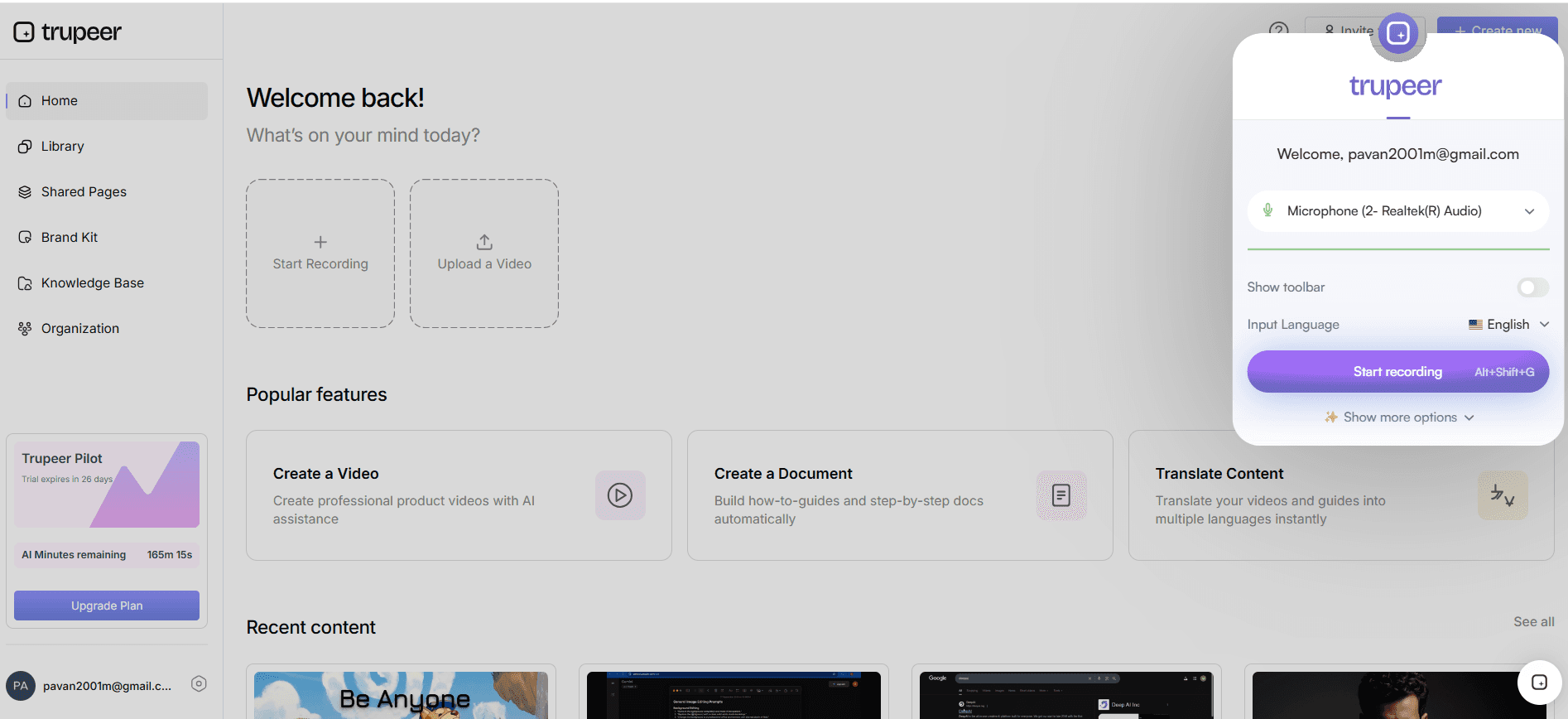
Step 2: Enhance with AI Voiceover
Once the recording is complete, enhance it with Trupeer's AI voiceover feature. Choose from over 65+ natural voices and adjust the pace and tone to match your brand's voice. This step involves selecting the voice and inputting the script, which Trupeer then narrates over your video. The AI voiceover is generated in just a few minutes, providing clear and professional narration that engages your users. This step ensures that the video is not only visually informative but also audibly engaging, catering to different learning preferences.
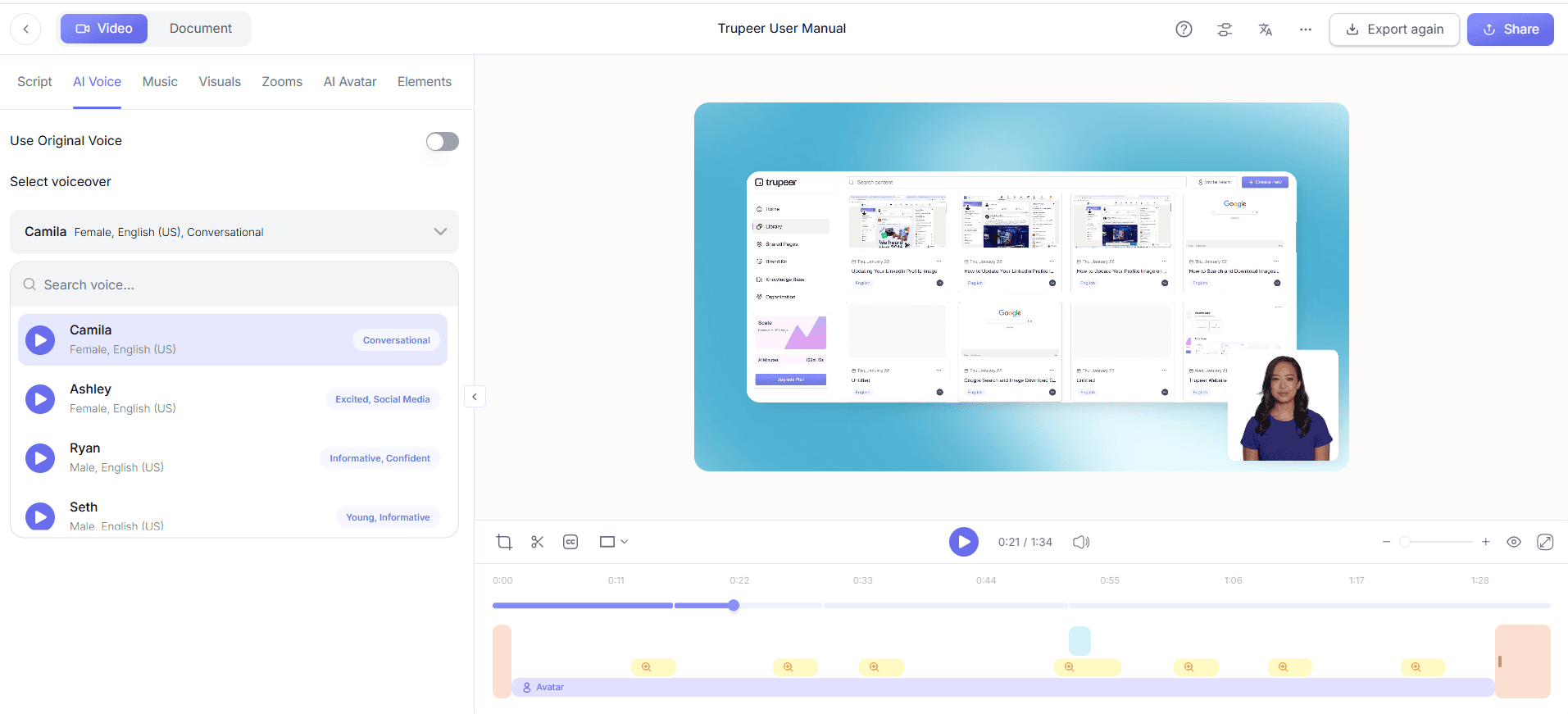
Step 3: Embed Video Widgets
Now, embed the video directly within your application using Trupeer's embeddable video widgets. Access the widget settings to customize the design so it matches your product's UI. This ensures a smooth look and feel. The embedding process is straightforward and typically takes less than 10 minutes. Users can now access the guide without leaving the app, reducing support friction and improving user satisfaction. This integration means video assistance is always available at the user’s point of need.
Step 4: Create AI-Searchable Knowledge Base
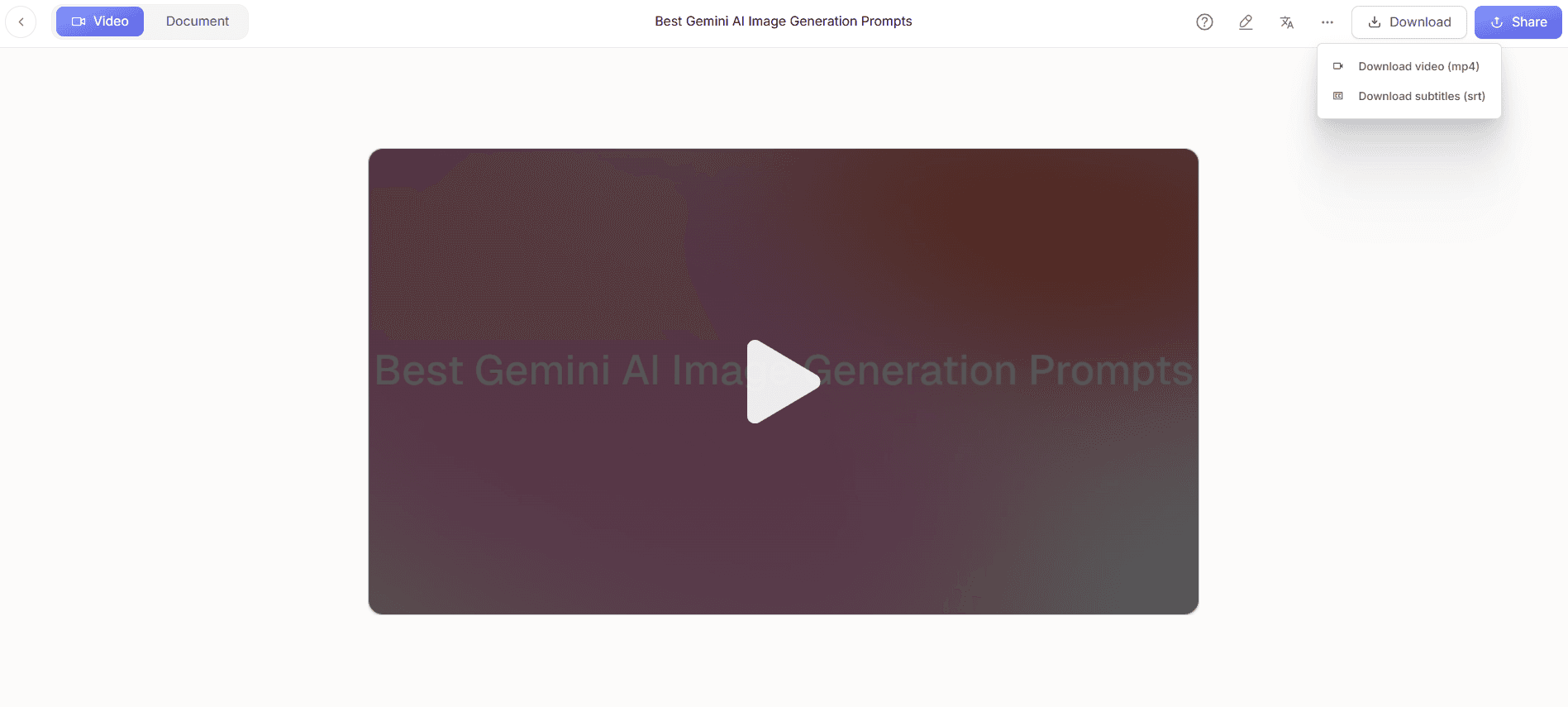
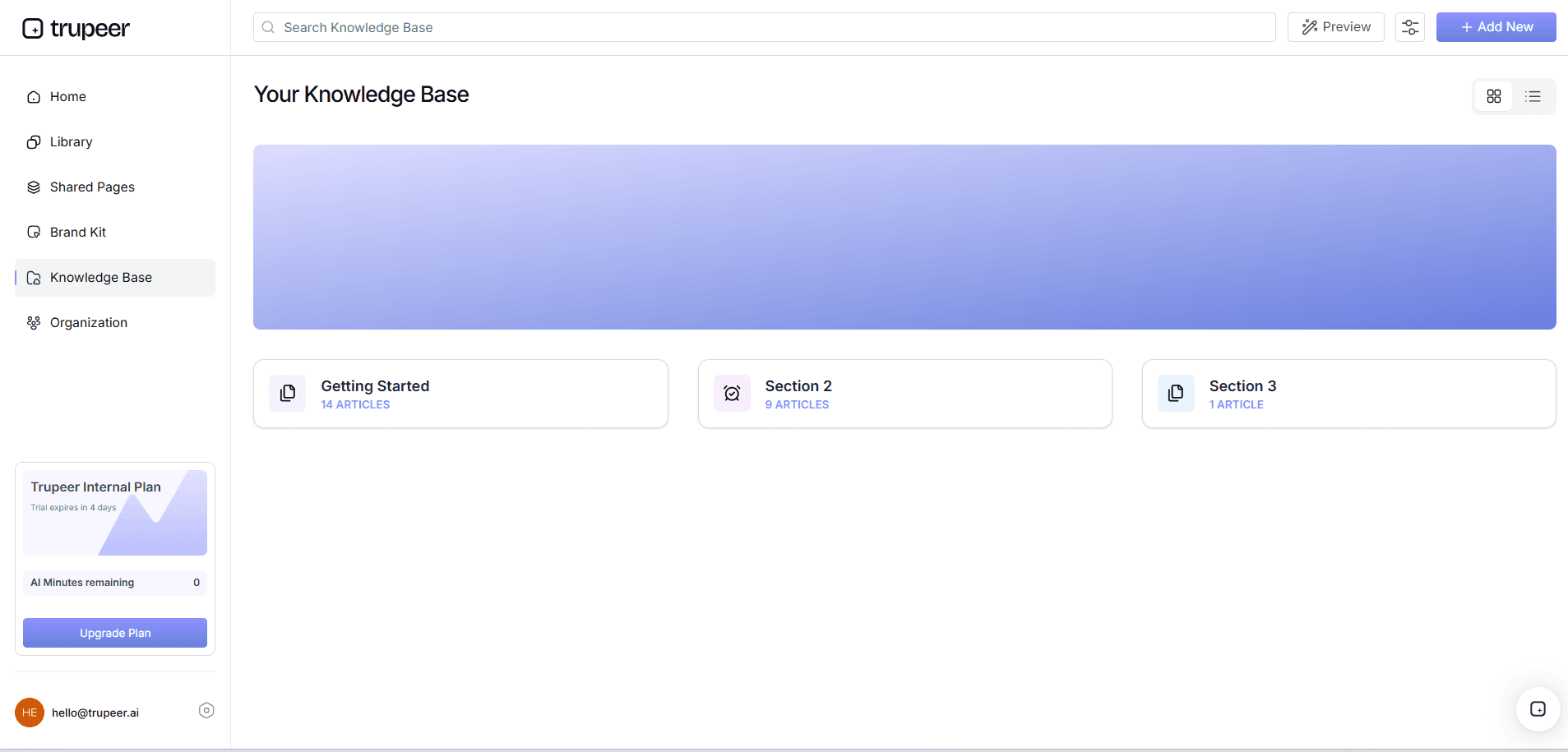
Link your video to Trupeer's AI-searchable knowledge base, which indexes content with timestamp deep-links. This step involves uploading the video to the knowledge base and setting up key timestamps for quick navigation. Users can search for specific topics and jump directly to relevant sections, saving time and enhancing the learning experience. The entire setup is quick, often completed in under 20 minutes. This feature ensures that users have quick access to video guidance, improving their overall experience.
Step 5: Generate SOP Documentation
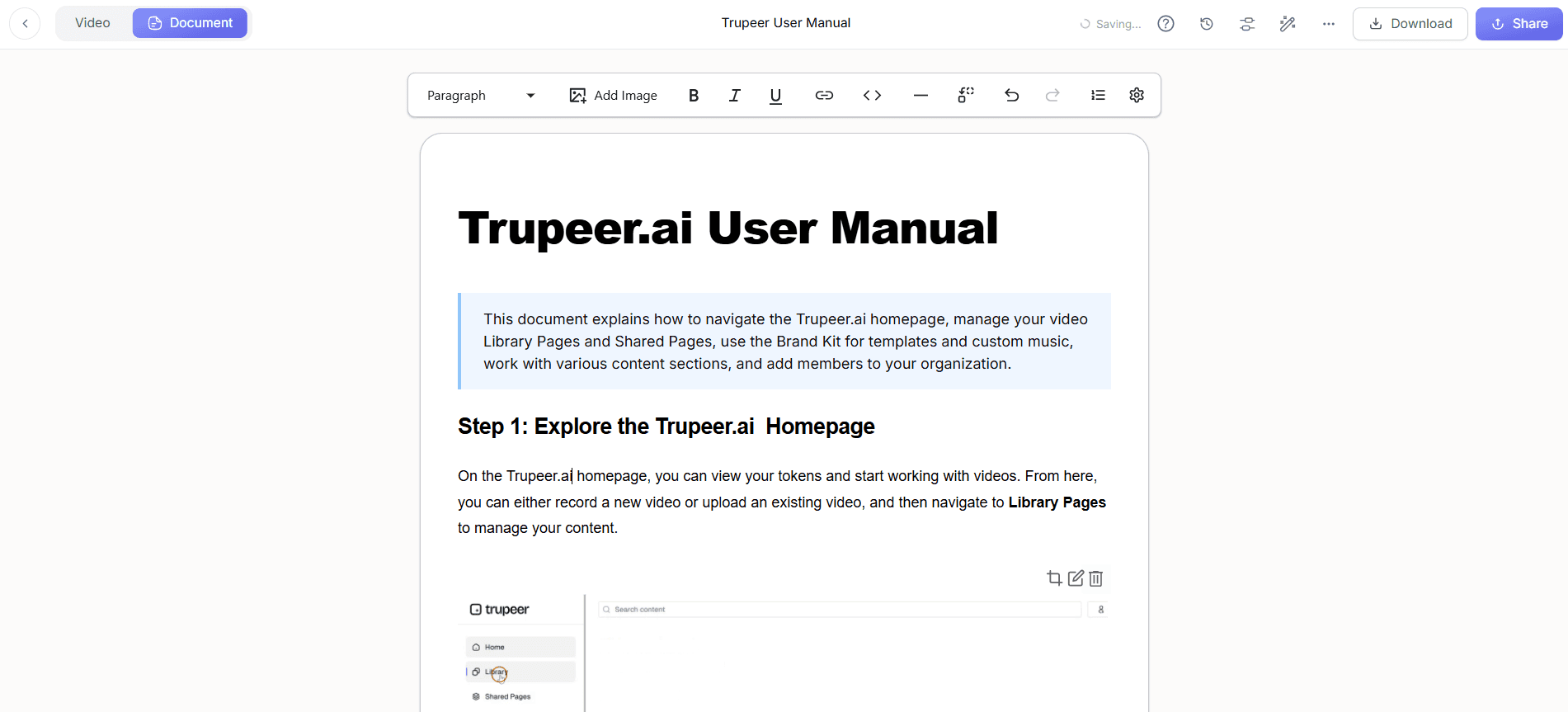
Use Trupeer's automatic SOP generation from any recording to create documentation. This involves exporting the video guide into an editable text format. The SOP is auto-generated and can be exported as HTML or PDF. This step provides a text-based alternative to the video guide, catering to users who prefer reading over watching. The exported SOPs are linked back to the original video, ensuring consistency and comprehensiveness in your support materials. This dual-format approach enhances accessibility and aids in training and compliance. Teams weighing tools often start with a Loom alternatives comparison before standardizing on a workflow.
Step 6: Measure Engagement and Optimize
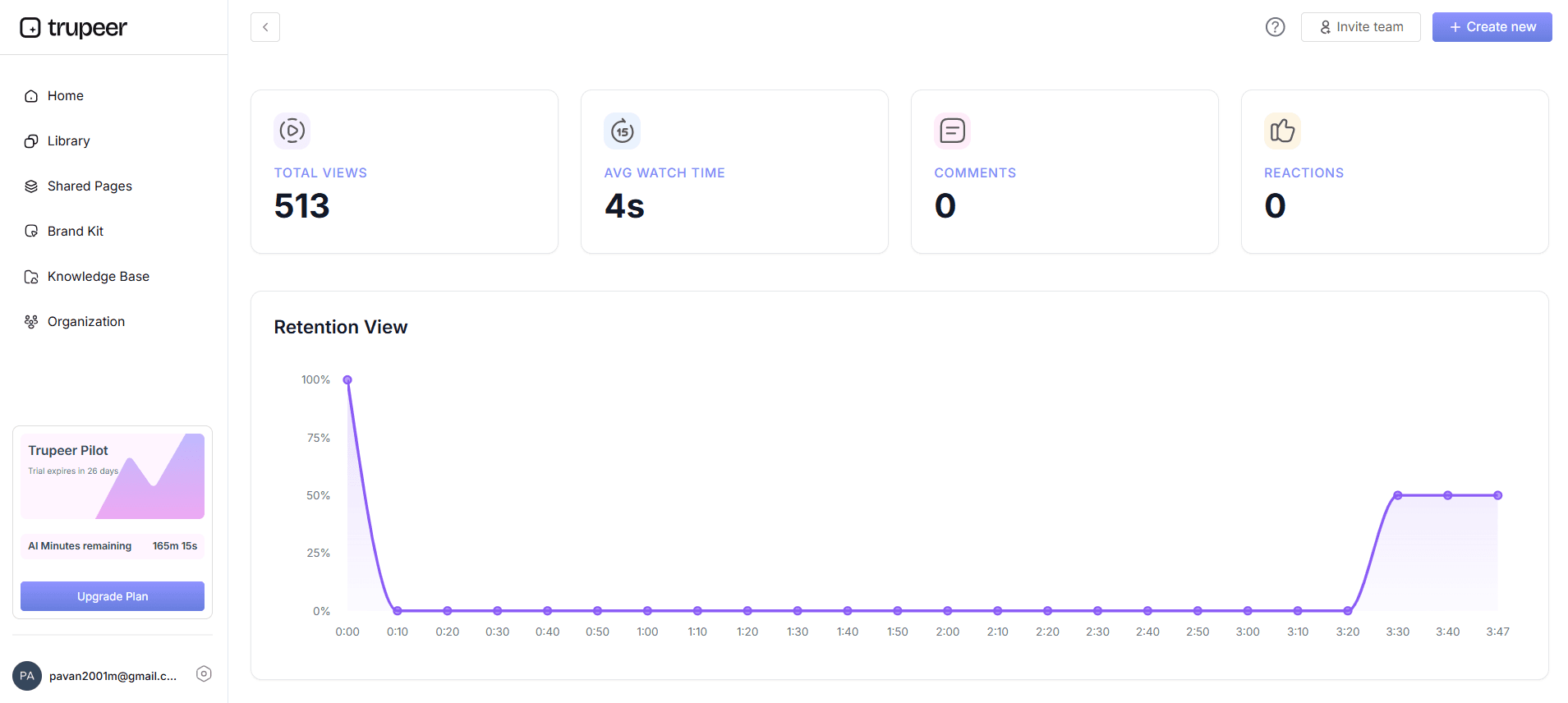
Finally, analyze user interactions with Trupeer's viewer engagement analytics. This involves reviewing metrics like viewer drop-off points and heatmaps. These insights help you understand how users engage with your video guides and identify areas for improvement. Adjust the content or structure of your guides based on these insights to ensure they meet user needs effectively. This iterative process is crucial for maintaining the relevance and effectiveness of your in-app guidance. By continually optimizing, you ensure that users receive the best possible assistance every time they need it.
What tips help you embed an AI video assistant inside your product for in-app guidance?
Successfully embedding an AI video assistant requires strategic planning and execution. Here are some practical tips to help you make the most of this integration.
Standardize Recording Style. Use consistent visual and audio settings to ensure all video guides have a uniform look and feel, reinforcing brand identity.
Prioritize Key Workflows. Focus on recording the most critical user journeys first, as these will have the biggest impact on user satisfaction and support reduction.
Use Custom Avatars. use the create your own custom ai avatar video feature to add a personal touch to guides, making them more relatable and engaging.
Test Across Devices. Ensure that video guides function smoothly across different devices and screen sizes to accommodate all users.
Regularly Update Content. Keep video guides current with new features and updates, ensuring that users always have access to the most relevant information.
Incorporate Feedback Loops. Encourage user feedback on video guides to understand their effectiveness and areas for improvement.
Compare Alternatives. Explore Scribe alternative comparison tools to ensure you're using the best solution for your needs.
Frequently asked questions
How do I embed video assistants in my product?
To embed video assistants, use a platform like Trupeer that offers embeddable video widgets. Start by creating a video guide using screen recording tools. Enhance the video with AI voiceovers for professional narration. Customize the video widget to match your product's UI and embed it within the app. This process ensures that the video guide is smoothly integrated, providing users with immediate assistance. Embedding video assistants is straightforward with the right tools, taking typically less than an hour to complete a single guide from recording to embedding.
What are the advantages of in-app video guidance?
In-app video guidance offers several advantages. It provides users with immediate, contextually relevant help, reducing the need for external support searches. This improves user retention and satisfaction. Video guides are more engaging and easier to follow than text-based help, leading to better feature adoption. They also standardize the support experience, ensuring consistency. also, video guides can scale with your user base, offering a cost-effective way to enhance support without increasing team size. These advantages make in-app video guidance a powerful tool for modern software products.
Why should I use Trupeer for video guidance?
Trupeer offers a comprehensive suite of features that enhance video guidance integration. Its AI screen recording and voiceover capabilities ensure high-quality, engaging content. Trupeer's AI video translation and localization tools broaden your reach to non-English speaking users. The searchable knowledge base and embeddable widgets simplify user access to guides. Trupeer also provides solid analytics for optimizing content effectiveness. These features make it an ideal choice for embedding video guidance, reducing support burdens, and enhancing user experience.
Can Trupeer handle multilingual video guides?
Yes, Trupeer supports multilingual video guides through its AI translation and dubbing capabilities. You can translate video content into over 40 languages, complete with lip-sync, ensuring that your guides are accessible to a global audience. This feature is crucial for companies with diverse user bases, allowing them to provide culturally relevant and understandable guidance across different regions. The translation process is efficient, making it easy to maintain up-to-date, localized content. Trupeer's multilingual support enhances user engagement and satisfaction by breaking down language barriers.
Does embedding video assistance reduce support costs?
Yes, embedding video assistance can significantly reduce support costs. By providing users with immediate, self-service guidance, the volume of support tickets decreases. Users find answers on their own, reducing the workload on support teams. This efficiency means fewer resources are needed to handle repetitive queries, allowing support staff to focus on more complex issues. also, video guides improve user retention, which indirectly saves costs associated with churn. The initial investment in creating video content is offset by these ongoing savings, making it a cost-effective solution for user support.
Related Blogs