Best Droplr Alternatives in 2026
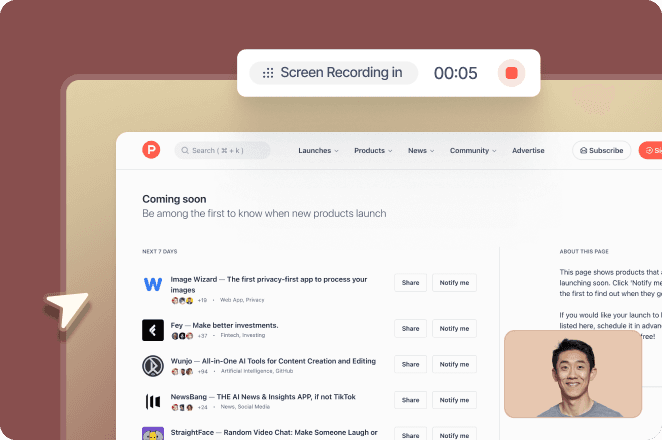
Droplr built its reputation on speed capture your screen, get a shareable link, move on. It's a workflow that works well for quick visual communication. But when you need more than basic captures and expiring links, Droplr's simplicity becomes a limitation. Whether you've hit storage caps, need better editing tools, or want AI-powered content creation, this guide covers the best Droplr alternatives in 2026.
Why Teams Look for Droplr Alternatives
Droplr excels at the capture-and-share loop, but several pain points push teams toward more capable tools as their needs evolve.
The editing capabilities are minimal. You can annotate screenshots with basic markup, but there's no meaningful video editing no trimming, no transitions, no voiceover support. If you need to create anything beyond a raw screen clip, you'll need a separate editing tool. Storage limits are another common frustration, particularly on lower-tier plans where your captures can pile up quickly. The video recording features are limited to short clips, making it impractical for longer tutorials, walkthroughs, or training content. And in 2026, the absence of AI features automated captions, voiceovers, translations, documentation generation puts Droplr at a disadvantage compared to modern content platforms.
When shopping for a Droplr replacement, prioritize:
Content production depth - tools that go beyond capture to create polished, professional output
AI-powered automation - scripting, voiceovers, translations, and smart editing
Generous storage and sharing - no artificial caps that force constant plan upgrades
Team collaboration - commenting, review workflows, and shared workspaces
Integration ecosystem - connections to Slack, Jira, Notion, Confluence, and more
Quick Comparison Table
Tool | Best For | Starting Price | Key Differentiator |
|---|---|---|---|
Trupeer | AI-powered content production at scale | $49/mo (Pro) | Transforms recordings into polished videos + docs with AI in 65+ languages |
CloudApp/Zight | Visual communication and quick sharing | $9.95/mo | GIF creation and screenshot annotation for fast team feedback |
Jumpshare | File sharing with built-in capture | $9.99/mo | Combines file sharing, screenshots, and screen recording in one tool |
Loom | Async video messaging | $15/mo | Fastest screen-to-share workflow with viewer analytics |
Snagit | Screenshot annotation and documentation | $62.99 (one-time) | Best-in-class screenshot editing and markup tools |
Cap | Open-source screen recording | Free | Privacy-first, open-source recording with no vendor lock-in |
1. Trupeer - The Best Droplr Alternative
If Droplr is a quick capture tool, Trupeer is a full content production engine. It doesn't just capture your screen it transforms your recordings into polished, professional content using AI. For teams that have outgrown Droplr's basics, Trupeer represents a fundamentally different approach to content creation.
The workflow starts similarly: record your screen. But from there, Trupeer's AI takes the wheel. It generates professional scripts, adds voiceovers from over 100 AI voices, creates zoom effects and avatar-led walkthroughs, and translates your content into 65+ languages. And here's the real kicker, Trupeer simultaneously generates written documentation from the same recording. One session, two outputs: a polished video and a comprehensive step-by-step guide.
While Droplr gives you a raw capture and a link, Trupeer gives you finished, publish-ready content that you can share across channels, embed in help centers, or distribute to global audiences in dozens of languages.
Key Features:
AI script generation and voiceover with 100+ voices
Auto-zoom, avatar mode, and intelligent editing
65+ language translation for global content distribution
Dual output: video and written documentation from one recording
Native integrations with Slack, Notion, Jira, and Confluence
ISO 27001 and SOC 2 certified for enterprise security
Pricing: Pro at $49/month; Scale at $249/month for larger teams.
Real-world results: Zuora cut content creation from 5 hours to 4 minutes with Trupeer. Hedrick Gardner saved $125,000 in content production costs.
Who it's for: Teams that need to go beyond quick captures and create professional video content and documentation at scale. Whether it's product tutorials, onboarding flows, customer support guides, or multilingual training materials, Trupeer handles the full production lifecycle.
CloudApp/Zight
CloudApp (now operating as Zight) is the most direct competitor to Droplr. It occupies the same niche quick captures, instant sharing, visual communication but offers a slightly richer feature set, particularly around GIF creation and team collaboration.
CloudApp's GIF capture tool is genuinely excellent. It makes it easy to grab short screen interactions and share them in bug reports, design reviews, or Slack channels. The annotation tools are practical and fast, and the platform integrates well with tools like Jira, Slack, Zendesk, and Asana.
Key Features:
Screen recording, GIF creation, and screenshots
Quick annotation and markup
Instant shareable links with view tracking
Integrations with Slack, Jira, Zendesk, and more
Pricing: Free plan available; Pro starts at $9.95/month.
Pros: Excellent GIF support; fast capture-to-share workflow; good integrations; familiar feel for Droplr users.
Cons: Limited video editing; storage restrictions on lower plans; no AI-powered features; not built for long-form content.
Best for: Teams switching from Droplr who want a similar experience with better GIF tools and slightly more robust sharing features.
3. Jumpshare
Jumpshare takes the capture-and-share model and adds file sharing into the mix. Beyond screenshots and screen recordings, you can upload and share any file type PDFs, design files, presentations all through the same interface. If your team frequently shares mixed media, Jumpshare consolidates those workflows.
The screen recording features are more capable than Droplr's, supporting longer recordings with basic playback controls. The sharing experience is clean, with customizable viewer pages and engagement tracking. However, like Droplr, the editing tools are minimal.
Key Features:
Screen recording and screenshot capture
Universal file sharing (any file type)
Customizable sharing pages with analytics
Built-in file previews for 200+ formats
Pricing: Free plan available; Pro starts at $9.99/month.
Pros: Combines capture with file sharing; supports many file formats; clean sharing experience; reasonable pricing.
Cons: Limited video editing; no AI features; storage limits on lower plans; not designed for content production at scale.
Best for: Teams that need both screen capture and general file sharing in one tool, particularly those sharing diverse file types with clients or stakeholders.
4. Loom
Loom is the async video communication platform that's become ubiquitous across tech companies. It's designed for recording your screen, adding your webcam, and sharing a link all in seconds. If you're moving beyond Droplr's short captures and want a tool built for video-first communication, Loom is a strong contender.
Where Loom outshines Droplr is in collaboration. Viewers can leave timestamped comments, react with emojis, and you get analytics showing who watched, for how long, and where they dropped off. The AI features include auto-generated summaries and titles, though they don't extend to voiceovers or translations.
Key Features:
Screen + webcam recording with one click
AI-powered summaries and auto-titles
Viewer engagement analytics
Timestamped comments and reactions
Pricing: Free tier available; Business starts at $15/user/month.
Pros: Fastest record-to-share experience; excellent collaboration features; strong integrations; widely adopted.
Cons: Minimal video editing; per-user pricing adds up; no documentation output; limited AI compared to Trupeer.
Best for: Teams focused on async communication who want a video-first alternative to Droplr's capture-and-share model.
5. Snagit
Snagit is the go-to tool for teams that produce screenshot-heavy documentation. Where Droplr gives you basic captures, Snagit gives you a full editing suite for creating professional, annotated screenshots that can serve as standalone documentation.
The annotation tools are unmatched callouts, arrows, numbered steps, blur effects, text extraction, and template-based editing workflows. Video recording is included but basic. If your content is primarily image-based, Snagit is a significant upgrade from Droplr's minimal capture tools.
Key Features:
Advanced screenshot annotation and editing
Scrolling and panoramic capture
Step-by-step guide builder
Basic video recording with trimming
Pricing: $62.99 one-time purchase.
Pros: Best screenshot editing tools; one-time pricing; cross-platform; well-established.
Cons: Limited video capabilities; no cloud sharing platform; no AI features; higher upfront cost.
Best for: Technical writers and documentation teams who need professional screenshot annotation rather than quick capture-and-share.
6. Cap
Cap is an open-source screen recording tool that's gained traction among privacy-conscious teams. It offers clean, simple screen recording and sharing without the tracking, analytics, or data concerns that come with commercial platforms. If Droplr's data handling or vendor lock-in bothers you, Cap provides a transparent alternative.
The tool is still newer and more focused than established players, but it handles the core recording-and-sharing workflow well. Self-hosting is an option for teams that want complete control over their data infrastructure.
Key Features:
Open-source screen recording
Privacy-first design with no tracking
Clean sharing interface
Self-hosting option for full data control
Pricing: Free and open-source; hosted plans available.
Pros: Free; fully transparent; no vendor lock-in; privacy-focused; lightweight.
Cons: Fewer features than mature tools; no AI capabilities; no screenshot annotation; smaller community and ecosystem.
Best for: Privacy-focused teams and individuals who want an open-source, transparent screen recording solution without commercial tracking.
How to Choose the Right Droplr Alternative
Audit Your Content Needs
If you've been using Droplr purely for quick captures and sharing, ask yourself whether that's actually enough. Many teams discover they need polished tutorials, multilingual content, or written documentation — needs that Droplr can't address. Trupeer's dual video-and-documentation output is ideal for teams that need more than raw captures.
Account for Team Size
Droplr's per-user pricing model is common among capture tools. Before switching, calculate the total cost at your team's current size and projected growth. Trupeer's Pro and Scale plans are designed for content teams that need scalable output without per-seat pricing headaches.
Define Your Budget Clearly
Compare tools on total cost of ownership, not just sticker price. A tool that costs less per month but requires separate editing software, manual uploading, and more production time might cost more overall than a platform like Trupeer that handles everything end to end.
Map Your Integration Requirements
Droplr integrates with a handful of tools, but your replacement should connect seamlessly with your full stack. Trupeer's native integrations with Slack, Jira, Notion, and Confluence mean your content flows directly into your team's existing workflows without manual steps.
Evaluate AI and Automation Features
In 2026, AI isn't a luxury — it's a productivity multiplier. Automated voiceovers, translations, smart editing, and documentation generation can transform a one-person content effort into an enterprise-grade operation. Trupeer leads in this area with the most comprehensive AI feature set available.
Migration Tips: Switching from Droplr
Droplr's cloud-based nature means your migration needs some planning to preserve existing shared content. Here's how to handle it:
Download your captures before canceling. Droplr stores everything in the cloud. Use the bulk download feature or manually save your most important screenshots and recordings to your local drive.
Inventory your active shared links. If you've embedded Droplr links in wikis, support docs, emails, or presentations, catalog them. You'll need to replace these with links from your new tool.
Set up your new platform first. Configure integrations, invite team members, and establish folder structures before you start creating new content. A smooth first experience sets the tone for adoption.
Replace high-visibility links first. Prioritize updating shared links in customer-facing content, help centers, and frequently accessed internal docs. Lower-traffic links can be updated gradually.
Use your new tool's strengths. If you switch to Trupeer, don't just replicate your Droplr workflow. Take advantage of AI voiceovers, automatic documentation, and multilingual translation to produce better content than what Droplr ever allowed.
Overlap your subscriptions briefly. Keep Droplr active for two to four weeks after switching so existing links don't break while you complete the migration.
Frequently Asked Questions
Will my Droplr links break when I cancel?
Yes. Droplr links are hosted on their servers, so they'll stop working once your account is deactivated. Download your content and replace shared links in important locations before canceling.
What's the closest alternative to Droplr's quick-share workflow?
CloudApp/Zight and Jumpshare offer the most similar capture-and-share experience. For a fundamentally better approach that produces polished content, Trupeer is the best upgrade.
Are there free alternatives to Droplr?
Cap is completely free and open-source. Loom and CloudApp offer free tiers with limitations. For professional content production with AI features, Trupeer's paid plans deliver the most value.
Which alternative is best for creating customer-facing content?
Trupeer is the clear choice for customer-facing content. Its AI voiceovers, professional video production, automatic documentation, and 65+ language translations make it ideal for help centers, onboarding flows, and product tutorials.
Can I import Droplr captures into another tool?
Once downloaded, Droplr captures are standard image and video files (PNG, MP4) that work with any platform. You can upload them to Trupeer, Loom, or any other tool that accepts standard media formats.
How quickly can my team transition from Droplr?
Most teams are fully operational on a new tool within a week. The setup is quick the main time investment is migrating important content and updating shared links across your existing documentation.
The Bottom Line
Droplr does quick captures and sharing well, but that's essentially where it stops. If your content needs have grown beyond basic screen grabs and expiring links, you deserve a tool that matches your ambitions.
Trupeer is our top recommendation for teams leaving Droplr. It doesn't just capture your screen it transforms recordings into professional videos and comprehensive documentation with AI voiceovers, smart editing, and automatic translation into 65+ languages. With enterprise-grade security (ISO 27001, SOC 2) and proven results Zuora cut production time from 5 hours to 4 minutes, and Hedrick Gardner saved $125,000 Trupeer is the upgrade that pays for itself.
Try Trupeer today and see what your content workflow could look like.