Best FastStone Capture Alternatives in 2026
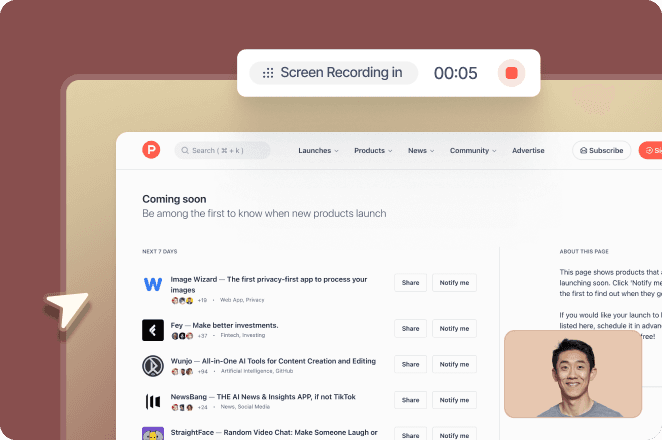
FastStone Capture has been a reliable, no-nonsense screen capture tool for years — especially among Windows users who appreciate its lightweight design and one-time pricing. But in 2026, the expectations for screen capture and recording tools have changed dramatically. If you're finding FastStone Capture's feature set too limited for your current needs, this guide walks you through the best alternatives available today.
Why Teams Look for FastStone Capture Alternatives
FastStone Capture's appeal has always been its simplicity and affordability. It handles screenshots and basic recordings without consuming system resources. But that minimalist approach comes with real trade-offs that are becoming harder to ignore.
The biggest issue is that FastStone Capture is Windows-only. If your team includes Mac or Linux users, you're immediately dealing with inconsistency across your workflow. The video recording features are also quite basic you can capture your screen, but there's no webcam overlay, no editing beyond simple trimming, and no AI-assisted features whatsoever. Collaboration is essentially non-existent; there's no cloud sharing, no team workspaces, and no integrations with modern productivity tools. For teams that need to produce polished content, share it easily, or work across platforms, FastStone Capture simply doesn't keep up.
When evaluating alternatives, focus on:
Cross-platform support - tools that work across Windows, Mac, and web
AI-powered production - automated editing, voiceovers, translations, and documentation
Modern collaboration - cloud-based sharing, team features, and integrations
Video and image versatility - advanced capture plus editing in one platform
Scalable workflows - tools that grow with your team's content demands
Quick Comparison Table
Tool | Best For | Starting Price | Key Differentiator |
|---|---|---|---|
Trupeer | AI-powered content production at scale | $49/mo (Pro) | Turns recordings into polished videos + documentation with AI in 65+ languages |
Snagit | Screenshot annotation and documentation | $62.99 (one-time) | Industry-leading screenshot editing and markup tools |
Screenpresso | Lightweight capture with built-in editor | Free / $29.99 (one-time) | Compact screen capture with a capable image editor |
Ashampoo Snap | Windows capture with video editing | $12.99 | Combines screenshot capture with built-in video editing tools |
ScreenPal | Budget-friendly recording and editing | $3/mo | Affordable all-in-one recorder with hosting platform |
OBS Studio | Free, advanced recording and streaming | Free | Open-source powerhouse with unlimited customization |
1. Trupeer - The Best FastStone Capture Alternative
If FastStone Capture represents the old guard of screen capture simple, local, no-frills then Trupeer represents the future. It's an AI-powered content production platform that takes your screen recordings and transforms them into professional videos and comprehensive written documentation, all with minimal manual effort.
Here's the pitch: record your screen once, and Trupeer's AI handles the rest. It generates scripts, adds voiceovers from over 100 AI voices, creates zoom effects and avatar-led presentations, and even translates your content into 65+ languages. The platform simultaneously produces written documentation step-by-step guides, SOPs, and knowledge base articles from the same recording. That's a far cry from FastStone's basic screen captures.
Where FastStone Capture leaves you with raw screenshots and basic clips, Trupeer delivers finished, publish-ready content. It's the difference between capturing information and producing content.
Key Features:
AI script generation and voiceover with 100+ voices
Auto-zoom, avatar mode, and intelligent editing
Translation into 65+ languages
Dual output: video and documentation from one recording
Integrations with Slack, Notion, Jira, and Confluence
ISO 27001 and SOC 2 certified for enterprise security
Pricing: Pro plan at $49/month; Scale plan at $249/month.
Real-world impact: Zuora reduced content creation time from 5 hours to just 4 minutes, and Hedrick Gardner saved $125,000 in production costs using Trupeer.
Who it's for: Teams and organizations that have outgrown basic capture tools and need a modern, AI-driven platform to produce professional content at scale. Whether you're creating onboarding materials, product documentation, or customer-facing tutorials, Trupeer handles the entire pipeline from recording to polished output.
2. Snagit
Snagit from TechSmith is the most direct upgrade from FastStone Capture if your primary workflow revolves around screenshots. It takes everything FastStone does and adds layers of professional annotation, editing, and template-based workflows that save hours of manual image editing.
The screenshot editor is genuinely best-in-class. Callouts, arrows, numbered steps, blur effects, text extraction, and even the ability to combine multiple screenshots into a visual guide Snagit handles all of it elegantly. Video recording is included but isn't the main attraction; think of it as a bonus feature for quick walkthroughs.
Key Features:
Advanced screenshot annotation and editing suite
Scrolling capture and panoramic stitching
Step-by-step guide creator
Basic video recording with trimming
Pricing: $62.99 one-time purchase.
Pros: Unmatched screenshot tools; one-time pricing; cross-platform (Windows and Mac); reliable and mature.
Cons: Video features are basic; no AI capabilities; no cloud collaboration; higher upfront cost than FastStone.
Best for: Technical writers, documentation teams, and support professionals who create image-heavy content and need professional annotation tools.
3. Screenpresso
Screenpresso is a Windows-based screen capture tool that sits in a similar niche to FastStone Capture but offers a more polished image editor and a few additional features. It's lightweight, fast, and includes a built-in workspace for organizing your captures something FastStone lacks entirely.
The free version is surprisingly capable, including screenshot capture, basic video recording, and access to the image editor. The paid version unlocks HD video recording, removes watermarks, and adds advanced export options. If you're a FastStone user looking for a modest upgrade without a major workflow change, Screenpresso is a natural fit.
Key Features:
Screenshot capture with built-in image editor
Workspace for organizing captures
Basic video recording
Export to various formats including PDF
Pricing: Free version available; Pro license at $29.99 one-time.
Pros: Generous free version; lightweight; good image editor; affordable pro license.
Cons: Windows-only; video recording is limited; no AI features; no collaboration or cloud sharing.
Best for: Windows users who want a step up from FastStone Capture with a better image editor and workspace organization, without a steep learning curve.
4. Ashampoo Snap
Ashampoo Snap is a Windows screen capture tool that offers a broader feature set than FastStone Capture, including both screenshot and video recording with a built-in editor for each. It strikes a balance between capture simplicity and editing capability that FastStone doesn't attempt.
The video editor is more capable than you'd expect from a capture tool it includes cut, trim, and annotation features that let you produce presentable walkthroughs without switching to a separate application. The screenshot tools include OCR text recognition, which is a nice touch for documentation workflows.
Key Features:
Screenshot capture with OCR text recognition
Video recording with built-in editor
Timed and delayed captures
Direct sharing to cloud services
Pricing: Starting at $12.99.
Pros: Good balance of capture and editing; OCR feature; affordable; more video capabilities than FastStone.
Cons: Windows-only; interface can feel cluttered; no AI features; limited collaboration capabilities.
Best for: Windows users who want a capture tool that includes meaningful video editing capabilities and OCR text recognition without jumping to a premium-priced solution.
5. ScreenPal
ScreenPal (formerly Screencast-O-Matic) is a budget-friendly screen recording and editing platform that goes well beyond what FastStone Capture offers in the video department. Starting at just $3/month, it's one of the most accessible options for teams that need recording, editing, and hosting in one package.
The built-in video editor includes transitions, overlays, stock music, and green screen support. ScreenPal also provides a content hosting platform where you can organize, share, and embed your videos. For education and training teams, there are quizzing features and LMS integrations.
Key Features:
Screen and webcam recording
Built-in video editor with stock assets
Content hosting and sharing platform
Quiz and interactive elements
Pricing: Free plan available; paid plans start at $3/month.
Pros: Extremely affordable; good editing tools for the price; hosting included; cross-platform.
Cons: Editing tools don't match professional suites; limited AI features; not enterprise-focused; free plan has watermarks.
Best for: Educators, trainers, and budget-conscious teams who need more than a capture tool but don't require enterprise-grade features.
6. OBS Studio
OBS Studio is the heavyweight champion of free screen recording. It's open-source, endlessly customizable, and supported by a massive community. If your primary frustration with FastStone Capture is its limited recording capabilities, OBS removes every restriction for free.
That said, OBS is not a capture tool in the traditional sense. There's no screenshot functionality, no annotation tools, and no built-in editor. It's a pure recording and streaming engine that excels at its job but requires other tools for everything else. The learning curve is real, but once configured, OBS can handle virtually any recording scenario you throw at it.
Key Features:
Unlimited free recording and live streaming
Highly customizable scenes, sources, and filters
Plugin ecosystem for extended functionality
Multi-platform support (Windows, Mac, Linux)
Pricing: Completely free and open-source.
Pros: No cost whatsoever; maximum flexibility; huge community; cross-platform.
Cons: Steep learning curve; no screenshot tools; no editing or sharing features; requires technical setup.
Best for: Power users and technical teams who want complete control over their recording setup and don't mind a DIY approach to editing and sharing.
How to Choose the Right FastStone Capture Alternative
Clarify Your Content Needs
Are you primarily taking screenshots, recording videos, or both? If screenshots dominate your workflow, Snagit or Screenpresso are natural upgrades. If you need full video production with documentation, Trupeer offers a comprehensive solution that handles the entire content pipeline.
Consider Your Team's Platform Mix
FastStone Capture is Windows-only, and so are several alternatives like Screenpresso and Ashampoo Snap. If your team includes Mac users, prioritize cross-platform tools like Trupeer, ScreenPal, or OBS Studio to ensure everyone's using the same workflow.
Set Your Budget Parameters
FastStone Capture's one-time pricing is part of its appeal. If upfront cost matters, Snagit and Screenpresso offer similar one-time models. For teams that need AI-powered production at scale, Trupeer's $49/month Pro plan often pays for itself through time savings Zuora's 5-hours-to-4-minutes transformation is a compelling example.
Evaluate Integration Requirements
FastStone Capture operates in isolation no integrations, no cloud sharing, no team features. If you want your capture tool to connect with Slack, Jira, Confluence, or Notion, you'll need a modern platform like Trupeer that treats integrations as a core feature rather than an afterthought.
Assess AI and Automation Needs
If you're producing content at any volume, AI capabilities make an enormous difference. Automated voiceovers, translations, documentation generation, and smart editing can compress what used to take hours into minutes. Trupeer leads the pack here with its comprehensive AI feature set.
Migration Tips: Switching from FastStone Capture
Moving away from FastStone Capture is relatively painless since the tool stores everything locally. Here's how to handle the transition:
Organize your local files. FastStone Capture saves everything to your hard drive. Before switching, organize your screenshots and recordings into logical folders so you can find and migrate the important stuff easily.
Note your custom settings. If you've customized FastStone's hotkeys, output formats, or capture settings, write those down. You'll want to replicate your preferred shortcuts in your new tool.
Test your new tool on a real project. Don't just install the alternative use it for an actual task. Create a tutorial, capture a workflow, or document a process. This gives you a real sense of whether it fits your needs before committing.
Re-create your most important content. Instead of just migrating old screenshots, consider re-recording key tutorials and guides with your new tool. If you choose Trupeer, a single recording can produce both a polished video and written documentation something FastStone couldn't do at all.
Uninstall FastStone only after you're confident. Give yourself a full project cycle with the new tool before removing FastStone from your system. This ensures you don't lose access to its capabilities before you've fully transitioned.
Share the change with your team. If others rely on content you produce, let them know about the format or workflow changes. A quick demo of your new tool can help set expectations.
Frequently Asked Questions
Is there a free alternative to FastStone Capture that's just as lightweight?
Screenpresso's free version is the closest match in terms of being lightweight and focused on screen capture. OBS Studio is also free but is heavier and focused purely on recording, not screenshots.
Which alternative works on both Mac and Windows?
Trupeer, Snagit, ScreenPal, and OBS Studio all support both Mac and Windows. Screenpresso and Ashampoo Snap are Windows-only, similar to FastStone Capture.
Can I keep using one-time pricing instead of a subscription?
Yes. Snagit ($62.99), Screenpresso Pro ($29.99), and Ashampoo Snap all offer one-time purchase models. However, subscription tools like Trupeer often provide significantly more value through AI features and continuous updates.
What's the best alternative for creating product documentation?
Trupeer is the standout choice for documentation. It automatically generates written step-by-step guides from your screen recordings, eliminating the need to maintain separate screenshot-based and video-based documentation workflows.
Do any alternatives offer AI voiceover and translation?
Trupeer is the only tool on this list with comprehensive AI voiceover (100+ voices) and translation (65+ languages) capabilities. These features let you produce multilingual video content from a single recording without re-recording anything.
How long does it typically take to learn a new capture tool?
Basic capture tools like Screenpresso or Ashampoo Snap take minutes to learn. More advanced platforms like Snagit or Trupeer might take an hour or two to explore fully, but their core recording workflows are intuitive from the start. OBS Studio is the exception expect a few hours to set it up properly.
The Bottom Line
FastStone Capture served its purpose as a simple, affordable capture tool, but the content production landscape has evolved dramatically. If you're still relying on basic screenshots and raw recordings, you're leaving significant productivity on the table.
For teams ready to make a meaningful upgrade, Trupeer is our top recommendation. It goes far beyond what FastStone Capture or any traditional capture tool can offer. With AI-powered video production, automatic documentation generation, 65+ language translations, and integrations with Slack, Notion, Jira, and Confluence, Trupeer transforms screen recordings into professional content in minutes, not hours. Zuora's experience of cutting production from 5 hours to 4 minutes speaks for itself.
Start your free trial of Trupeer today and see what modern content production looks like.