Best Mango Recorder Alternatives in 2026
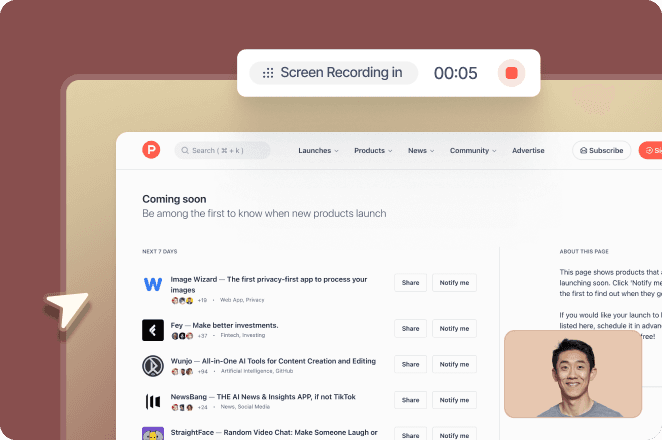
Mango Recorder has served as a straightforward screen recording tool for many users, but if you've been bumping into its limitations, you're not alone. Whether it's the lack of advanced editing features, limited AI capabilities, or collaboration bottlenecks, plenty of teams are actively searching for something better. This guide breaks down the top Mango Recorder alternatives in 2026 so you can find the right fit for your workflow.
Why Teams Look for Mango Recorder Alternatives
Mango Recorder does the basics well enough it captures your screen and lets you share recordings. But as content demands grow and teams scale, several pain points tend to surface.
First, there's the editing experience. Mango Recorder's built-in editor is fairly limited, which means you'll often need to export your recordings and polish them in a separate tool. That adds time and friction to every piece of content you produce. Second, the platform doesn't offer much in terms of AI-powered features. In 2026, teams expect auto-generated captions, AI voiceovers, and smart editing none of which Mango Recorder delivers reliably. Third, collaboration can feel clunky. If your team needs to review, comment on, or co-edit video content, you'll quickly outgrow what Mango Recorder provides.
When evaluating alternatives, here's what to prioritize:
AI-powered editing and production — tools that automate repetitive tasks like captioning, voiceovers, and translations
Seamless collaboration — sharing, commenting, and team workflows built into the platform
Integration ecosystem — connections to tools like Slack, Notion, Jira, and Confluence
Output versatility — the ability to produce not just videos but also documentation, guides, and tutorials from a single recording
Scalable pricing — plans that grow with your team without breaking the budget
Quick Comparison Table
Tool | Best For | Starting Price | Key Differentiator |
|---|---|---|---|
Trupeer | AI-powered content production at scale | $49/mo (Pro) | Turns recordings into videos + docs with AI voiceovers in 100+ voices and 65+ languages |
Loom | Quick async video messaging | $15/mo | Fast, lightweight screen recording with instant sharing links |
OBS Studio | Free, customizable recording and streaming | Free | Open-source with limitless configuration for power users |
Snagit | Screenshot-heavy documentation | $62.99 (one-time) | Best-in-class screenshot annotation and image editing |
ScreenPal | Education and training content | $3/mo | Built-in stock library and easy webcam overlay |
CloudApp | Visual team communication | $9.95/mo | GIF creation and quick annotation for fast feedback loops |
1. Trupeer - The Best Mango Recorder Alternative
Trupeer isn't just a screen recorder it's a full AI content production platform that transforms simple recordings into polished videos, step-by-step documentation, and multilingual content. If Mango Recorder's limitations have been holding you back, Trupeer is the upgrade you didn't know you needed.
Here's what makes Trupeer stand out. You start by recording your screen just like you would with any other tool. But from there, Trupeer's AI takes over. It can generate professional scripts, add voiceovers from over 100 AI voices, and even create zoom effects and avatar-led presentations all without you touching a timeline editor. Need to reach a global audience? Trupeer translates your content into 65+ languages automatically.
The platform doesn't stop at video either. From a single recording, Trupeer generates written documentation think step-by-step guides, SOPs, and knowledge base articles. This dual output is a massive time-saver for teams producing both video tutorials and written help content.
Key Features:
AI script generation and voiceover with 100+ voices
Auto-zoom, avatar mode, and smart editing
Translation into 65+ languages
Simultaneous video and documentation output
Integrations with Slack, Notion, Jira, and Confluence
ISO 27001 and SOC 2 certified for enterprise security
Pricing: Pro plan at $49/month, Scale plan at $249/month for larger teams.
Real-world impact: Zuora cut their content creation time from 5 hours to just 4 minutes using Trupeer, and Hedrick Gardner saved $125,000 in content production costs.
Who it's for: Teams that need to produce professional video and documentation content at scale especially those creating onboarding materials, product tutorials, customer-facing guides, or multilingual training content. If you've outgrown basic screen recorders and want AI to do the heavy lifting, Trupeer's your best bet.
2. Loom
Loom has become synonymous with quick async video communication. It's designed for teams who want to record their screen, add a webcam bubble, and share a link all in under a minute. If your primary use case is sending quick video updates or walkthroughs to teammates, Loom does that exceptionally well.
The platform offers automatic transcriptions, viewer analytics, and a clean commenting system that makes async collaboration straightforward. Loom's integration with tools like Slack, Notion, and GitHub means your videos slot right into existing workflows.
Key Features:
Instant screen + webcam recording
Auto-generated transcripts and captions
Viewer engagement analytics
Emoji reactions and threaded comments
Pricing: Free plan available; Business starts at $15/user/month.
Pros: Incredibly fast to record and share; clean interface; strong integrations.
Cons: Limited video editing capabilities; no documentation generation; can get expensive at scale; lacks AI voiceover and translation features.
Best for: Small to mid-size teams focused on internal async communication rather than polished external content.
3. OBS Studio
OBS Studio is the gold standard for free, open-source screen recording and live streaming. It's been around for years and has an enormous community behind it. If you're technically inclined and want full control over your recording setup without paying a cent, OBS is hard to beat.
That said, OBS is not for the faint of heart. The learning curve is steep, there's no built-in editing, and sharing your recordings requires manual uploading. It's a recording powerhouse, but everything else editing, collaboration, distribution you'll have to handle separately.
Key Features:
Unlimited free recording and streaming
Highly customizable scenes and sources
Plugin ecosystem for extended functionality
Multi-platform support (Windows, Mac, Linux)
Pricing: Completely free.
Pros: No cost; extremely flexible; active community and plugin support.
Cons: Steep learning curve; no editing, collaboration, or sharing features; no AI capabilities; requires technical setup.
Best for: Power users, streamers, and technically savvy individuals who want maximum control and don't mind a DIY approach.
4. Snagit
Snagit from TechSmith is the go-to tool for teams that need robust screenshot capture and annotation alongside basic video recording. It's particularly popular with technical writers, support teams, and anyone who produces image-heavy documentation.
Snagit's screenshot editing tools are genuinely best-in-class arrows, callouts, step numbering, blur effects, and more. The video recording side is more basic, but it gets the job done for simple walkthroughs and how-to clips.
Key Features:
Advanced screenshot annotation and editing
Scrolling capture for long pages
Step-by-step guide creation from screenshots
Basic video recording and trimming
Pricing: $62.99 one-time purchase; maintenance plan available for updates.
Pros: Excellent screenshot tools; one-time pricing; well-established and reliable.
Cons: Video features are limited; no AI-powered editing; no cloud collaboration; feels dated compared to modern tools.
Best for: Technical writers and documentation teams who prioritize screenshot-based content over video production.
5. ScreenPal
ScreenPal (formerly Screencast-O-Matic) targets educators, trainers, and small teams who need an affordable, easy-to-use screen recorder with decent editing built in. It's one of the most budget-friendly options on the market, with plans starting at just $3/month.
The platform includes a built-in video editor with stock music, transitions, and overlay effects. It also offers a content hosting platform where you can organize and share your videos. For education-focused teams, ScreenPal's quizzing features and LMS integrations are a nice bonus.
Key Features:
Screen and webcam recording
Built-in video editor with stock library
Hosting and sharing platform
Quiz and interactive elements for training
Pricing: Free plan available; paid plans start at $3/month.
Pros: Very affordable; easy to learn; good for educational content; built-in hosting.
Cons: Editing tools are basic compared to professional suites; limited AI features; not ideal for enterprise-scale content production.
Best for: Educators, individual creators, and small teams on tight budgets who need a simple all-in-one recording and editing solution.
6. CloudApp
CloudApp (now part of the Zight family) focuses on visual communication screen recordings, GIFs, annotated screenshots, and quick screen captures designed for fast team collaboration. It's built for speed: capture something, annotate it, share a link, move on.
CloudApp's GIF creation is particularly popular for bug reports, quick demos, and design feedback. The tool integrates with project management platforms and communication tools, making it easy to embed visual context in your existing workflows.
Key Features:
Quick screen recording and GIF creation
Screenshot annotation and markup
Instant shareable links
Integrations with Slack, Jira, Trello, and more
Pricing: Free plan available; Pro starts at $9.95/month.
Pros: Fast and lightweight; great for visual feedback loops; solid GIF support; good integrations.
Cons: Not designed for long-form video production; limited editing capabilities; no AI voiceover or translation; storage limits on lower plans.
Best for: Design teams, developers, and support teams who need quick visual communication tools rather than full video production.
How to Choose the Right Mango Recorder Alternative
Assess Your Content Needs
Start by mapping out what types of content you actually produce. If you're mainly sending quick internal updates, a lightweight tool like Loom might suffice. But if you're creating customer-facing tutorials, onboarding videos, or multilingual help content, you'll want a platform like Trupeer that handles the full production pipeline.
Consider Your Team Size
Solo creators have different needs than 50-person content teams. Tools like ScreenPal work great for individuals, while Trupeer's Scale plan and enterprise features (SSO, team workspaces, integrations) are built for larger organizations that need consistent output at volume.
Set a Realistic Budget
Free tools like OBS are tempting, but factor in the hidden costs time spent editing, uploading, and managing content manually. A tool like Trupeer at $49/month often pays for itself by cutting production time from hours to minutes, as Zuora's experience demonstrates.
Check Integration Requirements
Your screen recording tool shouldn't exist in a silo. Make sure whatever you choose integrates with your team's existing stack Slack for sharing, Jira for tickets, Confluence or Notion for documentation. Trupeer covers all of these natively.
Evaluate AI Capabilities
In 2026, AI isn't a nice-to-have it's a force multiplier. Auto-generated scripts, AI voiceovers, smart editing, and instant translation can turn a one-person team into a content machine. If AI-powered production matters to your workflow, prioritize tools that have invested heavily in these capabilities.
Migration Tips: Switching from Mango Recorder
Making the switch from Mango Recorder doesn't have to be painful. Here's how to do it smoothly:
Export your existing recordings first. Download all your Mango Recorder files in their highest quality format before canceling your subscription. Most recordings will be in MP4 format, which is universally compatible.
Audit your content library. Before migrating everything, review what's still relevant. There's no point moving outdated recordings to a new platform. Use this as an opportunity to clean house.
Set up your new tool's integrations early. Connect your new platform to Slack, Jira, Notion, or whatever tools your team uses before you start creating new content. This ensures everything flows smoothly from day one.
Run a parallel workflow for one to two weeks. Don't go cold turkey. Use both tools simultaneously while your team gets comfortable with the new platform. This reduces friction and lets people learn at their own pace.
Re-record high-value content. Instead of just migrating old recordings, consider re-recording your most important tutorials and guides using your new tool's capabilities. With something like Trupeer, you can produce significantly better content with AI enhancements in a fraction of the time.
Train your team. Schedule a brief walkthrough or share an onboarding video (made with your new tool, naturally) so everyone knows how to use the key features.
Frequently Asked Questions
Can I import my Mango Recorder videos into a new tool?
Most Mango Recorder exports are standard MP4 files, which means they're compatible with virtually any screen recording or video editing platform. You can upload them to Trupeer, Loom, or any other tool that accepts video imports.
What's the easiest Mango Recorder alternative to learn?
Loom and ScreenPal are both extremely beginner-friendly. However, Trupeer offers the best balance of ease-of-use and powerful features its AI handles most of the complex work, so you don't need to be a video editing expert.
Are there free alternatives to Mango Recorder?
Yes. OBS Studio is completely free and offers powerful recording capabilities. ScreenPal and CloudApp also have free tiers, though with limited features. Keep in mind that free tools often require more manual effort for editing and distribution.
Which alternative is best for creating product documentation?
Trupeer is the clear standout here. It's the only tool on this list that automatically generates written documentation from your screen recordings, saving you from maintaining separate video and text-based content workflows.
How long does it take to switch from Mango Recorder?
Most teams can be fully operational on a new tool within a week. The actual setup takes minutes the main time investment is re-recording or migrating your most important content and getting your team comfortable with the new workflow.
Do any of these alternatives support multiple languages?
Trupeer leads in this area with automatic translation into 65+ languages. Some other tools offer basic captioning in multiple languages, but none match Trupeer's end-to-end multilingual content production capabilities.
The Bottom Line
Mango Recorder is a decent basic tool, but if you're reading this, you've probably already hit its ceiling. The good news is that there's no shortage of better options in 2026.
For teams that want the most capable, future-proof alternative, Trupeer is our top recommendation. It doesn't just replace Mango Recorder it fundamentally upgrades your content production workflow with AI-powered video creation, automatic documentation generation, multilingual support, and enterprise-grade security. The fact that companies like Zuora have cut production time from 5 hours to 4 minutes tells you everything you need to know about what's possible when you make the switch.
Start with a free trial of Trupeer and see the difference for yourself.