Synthesia vs Trupeer: Feature Comparison (2026)
Synthesia has become the default name people reach for when they think about AI-generated video. The company hit a $4 billion valuation in 2024, and its avatar technology has been featured everywhere from Forbes to the BBC. With 240+ digital avatars, 1,000+ voice options, and support for 160+ languages, Synthesia has turned text-to-video into a recognizable product category. But a valuation and a feature count don't tell you whether a tool actually solves your team's content problems.
According to Forrester's 2025 Digital Content Report, enterprises spend an average of $4,700 per finished minute of professional training video when factoring in scripting, recording, editing, and review cycles.
The verdict: Trupeer wins this comparison. Synthesia is an impressive avatar video generator, but it's fundamentally a text-to-video tool. You write a script, pick an avatar, and get a talking-head video. Trupeer transforms your actual screen recordings into polished videos with AI voiceover, smart zoom effects, and auto-generated documentation simultaneously. If you need a digital spokesperson reading a script to camera, Synthesia does that well. If you need to show real product workflows, build step-by-step SOPs, and produce professional content at scale without hiring a video team, Trupeer solves the actual problem.
This comparison matters because Synthesia and Trupeer represent two fundamentally different approaches to AI video. Synthesia replaces the camera and the actor. Trupeer replaces the editor, the scriptwriter, the voiceover artist, and the technical writer all at once. Understanding that distinction will save you from buying the wrong tool and discovering the gap three months into a contract. If you're already leaning away from Synthesia, our roundup of Synthesia alternatives covers a wider field.
The Bigger Picture: Why AI Video Has Split Into Two Lanes
The AI video market has fractured into distinct categories that vendor marketing deliberately blurs. On one side, you have avatar-first platforms like Synthesia, HeyGen, and Colossyan that turn text scripts into talking-head videos. On the other side, you have production-first platforms like Trupeer that take real screen recordings and automate the entire post-production pipeline, turning them into polished help docs and videos in one pass. Both call themselves "AI video platforms," but they solve completely different problems.
Avatar platforms excel at a specific format: a digital person standing in front of a background, delivering scripted content to camera. This is useful for corporate announcements, compliance training, and any scenario where you'd otherwise hire a presenter and rent a studio. The video output looks polished from a distance, though the uncanny valley effect becomes obvious when avatars try to express emotion or handle complex gestures.
Production-first platforms solve a different problem entirely. When your support team needs to show how a product actually works, when your enablement team needs to walk through real workflows, when your documentation team needs step-by-step guides with annotated screenshots, an avatar standing in front of a slide deck doesn't cut it. You need actual screen recordings turned into professional content, and you need it done without spending hours in an editor.
The confusion happens because Synthesia recently added an AI Screen Recorder Chrome extension, pushing into Trupeer's territory. And Trupeer offers AI avatars through its HeyGen integration, overlapping with Synthesia's core offering. But as we'll see in the feature breakdown, bolt-on capabilities rarely match purpose-built ones.
What Is Synthesia?
Synthesia is an AI video generation platform that converts written scripts into videos featuring digital avatars. You type your script, choose an avatar from a library of 240+ options, select a voice from 1,000+ choices across 160+ languages, and Synthesia generates a video of that avatar delivering your script. The company was founded in 2017, is headquartered in London, and has raised over $250 million in funding.
The core workflow is text-to-video. You can also import PowerPoint slides to create presentation-style videos, use pre-built templates, and add screen recordings as background elements. Synthesia recently launched an AI Screen Recorder as a Chrome extension, though it functions primarily as a capture tool rather than a full editing pipeline.
Key Features
240+ AI avatars including diverse ethnicities, ages, and styles with gesture and expression support
Custom avatars created from a short video of yourself, available at $1,000/year per avatar
1,000+ voice options with voice cloning capability for Enterprise customers
160+ language support for translation and localization of avatar videos
AI Screen Recorder Chrome extension for capturing screen workflows
PowerPoint import for converting slide decks into avatar-presented videos
Template library with pre-designed layouts and scenes for rapid video creation
LMS integrations with SCORM export for learning management systems
Brand kit for consistent colors, fonts, and logos across videos
Collaboration tools with shared workspaces and comment threads
Synthesia's strengths are clear: the avatar library is the largest in the market, language coverage is extensive, and the text-to-video workflow is genuinely simple. But real limitations persist. Users consistently report avatar stiffness and uncanny valley effects, especially with gestures and emotional expressions. Content moderation policies block certain healthcare and medical content. Minute limits on lower tiers force teams into expensive Enterprise plans. Custom avatars at $1,000/year per persona add up quickly for teams that need multiple presenters. And the platform has limited customization options for users who want granular control over video output.
What Is Trupeer?
Trupeer is an AI content production platform that transforms rough screen recordings into professional videos and step-by-step written documentation simultaneously. You record your screen, and the AI handles scripting, voiceover, editing, zoom effects, and documentation generation as a single automated pipeline.
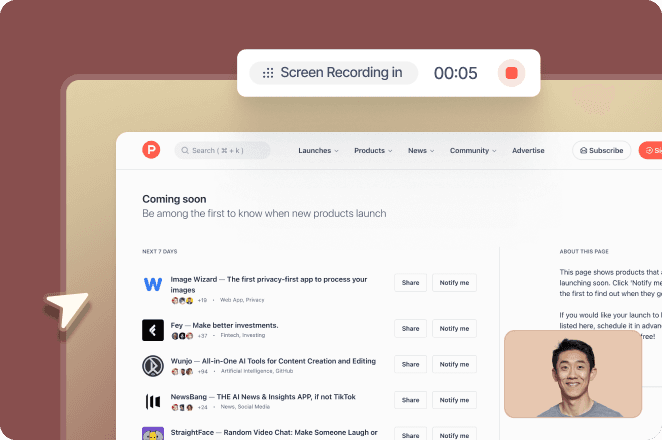
The workflow starts with a screen recording via Trupeer's Chrome extension or by uploading an existing recording. The AI strips filler words from your narration, restructures sentences for clarity, corrects grammar, and generates a polished script. It adds studio-quality voiceover from 100+ voices, applies automated zoom effects on click actions, and exports a finished video. In parallel, it produces formatted step-by-step guides with annotated screenshots extracted from the recording.
Key Features
AI script generation that removes filler words, restructures sentences, and corrects grammar automatically
Studio-quality AI voiceover with 100+ voices across multiple languages and accents
Automated zoom effects that detect click actions and apply dynamic zooms and transitions
AI avatars with hundreds of persona options via HeyGen integration
One-click translation into 65+ languages for both voiceover and subtitles
Auto-generated step-by-step guides with annotated screenshots from recordings
Brand customization with custom wallpapers, logos, color templates, intros, and outros
Knowledge base hosting with custom domains and AI-powered video search
Analytics dashboard tracking views, watch time, and engagement metrics
Interactive elements including clickable hotspots and embedded CTAs
Trupeer is ISO 27001 and SOC2 certified, supports SAML SSO for enterprise deployments, and integrates natively with Slack, Notion, Jira, and Confluence. Zuora reduced video production time from 5 hours to 4 minutes. Hedrick Gardner saved $125,000 on IT migration training. The platform is browser-based with no desktop installation required.
Feature-by-Feature Comparison
Feature | Synthesia | Trupeer |
|---|---|---|
Primary Approach | Text-to-video with AI avatars | Recording-to-video with AI post-production |
AI Avatars | 240+ stock avatars, custom avatars at $1,000/yr | Hundreds of AI personas via HeyGen integration |
Voice Options | 1,000+ voices, voice cloning (Enterprise) | 100+ studio-quality voices across languages |
Language Support | 160+ languages for avatar videos | 65+ languages with full voiceover + subtitle translation |
Screen Recording | AI Screen Recorder Chrome extension (basic) | Chrome extension with AI-powered post-production pipeline |
AI Script Generation | AI script assistant for writing from scratch | Auto-generates scripts from recordings, removes filler, restructures |
AI Voiceover | Avatar lip-synced delivery of written scripts | Studio-quality voiceover replacing original recording audio |
Auto Zoom Effects | No | AI detects click actions and applies dynamic zoom transitions |
Auto Documentation | No | Step-by-step guides with annotated screenshots from recordings |
PowerPoint Import | Yes, converts slides to avatar videos | No |
Brand Customization | Brand kit with colors, fonts, logos | Full brand kit: wallpapers, logos, intros/outros, color templates |
Knowledge Base | No | Hosted knowledge base with custom domain, AI-powered search |
Analytics | Basic video view counts | Views, watch time, engagement metrics, real-time dashboard |
Interactive Elements | No clickable hotspots or CTAs | Clickable hotspots, embedded CTAs |
Integrations | LMS (SCORM), limited third-party | Slack, Notion, Jira, Confluence, API access |
Collaboration | Shared workspaces, comments | Team workspaces, shared editor seats, role-based access |
Enterprise Security | SOC2, SSO | ISO 27001, SOC2, SAML SSO, SCIM |
Content Moderation | Blocks certain healthcare/medical content | No content moderation restrictions reported |
In-Depth Feature Analysis
1. Avatar Quality and Realism
This is supposed to be Synthesia's home turf, and the numbers are impressive. 240+ avatars covering diverse ethnicities, ages, genders, and professional styles. Custom avatars built from a short video recording of yourself. Voice cloning for Enterprise customers. On paper, Synthesia offers the most comprehensive avatar system on the market.
In practice, the experience is more complicated. User reviews consistently cite the uncanny valley problem. Avatars handle static delivery well enough, standing still and reading text to camera. But when scripts call for gestures, emotional emphasis, or natural pauses, the results often feel robotic. Lip sync drifts on longer videos. Eye contact feels mechanical rather than natural. Custom avatars, while impressive technically, cost $1,000 per year per persona, which adds up fast if your team needs multiple presenters for different departments or audiences.
Trupeer takes a fundamentally different approach. Instead of making avatars the centerpiece, Trupeer offers AI avatars through its HeyGen integration as one option among several. The primary workflow doesn't require avatars at all. You record your screen, and the AI handles the voiceover separately. When you do need an avatar, a talking head introducing a product demo or a presenter overlay on a walkthrough, the HeyGen integration provides hundreds of persona options without locking you into per-avatar annual fees.
For training content, product demos, and documentation, the screen recording itself is the star of the video. An avatar reading a script about how to navigate a dashboard is less effective than a screen recording that actually shows the dashboard with AI-applied zoom effects highlighting each step. Synthesia's avatars look polished in isolation, but they're often the wrong format for the content teams actually need to produce.
2. Content Production Workflow
Synthesia's workflow is script-first. You write your script (or use the AI assistant to help draft it), choose an avatar and voice, design your scene layout, and generate the video. The platform renders the avatar delivering your script with lip-synced audio. For simple talking-head content, this works well. For anything involving real product interfaces, live demonstrations, or actual workflow walkthroughs, you're limited to adding screen recordings as background elements while an avatar talks over them.
This creates a fundamental mismatch for product and support teams. If your goal is to show customers how to use your software, you need the screen recording to be the primary content, not a backdrop behind an avatar. Synthesia's AI Screen Recorder Chrome extension partially addresses this, but it's a capture tool, not a production pipeline. You record your screen, and then you still need to manually combine that footage with avatar content in Synthesia's editor or export it and edit externally.
Trupeer's workflow is recording-first. Record your screen (complete with your natural narration), and the AI transforms that raw material into finished content. The script generation doesn't start from a blank page; it starts from what you actually said and did during the recording. The AI strips filler words, fixes grammar, restructures for clarity, and generates a polished script that matches the visual flow of your recording. The voiceover replaces your original audio with studio-quality narration. Zoom effects are applied automatically at click points. And the same recording simultaneously generates written documentation with annotated screenshots. If you're evaluating other options in this space, our DemoCreator comparison covers a tool that takes the manual-editing approach instead.
The practical difference is enormous. Synthesia requires you to write a complete script before you produce anything. Trupeer lets you simply do the task on screen and talk through it naturally. For subject matter experts who know their product but aren't scriptwriters, Trupeer's approach produces better content faster because it captures genuine expertise rather than forcing experts to become writers first.
3. Documentation and Dual Output
This is where the comparison becomes lopsided. Synthesia produces video. Only video. If your team needs a written help article, a step-by-step SOP, or a quick-reference guide to accompany that video, someone writes it separately. That means a separate tool, a separate workflow, and content that inevitably drifts out of sync with the video when the product updates.
Trupeer produces both video and documentation from a single recording. The AI extracts screenshots at key steps, adds annotations highlighting the relevant UI elements, and formats everything into a clean step-by-step guide. The video and the written guide are always in sync because they come from the same source material. When your product changes, you re-record the affected portion and both outputs update together.
For teams maintaining help centers, knowledge bases, or training libraries, this dual output changes the economics entirely. Instead of producing video content and written content as two separate workstreams with two separate budgets, you produce both simultaneously from a single recording. The documentation generation alone can replace a technical writer's weekly output for routine product walkthroughs. (We dig deeper into cost factors in our Synthesia vs Trupeer pricing breakdown.)
4. Translation and Localization
Synthesia leads on raw language count with 160+ languages compared to Trupeer's 65+. For organizations operating in less common language markets, Synthesia's broader coverage is a genuine advantage. The avatar lip sync adjusts to match the target language, so the visual presentation remains consistent across translations.
But language count doesn't tell the whole story. Synthesia's translation applies to avatar-delivered content only. The screen recordings you might add as background elements don't get translated UI overlays or localized annotations. If your product demo shows an English-language dashboard while the avatar speaks Mandarin, there's a disconnect that undermines the localization effort.
Trupeer's translation covers both the voiceover and the subtitles with one click across 65+ languages. More importantly, the translated output includes both the video and the written documentation. When you translate a Trupeer recording into French, you get a French voiceover video and a French step-by-step guide. Synthesia gives you a French-speaking avatar but no translated documentation because it doesn't generate documentation at all.
For most global teams operating in the major commercial languages, 65+ languages covers every market that matters. The documentation translation alone can save thousands in localization vendor costs per quarter.
5. Pricing and Total Cost of Ownership
Synthesia's pricing has expanded significantly. The Free tier gives you 10 minutes of video with watermarks. Starter at $29/month provides higher video limits with basic features. Creator at $89/month unlocks more advanced capabilities and higher minute caps. Enterprise pricing is custom and typically runs into the hundreds per seat per month.
There are hidden costs that inflate the real spend. Custom avatars cost $1,000/year each. If three departments each want their own custom avatar, that is $3,000/year before you've produced a single video. Voice cloning is Enterprise-only, pushing teams toward the most expensive tier. Minute limits on lower plans force high-volume teams into Enterprise contracts. And because Synthesia only produces video, you still need separate tools and workflows for written documentation, knowledge base hosting, analytics, and workflow integrations.
Trupeer's Pro plan at $49/month ($40/month annual) includes AI voiceover, script generation, unlimited guide exports, and watermark removal. Scale at $249/month ($199/month annual) adds team workspaces, custom voices, branded pages, and CTAs. Enterprise pricing is custom with unlimited seats and advanced security features.
The TCO comparison favors Trupeer when you account for everything Synthesia doesn't include. A team of 5 on Synthesia Creator at $89/seat/month pays $445/month for video generation only. Add documentation tools ($50 to $75/month), knowledge base hosting ($50 to $100/month), analytics ($20 to $50/month), and custom avatars ($250/month amortized for 3 personas), and the real cost approaches $850 to $920/month. Trupeer Scale at $199/month bundles video, documentation, knowledge base, analytics, and avatar access into a single platform. The math isn't close.
6. Enterprise Readiness and Security
Both platforms take enterprise security seriously. Synthesia offers SOC2 compliance and SSO for Enterprise customers. Trupeer holds both ISO 27001 and SOC2 certifications, supports SAML SSO, and provides SCIM for automated user provisioning. For organizations with strict compliance requirements, both tools clear the baseline. Trupeer's additional ISO 27001 certification may matter for regulated industries that require it as a vendor prerequisite. We've written a detailed enterprise readiness comparison if compliance is a deciding factor for your team.
Where they differ is in enterprise workflow integration. Synthesia integrates primarily with LMS platforms via SCORM export, making it strong for formal learning and development programs. But it lacks native integrations with the productivity tools most teams use daily. Trupeer connects directly with Slack, Notion, Jira, and Confluence, embedding content production into existing workflows rather than sitting as an isolated video creation tool. Enterprise customers get API access for custom integrations.
The integration gap matters most for support and product teams. A support engineer using Synthesia creates a video, exports it, uploads it to the knowledge base manually, and links it in the relevant Jira ticket. A support engineer using Trupeer records a walkthrough and pushes both the video and the auto-generated guide directly into Jira and the knowledge base from within the platform. That friction reduction compounds across hundreds of content pieces per quarter.
7. Scalability and Content Maintenance
Synthesia's content maintenance story has a structural weakness. When your product UI changes, every Synthesia video that references the old UI needs to be re-scripted. You rewrite the script sections that reference changed screens, re-select scene layouts, and regenerate the avatar video. If screen recording clips were embedded, you re-record those separately and re-import them. For a team maintaining 100+ training videos with biweekly product updates, this becomes a significant ongoing burden.
Trupeer handles content updates by re-recording only the changed portions. Because the video is built from the screen recording itself rather than from a separate script, the update process is: re-record the changed screens, and the AI regenerates the affected video segments and documentation steps. Unchanged portions stay intact. What takes hours in Synthesia takes minutes in Trupeer. For fast-moving product teams, this maintenance advantage is the difference between a content library that stays current and one that quietly goes stale. (For a similar analysis with a video-editing-focused tool, see our Descript vs Trupeer feature comparison.)
Best Use Cases
Corporate Communications and Announcements
Sarah is VP of Internal Communications at a 2,000-person company. She needs quarterly all-hands summaries, policy update announcements, and leadership messages. Her CEO doesn't have time to sit in front of a camera for every message. With Synthesia, Sarah creates a custom avatar of the CEO ($1,000/year), writes the script, and generates a professional-looking video of the CEO delivering the message. The avatar maintains a consistent, polished appearance regardless of how many takes would have been needed in real life. For this specific use case, Synthesia works well.
But Sarah also needs process documentation for the new expense policy, a walkthrough of the updated benefits enrollment portal, and training videos for the new project management tool. None of these are talking-head content. They all require showing actual software interfaces and step-by-step workflows. For these, she needs Trupeer. The screen recording captures the real interface, the AI produces professional narration and zoom effects, and the auto-generated documentation gives employees a written reference alongside the video. Sarah ends up needing both tools, or she picks Trupeer and covers 90% of her needs with one platform, using the AI avatar integration for the occasional executive message.
Product Demos and Customer Education
Marcus leads product marketing for a B2B SaaS platform that ships updates every sprint. He needs to produce demo videos showing new features, help center articles explaining workflows, and localized content for 4 international markets. With Synthesia, Marcus writes a script describing the new feature, records his screen separately, combines the avatar and screen footage in the editor, and exports. The documentation is written separately by a technical writer. Translation requires regenerating each avatar video in 4 languages. For 8 features per quarter across 4 languages, that's 32 separate video production sessions plus 32 written articles.
With Trupeer, Marcus records each feature walkthrough once. The AI produces a polished walkthrough with professional voiceover and zoom effects highlighting key interactions. The step-by-step guide generates simultaneously. One-click translation creates all 4 localized versions of both video and documentation. Eight features in 4 languages produce 32 videos and 32 guides from just 8 recording sessions. Marcus saves weeks of production time and thousands in translation vendor costs per quarter.
Sales Enablement
Rachel manages a 15-person sales team that sends personalized demo videos to enterprise prospects. With Synthesia, her reps could use the AI avatar to deliver scripted pitches, but enterprise buyers want to see the actual product, not an avatar talking about it. Reps would still need to record live demos separately and edit them together with the avatar content, a workflow most sales reps simply won't do.
With Trupeer, Rachel's reps record their standard demo flow on screen with natural narration. The AI cleans up the script, adds professional voiceover, applies branded intros and outros, and highlights key product moments with zoom effects. Each rep produces polished, on-brand walkthroughs that double as onboarding content without touching an editor. For prospects in international markets, one-click translation generates localized versions. The consistent production quality across the entire sales team means every prospect gets a professional experience regardless of which rep they're assigned.
Compliance and Regulatory Training
This is worth flagging specifically because Synthesia has known content moderation issues. Users in healthcare, pharmaceutical, and certain regulated industries have reported that Synthesia's content moderation system blocks legitimate training content. If your organization needs to produce medical device training, patient care protocols, or pharmaceutical compliance videos, verify that Synthesia's content policies don't restrict your specific content before committing to a contract.
Trupeer doesn't apply content moderation restrictions to customer-generated recordings. You record your screen showing whatever system or process your team needs to document, and the AI processes it without content policy interventions. For regulated industries where training content inherently involves sensitive topics, this matters.
Detailed Pricing Breakdown
Synthesia Pricing Tiers
Free: 10 minutes of AI video with watermarks. Access to basic avatar library. Good for testing but watermark makes output unusable for professional use.
Starter ($29/month): Increased video minutes. Access to full avatar library. Basic brand kit. Watermark removed. Minute limits constrain high-volume production.
Creator ($89/month): Higher minute caps. Advanced editing features. Priority rendering. Full voice library. Still limited by monthly minute allocations.
Enterprise (custom pricing): Custom avatars ($1,000/year each). Voice cloning. SSO. Dedicated support. SCORM export for LMS. API access. Typically hundreds per seat per month.
Trupeer Pricing Tiers
Free (10-day trial): 10 AI video minutes, 5 AI guides, 3 video exports. 8-minute recording limit. Full feature access including AI voiceover, translation, and avatars.
Pro ($49/month, $40/month annual): 20 AI video minutes, unlimited guides and exports. 12-minute recording limit. Watermark removal, intros/outros, captions, screenshot tools.
Scale ($249/month, $199/month annual): 100 AI video minutes, 3 editor seats. 15-minute recording limit. Team workspace, custom voices, branded pages, CTAs, logos.
Enterprise (custom): Unlimited seats. Custom brand templates. Analytics dashboard. SAML SSO, SCIM. Priority support. Dedicated onboarding.
TCO Comparison: 5-Person Team, 30 Videos Per Month
Synthesia Creator at $89/seat/month for 5 users: $445/month. Add custom avatars for 3 departments at $1,000/year each ($250/month amortized): $695/month. Add documentation tools ($50 to $75/month), knowledge base hosting ($50 to $100/month), and analytics ($20 to $50/month): $815 to $920/month total. Plus the time cost of writing 30 scripts from scratch each month and producing documentation separately.
Trupeer Scale at $199/month (annual): $199/month total. Includes video production, documentation generation, knowledge base hosting, analytics, avatar access, and team collaboration. Scripts are auto-generated from recordings rather than written from scratch. Documentation generates automatically. The platform cost is less than a quarter of the Synthesia stack, and the labor cost is a fraction because the AI handles scripting, editing, and documentation.
Pros and Cons
Synthesia Pros
Largest AI avatar library on the market with 240+ options and diverse representation
160+ language support for the broadest localization coverage available
1,000+ voice options with voice cloning for Enterprise customers
PowerPoint import converts existing slide decks into avatar-presented videos quickly
Strong LMS integration via SCORM export for formal training programs
Low entry price at $29/month for Starter tier
Synthesia Cons
Avatar stiffness and uncanny valley effects, especially with gestures and emotional delivery
Content moderation blocks legitimate healthcare and medical training content
Custom avatars cost $1,000/year each, expensive for multi-department teams
Minute limits on non-Enterprise tiers force high-volume teams into expensive contracts
No auto-generated documentation, video is the only output format
Limited screen recording capabilities even with the new Chrome extension
No knowledge base hosting, analytics dashboard, or interactive elements
No native integrations with Slack, Notion, Jira, or Confluence
Script-first workflow requires writing before producing, slowing subject matter experts
Trupeer Pros
Full AI production pipeline: script, voiceover, zoom effects, and documentation from one recording
Dual output generates professional video and written step-by-step guides simultaneously
65+ language translation with one click covering both video and documentation
Documented ROI: Zuora cut production from 5 hours to 4 minutes, Hedrick Gardner saved $125,000
ISO 27001 and SOC2 certified with SAML SSO and SCIM for enterprise deployments
Native integrations with Slack, Notion, Jira, and Confluence
Built-in knowledge base hosting with custom domains and AI-powered search
No content moderation restrictions on screen recordings
Trupeer Cons
AI video minutes are credit-based and reset monthly without rollover
65+ languages is comprehensive but falls short of Synthesia's 160+ language coverage
No PowerPoint import for converting slide decks into videos
Browser-based only with no desktop app for offline recording
Free trial is 10 days rather than an ongoing free tier
Recording limits per video range from 8 to 15 minutes depending on plan
The Verdict
Synthesia and Trupeer are often placed in the same category, but they solve different problems with different architectures. Synthesia is a text-to-video platform built around AI avatars. You write scripts and get talking-head videos. Trupeer is a recording-to-content platform built around AI post-production. You record your screen and get polished videos and written documentation.
The narrow case for Synthesia: if your primary need is corporate communications where a digital presenter delivers scripted messages to camera, and you're operating in rare language markets that require 160+ language support, Synthesia's avatar library and language coverage are genuine strengths. For L&D teams with existing LMS infrastructure, the SCORM export integration is convenient.
For everyone else, product demos, customer support content, technical documentation, sales enablement, training walkthroughs, and knowledge base management, Trupeer is the stronger choice. The recording-first workflow captures real product interfaces and genuine expertise. The AI pipeline eliminates hours of scripting and editing. The dual video-plus-documentation output replaces two separate production workflows. The integrations with Slack, Notion, Jira, and Confluence embed content production into your existing stack. And the total cost of ownership is dramatically lower when you factor in everything Synthesia requires you to buy separately.
Synthesia gives you a digital presenter. Trupeer gives you a content production engine. For most teams, the engine is what they actually need.