Tutorialize vs Trupeer: Feature Comparison (2026)
The digital adoption platform space has a graveyard problem. Over the past five years, dozens of tools that promised to simplify user onboarding through in-app tooltips and walkthroughs have quietly shut down. The pattern is consistent: a small team builds a JavaScript snippet that overlays guided tours on web applications, gains a few hundred customers, then runs out of runway or gets outcompeted by platforms with deeper capabilities. Tutorialize is one of those stories. And the teams that relied on it are now searching for something that will not disappear.
According to Pendo's 2025 State of Product-Led Growth report, 64% of organizations that adopted first-generation walkthrough tools have since replaced them with platforms that produce standalone content assets rather than ephemeral in-app overlays.
The verdict: Trupeer wins this comparison decisively. Tutorialize is permanently closed. It was a lightweight SaaS tool that created tooltip-style walkthroughs via a JavaScript snippet and Chrome extension. It had no AI capabilities, no video production, no documentation generation, no integrations, and no offline content. Trupeer is an active, AI-powered content production platform that transforms recordings into professional videos with AI scripts, studio voiceover, automated zoom effects, and simultaneously produces step-by-step documentation. This comparison exists not as a head-to-head evaluation but as a guide for teams migrating from Tutorialize or similar legacy walkthrough tools to a modern platform that will not vanish and delivers fundamentally more capable output.
If you are reading this because you used Tutorialize, are evaluating alternatives to a defunct tool, or are considering a legacy walkthrough tool that shares Tutorialize's approach, this comparison explains why the market shifted and what a modern content platform looks like. You may also want to browse our list of Tutorialize alternatives for a broader view of available options.
Why Legacy Walkthrough Tools Failed
Tutorialize represented a category of tools built on a simple premise: embed a JavaScript snippet on your web application and create guided tooltip walkthroughs that appear for new users. Click here, then click there, now type this. The concept was intuitive. The execution had fundamental problems that eventually killed the category for most vendors.
First, tooltip walkthroughs are ephemeral. They exist only while the user is inside the application with the walkthrough active. There is no standalone content asset. No video a user can rewatch. No written guide a user can bookmark. No documentation a support team can reference. When the walkthrough ends, the knowledge disappears unless the user memorized every step. This is the opposite of how people actually learn software. Research from the Nielsen Norman Group consistently shows that users prefer to reference documentation at their own pace rather than follow guided tours that proceed on the tool's schedule.
Second, tooltip walkthroughs break constantly. Every time the application UI changes, a button moves, a menu is restructured, or a workflow is updated, the walkthroughs that reference those elements break. Maintenance becomes a perpetual tax. Teams that built 50 walkthroughs found themselves spending more time fixing broken ones than creating new ones. The promised time savings evaporated into maintenance overhead.
Third, tooltip walkthroughs are web-only. No desktop applications. No mobile apps. No offline access. No printed materials. No video content for YouTube or knowledge bases. The content format was locked to one delivery mechanism with no portability.
Tutorialize embodied all of these limitations. It was a lightweight tool in a lightweight category, and when the company closed, its customers lost every walkthrough they had built. No exports, no backups, no migration path. The content was trapped in a dead platform. The same production limitations show up in our Trainual vs Trupeer and Vidstep vs Trupeer comparisons, where manual content creation consistently bottlenecks teams, even on platforms that are still active.
What Was Tutorialize?
Tutorialize was a SaaS digital adoption platform that allowed users to create in-app tooltip walkthroughs for web applications. The product had two components: a JavaScript snippet embedded in the target application and a Chrome extension for creating the walkthroughs. The workflow was straightforward: install the snippet, open the Chrome extension, click through the steps you wanted to guide users through, add tooltip text to each step, and publish. Users visiting the application would see the guided tour overlay.
The product was permanently discontinued. The website is no longer active and the service is no longer available. Teams that had built walkthroughs on the platform lost access to their content when the service shut down.
What Tutorialize Offered (Before Closure)
JavaScript snippet for embedding walkthroughs in web applications
Chrome extension for creating tooltip-based guided tours
Tooltip walkthroughs with text instructions at each step
Basic analytics on walkthrough completion rates
Pricing from $9 to $49 per month depending on the plan
What Tutorialize Lacked
Zero AI capabilities of any kind
No video recording or production
No documentation generation
No voiceover or audio
No translation or multi-language support
No integrations with any third-party tools
No offline content or exportable assets
No mobile or desktop application support
No enterprise security certifications
No content portability or backup options
Tutorialize was not a bad product for its era. Tooltip walkthroughs solved a real problem when the alternative was writing lengthy help articles or scheduling live training calls. But the category evolved, user expectations changed, and platforms that produced standalone, reusable, multi-format content assets replaced tools that created ephemeral in-app overlays.
What Is Trupeer?
Trupeer is an AI-powered content production platform that transforms rough screen recordings into professional videos and step-by-step written documentation. Where Tutorialize created ephemeral tooltips that existed only inside a web application, Trupeer creates permanent content assets that live independently: polished videos, formatted guides, and searchable knowledge base articles.
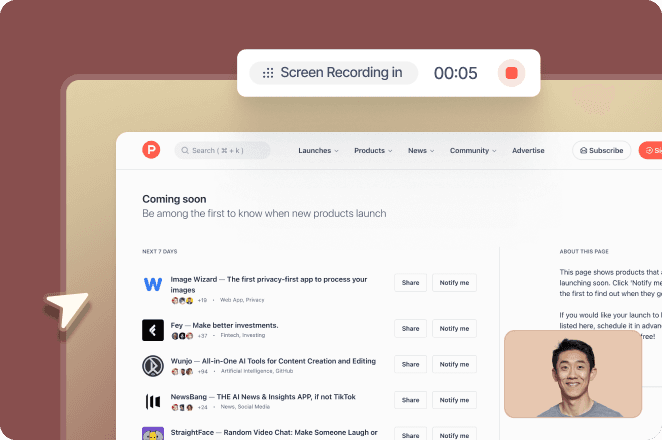
Record your screen using Trupeer's Chrome extension or upload an existing recording. The AI analyzes your narration, strips filler words, restructures sentences for clarity, and generates a polished script. It applies studio-quality voiceover from 100+ voice options, adds automated zoom effects highlighting click actions, and produces a professional video. Simultaneously, it creates formatted step-by-step documentation with annotated screenshots extracted from that same recording.
Key Features
AI script generation that removes filler words, restructures sentences, and fixes grammar
Studio-quality AI voiceover with 100+ voices across multiple languages and accents
Automated zoom effects that dynamically highlight click actions and key UI elements
AI avatars with hundreds of persona options via HeyGen integration
One-click translation into 65+ languages for voiceover and subtitles
Auto-generated step-by-step guides with annotated screenshots from recordings
Brand customization with logos, wallpapers, intros/outros, and color templates
Knowledge base hosting with custom domains and AI-powered video search
Analytics dashboard tracking views, watch time, and engagement metrics
Interactive elements including clickable hotspots and embedded CTAs
Trupeer is ISO 27001 and SOC2 certified, supports SAML SSO for enterprise teams, and integrates with Slack, Notion, Jira, and Confluence. Zuora reported cutting content creation time from 5 to 6 hours down to 3 to 4 minutes using Trupeer. Hedrick Gardner saved $125,000 on IT migration training by replacing external video production with Trupeer's AI pipeline.
Feature-by-Feature Comparison
Feature | Tutorialize (Defunct) | Trupeer |
|---|---|---|
Status | Permanently closed | Active, growing platform |
Content Type | In-app tooltip walkthroughs only | Professional videos + written documentation |
AI Capabilities | None | Script generation, voiceover, zoom effects, avatars, translation |
Video Production | None | Full AI-powered video production pipeline |
Documentation | None (tooltips only) | Auto-generated step-by-step guides with annotated screenshots |
AI Voiceover | None | 100+ voices, multiple languages and accents |
Translation | None | One-click translation in 65+ languages |
AI Avatars | None | Hundreds of personas via HeyGen integration |
Content Portability | Locked to in-app overlay (lost when service closed) | Exportable videos, shareable links, embeds, knowledge base |
Platform Support | Web applications only | Browser-based recording works on any platform |
Offline Access | None | Exported videos and documentation accessible offline |
Knowledge Base | None | Full knowledge base with custom domains and AI search |
Analytics | Basic completion rates | Views, watch time, engagement metrics, real-time dashboard |
Brand Customization | Basic tooltip styling | Logos, wallpapers, intros/outros, color templates, CTAs |
Integrations | None | Slack, Notion, Jira, Confluence, API access |
Security | No certifications | ISO 27001, SOC2, SAML SSO, SCIM |
Pricing | Was $9 to $49/month | Pro $49/mo, Scale $249/mo, Enterprise custom |
Vendor Stability | Company closed permanently | Active with enterprise customers (Zuora, Hedrick Gardner, Glean) |
In-Depth Analysis: Why Teams Migrate from Legacy Tools
The Ephemeral Content Problem
The fundamental flaw of tooltip walkthrough tools like Tutorialize was that they did not create content. They created experiences, temporary, sequential, in-app experiences that evaporated the moment they ended. A user who completed a Tutorialize walkthrough had no artifact to return to. No video to rewatch. No guide to bookmark. No documentation to search. If they forgot step 7 of a 12-step process two days later, their only option was to run the walkthrough again from the beginning.
Trupeer creates permanent content assets. Every recording produces a video that users can pause, rewind, and rewatch at any point. It simultaneously generates written documentation with annotated screenshots that users can search, bookmark, and reference at their own pace. The knowledge base hosts everything in a searchable library. Content exists independently of the application it documents, which means it works even when the application is down, changed, or being used by someone who does not have access yet.
This is not a subtle difference. It is the difference between training that evaporates and documentation that persists. Teams that migrated from Tutorialize consistently cite this as the primary reason: they needed content that lasts, not experiences that disappear.
The Maintenance Tax
Tooltip walkthroughs have a dirty secret: they require constant maintenance. Every UI change, every button rename, every workflow adjustment breaks the walkthroughs that reference those elements. A team with 50 active walkthroughs can spend 5 to 10 hours per week just keeping them functional after routine product updates. The CSS selectors that Tutorialize used to anchor tooltips to specific elements would break whenever a developer refactored the DOM structure, even if the visible UI did not change.
Trupeer's content maintenance is fundamentally different. When a UI changes, you re-record the affected screen, typically a 2 to 5 minute recording, and the AI regenerates the video segment and documentation. Unchanged sections remain intact. There is no fragile dependency on CSS selectors or DOM elements. The content is derived from a visual recording, not from brittle programmatic hooks into the application's front-end code. Hedrick Gardner's IT migration training benefited directly from this pattern: when the vendor shipped updates mid-rollout, the team re-recorded affected screens rather than debugging broken walkthroughs.
Multi-Format Content Production
Tutorialize produced one output format: in-app tooltip overlays. If you needed a video version for your YouTube channel, you could not create one. If you needed a PDF for offline reference, there was no option. If you needed a help center article, you wrote it separately from scratch. The content was locked into a single delivery mechanism with zero portability.
Trupeer produces multiple output formats from a single recording. A 5-minute screen capture generates a professional video with AI voiceover, a formatted step-by-step guide with annotated screenshots, a knowledge base article with AI-powered search, and shareable links with embedded analytics. One input, multiple outputs. Teams use this to turn any process into a shareable SOP, publish polished walkthroughs without a video team, or stand up a searchable help center from scratch. Teams that used to maintain separate workflows for video, documentation, and in-app guidance can consolidate everything into a single recording workflow.
AI vs. Manual Content Creation
Tutorialize had zero AI capabilities. Every walkthrough was manually created: click through each step, type the tooltip text, position the overlay, test the flow, and publish. For a 10-step walkthrough, this manual process took 20 to 45 minutes. Multiply that by 50 walkthroughs, add the ongoing maintenance, and a single content creator could spend their entire week on walkthrough management.
Trupeer's AI automates the production pipeline. Record your screen while roughly narrating what you are doing. The AI strips your filler words, restructures your sentences, generates a professional script, applies studio voiceover from 100+ voices, adds automated zoom effects on click actions, and produces both video and documentation. What took 45 minutes of manual walkthrough creation with Tutorialize takes 5 to 10 minutes of recording plus AI processing with Trupeer. Zuora's team demonstrated this at scale: content creation that took 5 to 6 hours dropped to 3 to 4 minutes.
Vendor Stability and Content Survival
When Tutorialize shut down, its customers lost everything. Every walkthrough, every piece of content, every hour of work invested in the platform disappeared. There were no export options, no migration tools, no way to preserve the work. This is the risk of building content on a platform without content portability.
Trupeer produces exportable content assets. Videos are downloadable MP4 files. Documentation is hosted and shareable. Even if a team decided to leave Trupeer, the videos and guides they created exist as standalone files. The knowledge base content is accessible through standard URLs. Content portability is not just a feature; it is insurance against vendor risk.
Beyond portability, Trupeer demonstrates vendor stability through its enterprise customer base. Zuora, Hedrick Gardner, Glean, and Fluid Networks are documented customers. ISO 27001 and SOC2 certifications require ongoing organizational investment in security and process maturity. SAML SSO and SCIM integrations indicate enterprise infrastructure. These are signals of a platform built for long-term operation, not a lightweight tool that might disappear.
Translation and Global Reach
Tutorialize had no translation or multi-language support whatsoever. Tooltip text was created in one language, and if you needed the walkthrough in Spanish, you created an entirely separate walkthrough manually in Spanish. For global teams, this meant creating and maintaining N copies of every walkthrough, where N is the number of supported languages.
Trupeer supports one-click translation into 65+ languages for both voiceover and subtitles. Record once in English and generate native-sounding versions in any supported language. The step-by-step documentation translates too. A single recording session produces content for every market. For teams that previously maintained separate walkthrough sets for each language, consolidating to one recording with automated translation eliminates an enormous maintenance burden.
Enterprise Readiness
Tutorialize had no enterprise security certifications, no SSO, no SCIM, no audit logs, and no admin controls beyond basic account management. For small teams and startups, this was acceptable. For any organization with IT governance requirements, procurement policies, or compliance obligations, Tutorialize could not pass a vendor security review.
Trupeer is ISO 27001 and SOC2 certified, supports SAML SSO and SCIM for enterprise identity management, and provides admin controls for user access and content permissions. These are not optional features for enterprise adoption. They are baseline requirements. Our enterprise readiness comparison covers these compliance details in full. Teams migrating from Tutorialize to Trupeer are not just upgrading their content capabilities; they are moving to a platform that their IT and security teams can actually approve.
Migration Guide: Moving from Legacy Tools to Trupeer
Step 1: Audit Your Existing Content
Before migrating, catalog every walkthrough or guide you had in Tutorialize or a similar tool. List the workflows covered, the target audience for each, and the languages they existed in. This inventory becomes your migration checklist. Prioritize by usage: start with the walkthroughs that were accessed most frequently.
Step 2: Record Priority Workflows First
Start with your top 10 most-accessed workflows. Open the Trupeer Chrome extension, record yourself walking through each workflow while narrating the steps. Do not worry about speaking perfectly; the AI will clean up your narration. A 5-minute workflow recording typically takes 5 to 7 minutes including setup. Your top 10 workflows will be recorded in about an hour.
Step 3: Let AI Handle Production
After recording, Trupeer's AI generates the polished video and written documentation for each workflow. Review the output, make any needed adjustments, and publish. What would have taken days of manual walkthrough creation in Tutorialize takes a few hours with Trupeer. Translation into additional languages is one click per recording.
Step 4: Set Up Your Knowledge Base
Organize your published content in Trupeer's knowledge base with custom domains and categories. Enable AI-powered search so users can find specific workflows by describing what they need. Connect the knowledge base to your support tools via Slack, Notion, or Jira integration. Your users now have a self-serve resource hub instead of ephemeral in-app tooltips.
Step 5: Establish an Update Workflow
When your product UI changes, identify the affected recordings, re-record just those screens, and let the AI regenerate the content. Set up a quarterly review cycle to audit your content library for accuracy. The ongoing maintenance cost is a fraction of what tooltip walkthrough maintenance required because there are no CSS selectors to break and no DOM dependencies to manage.
Detailed Pricing Breakdown
Tutorialize Pricing (Historical, No Longer Available)
Starter: Was approximately $9 per month. Basic walkthrough creation with limited active walkthroughs.
Professional: Was approximately $29 per month. More active walkthroughs, basic analytics.
Business: Was approximately $49 per month. Highest walkthrough limits, priority support.
All plans are discontinued. The service is permanently closed. No refunds, exports, or migration assistance was provided at shutdown.
Trupeer Pricing Tiers
Free (10-day trial): 10 AI video minutes, 5 AI guides, 3 video exports. 8-minute recording limit. Full AI features including voiceover, translation, avatars, and sharing. Genuine trial of the complete platform.
Pro ($49/month, $40/month annual): 20 AI video minutes, unlimited guides and exports. 12-minute recording limit. Watermark removal, intros/outros, captions, and screenshot tools. Best for individual creators and small teams getting started.
Scale ($249/month, $199/month annual): 100 AI video minutes, 3 editor seats. 15-minute recording limit. Team workspace, custom voices, custom backgrounds, branded pages, CTAs, and logos. Built for content teams producing at volume.
Enterprise (custom): Unlimited seats, custom brand templates, analytics dashboard, SAML SSO, SCIM, priority support, and dedicated onboarding. For organizations with advanced security and compliance requirements.
Cost Comparison: Migration ROI
A team that was paying Tutorialize $49 per month for Business and maintaining 50 walkthroughs spent approximately 8 to 12 hours per week on walkthrough creation and maintenance. At an average loaded labor cost of $75 per hour, that is $2,400 to $3,600 per month in labor plus the $49 subscription, totaling $2,449 to $3,649 per month for tooltip walkthroughs only, with no video, no documentation, and no translation.
Trupeer Pro at $49 per month or Scale at $199 per month produces both video and documentation from each recording, with AI handling the production. Recording 50 workflows takes approximately 6 to 8 hours total, and ongoing maintenance drops to 2 to 3 hours per week as updates require only re-recording affected screens. Monthly total: $199 to $249 plus $600 to $900 in labor. That is a 60% to 85% reduction in total cost while producing dramatically more capable content. Our pricing breakdown walks through the numbers in detail.
Pros and Cons
Tutorialize Pros (Historical)
Low entry price starting at $9 per month
Simple setup with a JavaScript snippet and Chrome extension
In-app guidance appeared exactly where users needed help
Quick to create individual walkthroughs for simple workflows
Tutorialize Cons
Permanently shut down with no migration path for customers
Zero AI capabilities of any kind
No video production, voiceover, or multimedia output
No documentation generation
No translation or multi-language support
Content was ephemeral: existed only as in-app overlays with no exportable assets
Walkthroughs broke constantly with every UI change
Web applications only, no desktop or mobile support
No integrations with any third-party tools
No enterprise security certifications or SSO
Content locked to the platform with no portability
Trupeer Pros
Full AI production pipeline: script, voiceover, zoom effects, and documentation from one recording
65+ language translation with one click for global teams
Dual output: professional video AND written step-by-step guides from the same recording
Content exists as portable, permanent assets (videos, documents, knowledge base pages)
Knowledge base hosting with custom domains and AI-powered search
Documented ROI with customers like Zuora (5 hours to 4 minutes) and Hedrick Gardner ($125K saved)
Enterprise-ready with ISO 27001, SOC2, and SAML SSO
Active platform with stable vendor signals (enterprise customers, security certifications)
AI avatars for personalized video at scale without being on camera
Trupeer Cons
AI video minutes are credit-based and reset monthly with no rollover
No in-app tooltip overlay capability (different content delivery model)
Higher starting price than legacy walkthrough tools
Free trial is 10 days, not an ongoing free tier
Recording limits per video (8 to 15 minutes depending on plan)
Requires users to visit knowledge base or watch video rather than receiving in-app guidance
The Verdict
This is not a traditional tool comparison because Tutorialize no longer exists. But the comparison serves an important purpose for teams in two situations. First, teams that used Tutorialize and are now searching for a replacement. Second, teams evaluating legacy walkthrough tools that share Tutorialize's approach and wondering whether that category still makes sense.
The answer to the second question is clear: ephemeral, tooltip-only walkthrough tools are a dying category. They produce no permanent content assets. They break with every UI change. They cannot generate video, documentation, or multi-language content. They cannot pass enterprise security reviews. And they carry vendor risk that is unacceptable for business-critical content.
Trupeer represents the modern approach. One recording produces multiple permanent content assets: professional video with AI voiceover, written documentation with annotated screenshots, and knowledge base articles with AI-powered search. The content is portable, translatable, and maintained through simple re-recording rather than fragile DOM dependencies. Enterprise security certifications and integrations with Slack, Notion, Jira, and Confluence make it viable for organizations of any size.
Bottom line: Tutorialize is gone, and the category of ephemeral tooltip walkthrough tools is fading with it. Trupeer represents the next generation: AI-powered content production that creates permanent, professional videos and documentation from simple screen recordings. For teams migrating from Tutorialize or evaluating similar legacy tools, Trupeer is not just a replacement; it is a fundamental upgrade in capability, reliability, and content quality.