UserGuiding vs Trupeer: Feature Comparison (2026)
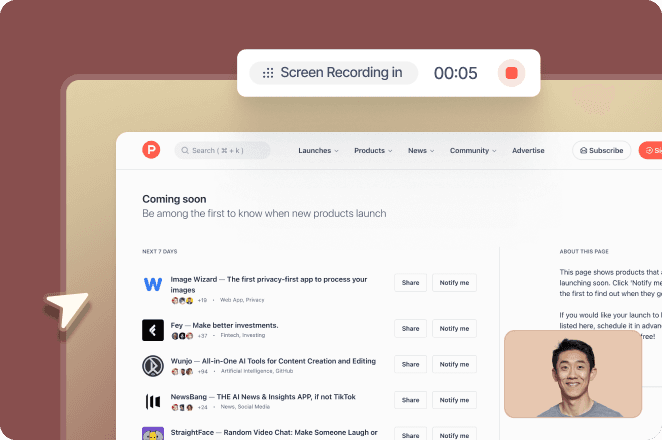
Product adoption tools were supposed to solve the activation problem. Build a tooltip, create a checklist, point users toward value. And for years, that worked well enough. But Pendo's 2025 State of Product Adoption report revealed a stubborn truth: 72% of in-app guides go unfinished by users, and the average interactive walkthrough loses half its audience by step four. The issue isn't the guide itself. It's that static tooltips and linear tours can't match the way people actually learn software in 2026, which is increasingly through video, visual documentation, and self-serve content in their native language.
Wyzowl's 2025 research found that 91% of businesses use video as a marketing and training tool, and 87% of users say video tutorials are the most helpful form of product documentation.
The verdict: Trupeer wins this comparison. UserGuiding is a capable no-code product adoption platform for building in-app tours, checklists, and tooltips. But it operates within the browser tab. Trupeer takes a fundamentally different approach, transforming screen recordings into polished videos with AI-generated scripts, studio voiceovers, automated zoom effects, and simultaneously producing step-by-step documentation. If your primary need is embedding guided tooltips inside your web app, UserGuiding handles that. If you need professional onboarding videos, multilingual help content, training guides, and scalable documentation, Trupeer delivers capabilities that UserGuiding simply cannot.
This comparison exists because both tools aim to help users understand and adopt software. UserGuiding does it through in-app overlays. Trupeer does it through professional content production. The overlap in intent is significant, but the approach, output quality, and scalability differ enormously. If you're surveying other options beyond UserGuiding, understanding these architectural differences will sharpen your shortlist.
Why In-App Guides Alone No Longer Suffice
In-app product tours had a strong decade. Tools like UserGuiding, WalkMe, and Appcues built thriving businesses on the premise that showing users what to do inside the app itself would drive adoption. And it did, for simple workflows. Click here, then here, then here. Welcome aboard.
But modern SaaS products aren't simple. They have complex workflows spanning multiple screens, conditional logic, integrations with external tools, and user segments that need completely different onboarding paths. A linear tooltip tour can't handle that complexity. It also can't help users before they're in the app, after they've left the app, or when they're trying to learn in a language the guide wasn't written in.
UserGuiding represents the in-app guide era. It's no-code, it's fast to set up, and it covers the basics well. But it doesn't produce videos, doesn't generate voiceover, doesn't auto-create written documentation, and its translation requires manual effort or third-party tools. Trupeer represents the next evolution: content that lives everywhere your users are, produced at scale by AI, in any language, in both video and written format. The same dynamic plays out in our WalkMe vs Trupeer feature comparison, where the gap between overlay-based and content-based approaches is even wider.
What Is UserGuiding?
UserGuiding is a no-code product adoption platform designed primarily for SaaS companies that want to guide users through their web applications without writing code. It layers interactive elements on top of your existing product UI: tours, tooltips, checklists, resource centers, modals, banners, and surveys.
The core workflow is straightforward: install a JavaScript snippet on your site, open UserGuiding's Chrome extension builder, point and click to select UI elements, attach guide steps to those elements, set trigger conditions, and publish. Users then see these overlays when they match the targeting criteria. It's a visual builder that non-technical team members can use to create onboarding flows without involving engineering.
Key Features
Interactive product tours with step-by-step walkthroughs attached to UI elements
Onboarding checklists that track user progress through setup tasks
Tooltips and hotspots for contextual in-app guidance
Resource center widget embedding help articles, videos, and links inside the app
NPS and CSAT surveys for collecting in-app user feedback
Knowledge base for hosting help articles externally
Changelog for announcing product updates to users
User segmentation based on attributes, behavior, and custom properties
GPT-4 powered AI chatbot assistant within the resource center
Analytics showing guide completion rates and user engagement metrics
UserGuiding has earned a solid reputation among SaaS teams for its ease of setup and breadth of adoption features. The integration list is strong: Google Analytics, Segment, Mixpanel, Salesforce, HubSpot, Slack, Intercom, and Zapier cover most analytics and CRM stacks.
But the platform has meaningful limitations. Product tours are linear with no branching logic, so you can't create conditional paths based on user actions. Analytics refresh only every 10 minutes, making real-time iteration difficult. Guide counts are capped per plan, with the Basic tier limiting you to just 20 guides. Pricing has increased significantly over time, and the Basic plan includes a UserGuiding watermark. There's no auto-translation capability; multilingual guides must be created manually. And the entire platform is web-only, so mobile apps, desktop software, and offline training are out of scope.
What Is Trupeer?
Trupeer is an AI-powered content production platform that transforms rough screen recordings into professional videos and step-by-step written documentation. While UserGuiding adds interactive layers inside your app, Trupeer produces standalone content assets that work everywhere: help centers, knowledge bases, LMS platforms, sales decks, onboarding emails, and embedded in any application.
The workflow starts with a recording. Use Trupeer's Chrome extension or upload an existing recording. The AI analyzes your narration, strips filler words, fixes grammar, and generates a polished script. It then applies a studio-quality voiceover from 100+ voice options, adds automated zoom effects that highlight your click actions, and exports a professional video. Simultaneously, it creates formatted step-by-step documentation with annotated screenshots extracted from that same recording.
Key Features
AI script generation that removes filler words, restructures sentences, and fixes grammar
Studio-quality AI voiceover with 100+ voices across multiple languages and accents
Automated zoom effects that dynamically highlight click actions and key UI elements
AI avatars with hundreds of persona options via HeyGen integration
One-click translation into 65+ languages for voiceover and subtitles
Auto-generated step-by-step guides with annotated screenshots from recordings
Brand customization with logos, wallpapers, intros/outros, and color templates
Knowledge base hosting with custom domains and AI-powered video search
Analytics dashboard tracking views, watch time, and engagement metrics
Interactive elements including clickable hotspots and embedded CTAs
Trupeer is ISO 27001 and SOC2 certified, supports SAML SSO for enterprise teams, and integrates with Slack, Notion, Jira, and Confluence (the enterprise readiness comparison covers these details). Zuora reported cutting content creation time from 5 to 6 hours down to 3 to 4 minutes using Trupeer. Hedrick Gardner saved $125,000 on IT migration training by replacing external video production with Trupeer's AI pipeline.
Feature-by-Feature Comparison
Feature | UserGuiding | Trupeer |
|---|---|---|
In-App Tours | Yes, no-code point-and-click builder (linear only) | No native in-app overlay; produces standalone video and doc content |
Onboarding Checklists | Yes, embedded in-app checklists | No; generates onboarding videos and written guides instead |
Video Production | No native video creation | Full AI pipeline: script, voiceover, zoom effects, branded output |
Auto Documentation | Knowledge base (manual article creation) | AI-generated step-by-step guides with annotated screenshots |
AI Script Generation | No | Yes, auto-removes filler, restructures for clarity |
AI Voiceover | No | Yes, 100+ voices, multiple languages and accents |
Auto Zoom Effects | No | Yes, AI highlights click actions with dynamic zooms |
AI Avatars | No | Yes, hundreds of personas via HeyGen integration |
Translation | No auto-translation; manual recreation required | One-click translation in 65+ languages (voiceover + subtitles) |
AI Capabilities | GPT-4 chatbot in resource center | Full AI pipeline: script, voice, zoom, avatar, translation |
Surveys | NPS and CSAT surveys built in | No native survey tools |
User Segmentation | Yes, attribute and behavior-based targeting | Analytics-based engagement tracking |
Knowledge Base | Yes, with AI chatbot search | Yes, with custom domains and AI-powered video search |
Brand Customization | Theme colors and CSS overrides | Logos, wallpapers, intros/outros, color templates, custom voices |
Analytics | Guide completion rates, 10-min refresh delay | Views, watch time, engagement metrics, real-time dashboard |
Integrations | GA, Segment, Mixpanel, Salesforce, HubSpot, Slack, Intercom, Zapier | Slack, Notion, Jira, Confluence, API access |
Security | Standard SaaS security | ISO 27001, SOC2, SAML SSO, SCIM |
Platform Support | Web-only | Chrome extension recording; content playable anywhere |
Free Plan | Yes (knowledge base and AI assistant only) | 10-day free trial with full features |
In-Depth Feature Analysis
1. Content Creation and Production Quality
UserGuiding creates in-app overlays. Tours are sequences of tooltip-like popups anchored to specific UI elements. The content within each step is text-based with optional images or embedded videos from external sources. You're essentially writing copy for each tooltip, choosing which element to highlight, and defining the next step. The output lives exclusively inside your web application and disappears when users close the guide.
The production quality ceiling is constrained by the format itself. Tooltips are small. Text space is limited. You can embed an externally hosted video in a resource center, but UserGuiding doesn't produce that video. If you want a polished onboarding video to embed, you need a separate tool to create it.
Trupeer's production pipeline is fundamentally different. Record your screen, even roughly with verbal stumbles and pauses, and the AI produces broadcast-quality output. The script generator doesn't just strip filler words. It restructures sentences for narrative flow, adjusts technical terminology for your target audience, and generates clean copy that sounds like it was written by a professional scriptwriter. The 100+ AI voices sound natural across languages, avoiding the robotic quality that plagued earlier text-to-speech tools.
The automated zoom effects are particularly valuable for software walkthroughs. When you click a button during recording, the AI detects that action and adds a smooth zoom transition that draws viewer attention to exactly the right spot. A video editor would spend 20 to 30 minutes adding these zooms manually. Trupeer handles it automatically. The result is a video that looks like it was produced by a professional team, not recorded by someone talking into their laptop microphone.
2. Scalability and Multi-Language Support
UserGuiding's scaling challenge is architectural. Every guide is manually built, step by step, element by element. A 10-step onboarding tour might take 30 to 45 minutes to create if you're familiar with the builder. Now multiply that by the number of user segments, languages, and product areas you need to cover. A SaaS product with 5 user roles, 3 languages, and 8 feature areas needs 120 separate guides. At 30 minutes each, that's 60 hours of guide building, and then you need to maintain them every time the UI changes.
UserGuiding has no auto-translation. If your product serves users in English, Spanish, and German, you build each guide three times. Some teams use browser-level translation extensions as a workaround, but the results are unreliable for the short, contextual text used in tooltips.
Trupeer's scaling model is built around AI leverage. Record once, and the AI produces the video and documentation. Click translate, and it generates native-sounding voiceover and subtitles in 65+ languages. That same 5-role, 3-language, 8-feature-area scenario requires 40 recordings (5 roles times 8 areas) and a few translation clicks. The AI handles voiceover, documentation, and localization. What takes 60+ hours with UserGuiding takes roughly 10 to 15 hours with Trupeer, and the output includes professional videos and written guides that UserGuiding simply cannot produce.
3. Integration Strategy and Ecosystem
UserGuiding's integration list is impressive for a product adoption tool. Google Analytics and Segment pass guide interaction data into your analytics stack. Salesforce and HubSpot sync user attributes for segmentation. Mixpanel enables funnel analysis that includes guide completion events. Slack sends notifications when users complete key steps. Intercom connects guide data to support conversations. Zapier opens the door to hundreds of additional connections.
These integrations are analytics-and-CRM focused. They help you measure whether guides work and target the right users. What they don't do is distribute content to other platforms, because UserGuiding's content lives inside your app and nowhere else.
Trupeer integrates with Slack, Notion, Jira, and Confluence, plus offers API access for custom workflows. The integration count is smaller, but the content flows differently. A product manager records a feature walkthrough and pushes the AI-generated documentation directly into Confluence. A support engineer records a troubleshooting guide and attaches both the polished video and the written steps to a Jira ticket. The content Trupeer produces is portable: it works in your help center, LMS, sales deck, knowledge base, or embedded in any web page.
UserGuiding's integrations measure adoption inside your app. Trupeer's integrations distribute professional content across your entire tool ecosystem. Both are valuable, but they serve different strategic purposes. We've seen a similar pattern in the Usetiful vs Trupeer breakdown, where integration philosophy is another clear dividing line.
4. Pricing and Total Cost of Ownership
UserGuiding's pricing has become a sore point for many customers. The Basic plan starts around $69 to $89 per month for 2,500 monthly active users, but it limits you to 20 guides and includes a UserGuiding watermark on all overlays. The Professional plan at $299 per month supports 20,000 MAU with unlimited guides and removes the watermark. The Corporate plan ranges from $499 to $999 per month for advanced customization, dedicated support, and higher MAU limits.
The MAU-based pricing model creates unpredictable costs. As your product grows, your UserGuiding bill grows with it, even if you're not creating more guides. Several G2 reviews specifically cite unexpected price increases and feeling locked in after building extensive guide libraries. And if you need professional video content to embed in those guides, you're paying for a separate video production tool on top.
Trupeer's Pro plan is $49 per month ($40 annual), and the Scale plan is $249 per month ($199 annual). The pricing is predictable and not tied to your user count. A SaaS company with 50,000 MAU pays the same Trupeer rate as one with 500 MAU. The content Trupeer produces, professional videos and documentation, would otherwise require a video editor ($20 to $55 per user per month), voiceover services ($30 to $100 per month), a documentation tool ($10 to $15 per user per month), and translation services ($500+ per language per asset).
For a team that needs both in-app adoption guides and professional content, the realistic comparison is UserGuiding Professional at $299 per month plus a video tool plus voiceover plus documentation tool plus translation, totaling $500 to $900+ per month. Trupeer Scale at $199 per month bundles the entire content production pipeline. It doesn't replace UserGuiding's in-app overlays, but it eliminates 3 to 4 other tools from the stack.
5. AI Capabilities Deep Dive
UserGuiding's AI is a GPT-4-powered chatbot embedded in the resource center widget. Users can ask questions and get AI-generated answers based on your knowledge base articles. It's a useful self-serve support feature, but it's the only AI capability in the platform. Guide creation is fully manual. Content writing is fully manual. There's no AI-assisted tour building, no auto-generation of tooltip copy, and no intelligent step suggestions.
Trupeer's AI is the core product. Every major feature runs on AI processing. The script generator analyzes your spoken narration and produces professional copy. The voiceover engine synthesizes natural-sounding speech in 100+ voices across languages. The zoom effect engine tracks cursor movements and click patterns during recording to generate dynamic transitions. The avatar system creates realistic presenter videos without requiring anyone to be on camera. And the translation engine handles both audio and text localization in 65+ languages with a single click.
The gap here isn't incremental. UserGuiding has one AI feature (chatbot). Trupeer has AI powering every stage of content production. For teams evaluating AI readiness, Trupeer represents a fundamentally AI-native platform where UserGuiding has added a single AI feature to a manual workflow. Our pricing comparison shows how that capability gap translates into total cost of ownership.
Best Use Cases
SaaS Onboarding at Scale
Priya manages product adoption for a B2B SaaS platform with 15,000 monthly active users across 4 industries. Each industry needs a different onboarding path because they use different features. With UserGuiding, she builds 4 separate tour sequences, each with 8 to 12 steps. The Basic plan's 20-guide limit means she needs the Professional plan at $299 per month. The tours work well for first-time users, but completion rates hover around 45%. Users who skip the tour have no fallback content.
With Trupeer, Priya records one comprehensive walkthrough per industry vertical. The AI produces a polished onboarding video and a written step-by-step guide for each. She embeds the videos in UserGuiding's resource center and publishes the documentation to the help center. Users who skip the in-app tour can watch the video at their own pace or read the guide. Users in non-English markets get translated versions with native-sounding voiceover. The combination of in-app guidance plus professional video plus written documentation covers every learning style and preference.
Customer Support Deflection
David runs support for a mid-market SaaS company handling 300 tickets per week. About 35% are repetitive how-to questions. With UserGuiding, he adds tooltips and a resource center with help articles. The AI chatbot answers some questions automatically. This deflects maybe 10 to 15% of tickets, mostly the simplest ones.
With Trupeer, David's team records walkthroughs for the top 25 repetitive question categories. The AI generates both video tutorials and written help guides from each recording, and teams can organize everything in a searchable help hub without bolting on a separate platform. Customers find visual answers before filing tickets. Over a quarter, ticket deflection reaches 25 to 30% because video tutorials answer complex questions that text tooltips cannot. Each recording session takes 5 to 10 minutes and produces two content assets.
Multi-Language Product Training
Tomoko leads enablement for a global SaaS company with offices in Chicago, London, Munich, and Tokyo. Every product update needs training content in English, German, and Japanese. With UserGuiding, she builds each tour three times, once per language, manually translating tooltip text. A single product update affecting 5 features requires 15 separate guide updates. It takes her team a full week to keep content current across languages.
With Trupeer, Tomoko records 5 feature walkthroughs in English. One click translates each into German and Japanese with natural-sounding voiceover and subtitles. The written documentation translates simultaneously. Five recordings become 15 language-specific video and documentation packages in under an hour. When the next product update ships, she re-records only the changed screens and lets the platform regenerate the written guides automatically. The time savings compound every release cycle.
Sales Demo Personalization
Carlos manages a sales team selling enterprise software. Prospects expect personalized demos showing their specific use case. UserGuiding can't help here since it's an in-app adoption tool, not a demo creation platform. Carlos's reps record Zoom calls and send unedited recordings, or they spend hours creating slide-based demos that can't show the actual product in action.
With Trupeer, Carlos's reps record a base product walkthrough. The AI adds professional voiceover, branded intros, and custom backgrounds. AI avatars let reps personalize outreach at scale without sitting in front of a camera for every prospect. A rep produces 5 personalized demo videos in the time it used to take to create one. Analytics show which prospects watched the video, how far they got, and which features held their attention longest.
Detailed Pricing Breakdown
UserGuiding Pricing Tiers
Free Plan: Limited to knowledge base and AI assistant features only. No product tours, checklists, tooltips, or surveys. Essentially a trial of the knowledge base module.
Basic ($69-89/month): Up to 2,500 MAU. Limited to 20 guides. Includes UserGuiding watermark on all elements. Basic segmentation. Standard analytics with 10-minute refresh delay. One active theme only.
Professional ($299/month): Up to 20,000 MAU. Unlimited guides. No watermark. Advanced segmentation and targeting. Priority support. Custom CSS for branding. This is the tier most growing SaaS teams need.
Corporate ($499-999/month): Higher MAU limits. Dedicated success manager. Advanced customization. SLA guarantees. Built for enterprise SaaS products with large user bases.
Trupeer Pricing Tiers
Free (10-day trial): 10 AI video minutes, 5 AI guides, 3 video exports. 8-minute recording limit. Includes AI voiceover, translation, avatars, and sharing. Full platform access for evaluation.
Pro ($49/month, $40/month annual): 20 AI video minutes, unlimited guides and exports. 12-minute recording limit. Watermark removal, intros/outros, captions, and screenshot tools. Best for individual creators and small teams.
Scale ($249/month, $199/month annual): 100 AI video minutes, 3 editor seats. 15-minute recording limit. Team workspace, custom voices, custom backgrounds, branded pages, CTAs, and logos. Built for content teams producing at volume.
Enterprise (custom): Unlimited seats, custom brand templates, analytics dashboard, SAML SSO, SCIM, priority support, and dedicated onboarding. For organizations with advanced security and compliance requirements.
TCO Comparison: SaaS Company with 10,000 MAU Needing Onboarding Content
With UserGuiding Professional at $299 per month, you get unlimited in-app guides for 20,000 MAU. But you still need video content for users who skip tours, external documentation for your help center, and translations for international users. Add a video tool ($40 to $80 per month), documentation platform ($50 to $100 per month), and translation services ($500+ per language). Conservative total: $500 to $900+ per month, plus 40 to 60 hours monthly of manual content creation labor.
With Trupeer Scale at $199 per month (annual), you get AI video production, auto-documentation, and 65+ language translation bundled together. 100 AI video minutes covers extensive content libraries. The content embeds anywhere, including inside UserGuiding's resource center if you use both tools. Total: $199 per month with roughly 8 to 12 hours of human time (recording and reviewing) instead of 40 to 60 hours. If you pair Trupeer with UserGuiding's Basic plan at $69 per month for in-app overlays, the combined cost of $268 per month is still less than UserGuiding Professional alone, and you get vastly more content.
Pros and Cons
UserGuiding Pros
No-code builder that non-technical team members can use to create in-app guides
Comprehensive adoption toolkit: tours, checklists, tooltips, resource center, surveys, changelog
Strong analytics and CRM integrations: GA, Segment, Mixpanel, Salesforce, HubSpot
GPT-4 chatbot in resource center provides AI-powered self-serve support
User segmentation enables targeted guide delivery based on attributes and behavior
Knowledge base with external hosting for help center articles
NPS and CSAT surveys built into the platform for in-app feedback collection
UserGuiding Cons
Product tours are linear only with no branching or conditional logic
Analytics refresh every 10 minutes, preventing real-time iteration
Basic plan limited to 20 guides with UserGuiding watermark on all elements
No auto-translation; multilingual guides must be recreated manually per language
No video production, voiceover, or automated content creation capabilities
MAU-based pricing creates unpredictable costs as your product grows
Web-only platform with no support for mobile apps or desktop software
Price increases have been cited repeatedly in user reviews
Feature caps on lower tiers push growing teams to expensive upgrades quickly
Trupeer Pros
Full AI production pipeline: script, voiceover, zoom effects, and documentation from one recording
65+ language translation with one click for global teams
Dual output: professional video AND written step-by-step guides from the same recording
Documented ROI with customers like Zuora (5 hours to 4 minutes) and Hedrick Gardner ($125K saved)
Enterprise-ready with ISO 27001, SOC2, and SAML SSO
AI avatars for personalized video at scale without being on camera
Content works everywhere: help centers, LMS, email, embedded in any app or page
Trupeer Cons
No native in-app overlay or tooltip functionality
AI video minutes are credit-based and reset monthly with no rollover
Chrome extension is the primary recording method (also supports Safari, Arc, Edge)
Free trial is 10 days, not an ongoing free tier
Recording limits per video (8 to 15 minutes depending on plan)
No built-in NPS/CSAT survey tools
The Verdict
UserGuiding and Trupeer address the same fundamental challenge, helping users understand and adopt software, through very different approaches. UserGuiding builds interactive overlays inside your web application. Trupeer produces professional content from screen recordings. Neither is a direct replacement for the other in every scenario, but for the broader goal of user education and enablement, Trupeer delivers significantly more value.
UserGuiding works best as a narrow in-app layer for first-time user orientation. If your only need is pointing new users to the right buttons during their first session in a web app, it handles that. But the moment you need video tutorials, multilingual content, written documentation, training materials, sales demos, or any content that lives outside the app itself, UserGuiding has nothing to offer.
Trupeer produces the content that actually drives long-term adoption: professional videos that users watch and remember, documentation they can reference later, and translations that serve your global user base without multiplying your workload. The AI pipeline eliminates the manual labor that makes content production expensive and slow. And the output works everywhere, not just inside one browser tab.
Bottom line: UserGuiding is an in-app tooltip builder for web applications. Trupeer is an AI content production platform that transforms recordings into professional videos and documentation at scale. For teams serious about user adoption, education, and enablement in 2026, the content Trupeer produces reaches more users, in more languages, across more channels than any tooltip tour ever could.