Usetiful vs Trupeer: Feature Comparison (2026)
Product-led growth runs on one assumption: users can figure out your product without hand-holding. The data says otherwise. Pendo's 2025 report found that only 26% of software features are adopted within the first 60 days of deployment. The other 74% sit unused, not because they're bad features, but because users never discovered them or didn't understand how to use them. The question isn't whether you need adoption tools. It's whether you need in-app nudges or comprehensive content that teaches, demonstrates, and documents your product across every channel.
According to TSIA, companies with structured digital adoption programs see 49% faster time-to-value for new customers compared to those relying on passive documentation alone.
The verdict: Trupeer wins this comparison. Usetiful (now part of Fullstory after the November 2025 acquisition) is a solid no-code digital adoption platform that overlays product tours, tooltips, and checklists inside your web app. It's effective for in-context guidance. But it doesn't produce content. It doesn't create videos. It doesn't generate written documentation. It doesn't translate content across languages. It guides users inside your app, and only inside your app. Trupeer transforms screen recordings into professional videos with AI scripts, studio voiceovers, automated zoom effects, and simultaneously produces step-by-step documentation that works everywhere: in your help center, knowledge base, onboarding emails, and training programs. Different tools for different problems, but Trupeer solves the bigger one.
This comparison exists because both tools aim to improve user adoption and reduce support burden. Usetiful does it with in-app overlays. Trupeer does it with professional content. Teams often evaluate both when building their adoption strategy, and understanding where each tool fits, and where it doesn't, prevents expensive mistakes. If you're also weighing other Usetiful alternatives, start here for the feature-level picture.
The Bigger Picture: In-App Guidance vs. Content-Led Adoption
Digital adoption platforms (DAPs) like Usetiful, WalkMe, and Pendo built their category on a simple idea: put help where users are. Instead of sending people to a help center, show them a tooltip right next to the button they need to click. Instead of a training video they'll never watch, create an interactive product tour that walks them through the workflow in real time. It's contextual, it's immediate, and it works for simple feature discovery.
But in-app guidance has structural limitations. It only works inside your web app. It can't teach users about workflows that span multiple tools. It can't produce content for your help center, sales collateral, training programs, or knowledge base. It can't create polished videos that marketing uses for product launches. It can't generate documentation that support agents reference when answering tickets. And it can't translate content into 65 languages for global deployment. The tooltip is useful, but it's a narrow solution to a broad problem. We've seen the same limitations surface in our UserGuiding vs Trupeer and HelpHero vs Trupeer comparisons, where in-app overlays consistently fall short on content production.
Trupeer approaches adoption from the content side. Record a walkthrough, and the AI produces professional video tutorials and written step-by-step guides that work across every channel: embedded in your app, hosted in your help center, shared in Slack, emailed during onboarding, or used in formal training programs. The content exists independently of the product UI, which means it serves users wherever they are, not just when they're logged into your app.
What Is Usetiful?
Usetiful is a no-code digital adoption platform that creates in-app guidance experiences for web applications. Acquired by Fullstory in November 2025, it overlays interactive elements like product tours, tooltips, checklists, and banners on top of your existing web app without requiring engineering changes. Think of it as a transparent layer on top of your product that nudges users toward the right actions at the right time.
The core workflow: install a JavaScript snippet on your site, use the visual builder to create tours and tooltips by pointing and clicking on UI elements, set triggers and audience segments, and publish. Users see contextual guidance as they navigate your product. A new user might see a welcome tour highlighting key features. A user who hasn't tried a specific workflow might see a tooltip suggesting they explore it. A user hitting a friction point might see a checklist of steps to complete.
Key Features
Product tours with multi-step guided walkthroughs inside the live application
Onboarding checklists that track user progress through setup workflows
Smart tips (tooltips) that appear contextually when users hover or interact with elements
Announcement banners for in-app notifications about features, updates, or promotions
Knowledge base widget embedded inside the application with AI-powered search
NPS surveys for in-app feedback collection
User segmentation based on attributes, behavior, and custom events
No-code visual builder for creating experiences without developer involvement
Analytics tracking tour completion, step drop-off, and checklist progress
Integrations with Google Analytics, HubSpot, Intercom, Segment, Mixpanel, Salesforce, Slack, and Zapier
What sets Usetiful apart from heavier DAPs like WalkMe or Pendo is its simplicity and pricing. At around €29/month for the Plus plan, it's dramatically cheaper than enterprise DAPs that start at $10,000+/year. The no-code builder is genuinely easy to use, and the Fullstory acquisition adds the promise of session replay integration for deeper behavioral insights.
But Usetiful has clear limitations. Analytics are basic compared to dedicated product analytics tools. The integration library is limited, with no native connections to many common support and LMS platforms. There's no mobile SDK, so native mobile apps can't use Usetiful's guidance features. Custom styling requires CSS knowledge, which undermines the "no-code" promise for non-technical users. Lower-tier plans include a Usetiful watermark. And the only AI capability is AI-powered search within the knowledge base widget. There's no AI content generation, no automated video production, no voiceover, no translation, and no documentation creation.
What Is Trupeer?
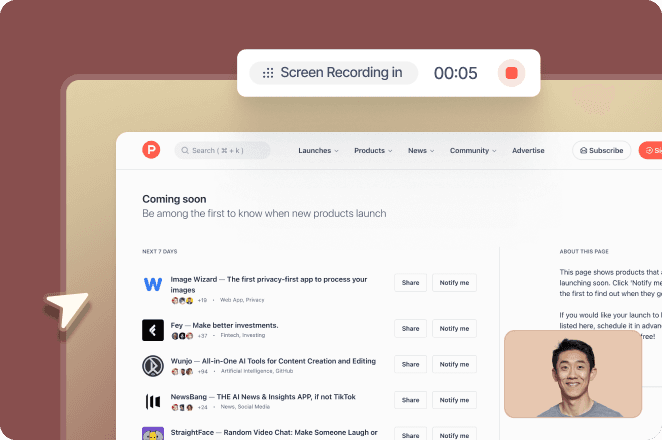
Trupeer is an AI-powered content production platform that transforms rough screen recordings into professional videos and step-by-step written documentation. Where Usetiful guides users inside your app with tooltips and tours, Trupeer produces the professional content that lives outside your app: in help centers, knowledge bases, training programs, sales collateral, and onboarding emails.
Here's how it works: record your screen using Trupeer's Chrome extension or upload an existing recording. The AI analyzes your narration, strips filler words, fixes grammar, and generates a clean script. It then applies a studio-quality voiceover from 100+ voice options, adds automated zoom effects that highlight your click actions, and produces a polished video. Simultaneously, it creates formatted step-by-step documentation with annotated screenshots extracted from that same recording.
Key Features
AI script generation that removes filler words, restructures sentences, and fixes grammar
Studio-quality AI voiceover with 100+ voices across multiple languages and accents
Automated zoom effects that dynamically highlight click actions and key UI elements
AI avatars with hundreds of persona options via HeyGen integration
One-click translation into 65+ languages for voiceover and subtitles
Auto-generated step-by-step guides with annotated screenshots from recordings
Brand customization with logos, wallpapers, intros/outros, and color templates
Knowledge base hosting with custom domains and AI-powered video search
Analytics dashboard tracking views, watch time, and engagement metrics
Interactive elements including clickable hotspots and embedded CTAs
Trupeer is ISO 27001 and SOC2 certified, supports SAML SSO for enterprise teams, and integrates with Slack, Notion, Jira, and Confluence. Zuora reported cutting content creation time from 5 to 6 hours down to 3 to 4 minutes using Trupeer. Hedrick Gardner saved $125,000 on IT migration training by replacing external video production with Trupeer's AI pipeline.
Feature-by-Feature Comparison
Feature | Usetiful | Trupeer |
|---|---|---|
Primary Function | In-app guidance overlays (tours, tooltips, checklists) | AI content production (video + documentation from recordings) |
Product Tours | Yes, multi-step guided walkthroughs inside live app | No in-app overlay tours; produces tutorial videos and guides instead |
Onboarding Checklists | Yes, with progress tracking | No native checklists; produces onboarding video content and docs |
Video Production | No | Yes, AI-polished videos with script, voiceover, and zoom effects |
AI Script Generation | No | Yes, auto-removes filler, restructures for clarity |
AI Voiceover | No | 100+ voices, 65+ languages, multiple accents and styles |
Auto Zoom Effects | No | Yes, AI highlights click actions with dynamic zooms |
AI Avatars | No | Yes, hundreds of personas via HeyGen integration |
Documentation Generation | No (hosts manual KB articles, doesn't generate them) | Yes, auto-generated step-by-step guides with annotated screenshots |
Translation | Multi-language support for tour text (manual translation) | One-click translation in 65+ languages (voiceover + subtitles + docs) |
Knowledge Base | Embeddable widget with AI-powered search | Full hosted knowledge base with custom domains and AI search |
NPS Surveys | Yes, in-app NPS collection | No native NPS surveys |
User Segmentation | Yes, behavioral and attribute-based targeting | Not applicable (content production, not in-app targeting) |
Smart Tips/Tooltips | Yes, contextual hover-triggered guidance | No in-app tooltips |
Analytics | Tour completion, step drop-off, checklist progress | Views, watch time, engagement metrics, real-time dashboard |
Integrations | GA, HubSpot, Intercom, Segment, Mixpanel, Salesforce, Slack, Zapier | Slack, Notion, Jira, Confluence, API access |
Security | GDPR compliant, data processing agreements | ISO 27001, SOC2, SAML SSO, SCIM |
Free Plan | Yes, 500 MAU limit, Usetiful watermark | 10-day free trial with full features |
Mobile Support | Web only (no mobile SDK) | Browser-based (Chrome extension primary) |
In-Depth Feature Analysis
1. Adoption Strategy: Contextual vs. Content-Based
Usetiful's approach to adoption is contextual. When a user is inside your app looking at a specific screen, Usetiful can show them exactly what to do next. A tooltip pointing to the export button says "Click here to export your report." A product tour walks them through a multi-step workflow in real time. A checklist shows them what setup steps remain. This is powerful for in-the-moment guidance, and research from Nielsen Norman Group consistently shows that contextual help outperforms external documentation for simple tasks.
But contextual guidance has a fundamental limitation: it only works when users are in your app, looking at the right screen, at the right time. It can't help users before they log in. It can't help users who prefer watching a video tutorial before attempting a workflow. It can't help support agents who need to reference documentation while answering a ticket. It can't help sales teams who need demo content to show prospects what the product does. The tooltip is great for the moment, but the moment is narrow.
Trupeer's approach is content-based. Record a workflow once, and the AI produces a professional video and written documentation that serve users across every touchpoint. The video lives in your help center, onboarding email sequence, sales deck, training LMS, and YouTube channel. The documentation lives in your knowledge base, Confluence, support tool, and printed QRGs. Content-based adoption isn't as contextual as a tooltip, but it's infinitely more versatile. It reaches users wherever they are, in whatever format they prefer, in whatever language they speak.
2. AI Capabilities Comparison
Usetiful's only AI feature is AI-powered search within the knowledge base widget. Users can ask natural language questions and the search returns relevant articles from your manually-created knowledge base. It's a useful enhancement to self-serve support, and it reduces the friction of users needing to know exact search terms to find answers. But it's the extent of Usetiful's AI. There's no content generation, no automated production, no intelligence applied to the creation side.
This means every product tour, tooltip, checklist, and knowledge base article in Usetiful is created manually. Your team writes the tour steps, crafts the tooltip copy, designs the checklist items, and authors the KB articles. For a 10-tour onboarding flow with 50 tooltips and 30 KB articles, that's dozens of hours of manual content creation, plus ongoing maintenance as your product evolves.
Trupeer's AI handles the creation. Record a walkthrough, and the AI generates the script, applies professional voiceover, adds zoom effects, and produces both video and written documentation. The creation cost per piece of content drops from hours to minutes. When your product UI changes, you re-record the affected screens and the AI regenerates everything. For teams producing content at any volume, the difference between manual creation and AI-powered production isn't incremental. It's structural. Zuora's 5-hours-to-4-minutes compression ratio illustrates the magnitude of that gap. Our pricing comparison quantifies how that production speed translates into total cost savings.
3. Knowledge Base and Self-Serve Support
Both tools offer knowledge base capabilities, but the implementations are completely different. Usetiful provides an embeddable widget that sits inside your app. Users click a help icon and a panel slides out with searchable articles. The AI-powered search improves discoverability. It's convenient for users who are actively working in your product and need a quick answer without leaving the page. The widget feels native and non-disruptive.
But Usetiful's knowledge base is manually populated. Your team writes every article, takes every screenshot, and maintains every update. There's no content generation. The widget is a delivery mechanism, not a creation tool. And the content only lives inside the widget. It's not a standalone help center with its own URL, SEO presence, or shareable links that work outside your app.
Trupeer's knowledge base is both a creation engine and a delivery platform. The AI generates articles with annotated screenshots directly from your recordings. The hosted knowledge base has custom domains, AI-powered video search, and full branding. It works as a standalone help center that users can access from anywhere: a Google search result, a support email link, a QR code on printed material. And every article is paired with a professional video tutorial covering the same content. For organizations that need a help center, not just an in-app widget, Trupeer's approach is more comprehensive.
4. Pricing and Total Cost of Ownership
Usetiful is one of the most affordable DAPs on the market. The free plan supports 500 monthly active users (MAU) with a Usetiful watermark. Plus costs approximately €29/month and removes the watermark. Premium at approximately €99/month adds more MAU capacity, advanced segmentation, and priority support. Compared to WalkMe ($10,000+/year) or Pendo ($7,000+/year), Usetiful is a fraction of the cost for basic digital adoption features.
But Usetiful's cost doesn't include content production. You still need someone to write knowledge base articles ($50 to $100+/hour for technical writers), produce training videos (video editor + voiceover = $200 to $500+/video), create sales demo content, and translate everything for international users ($500+ per language per content batch). The DAP itself is cheap, but the content it depends on is expensive to create and maintain manually.
Trupeer's Pro plan at $49/month ($40/month annual) handles content production. Scale at $249/month ($199/month annual) adds team features and volume. A team using Usetiful Premium (€99/month) plus manual content production costs might spend €99 for the DAP plus $1,000 to $3,000 per month on technical writing, video production, and translation. Total: $1,100 to $3,100+/month. A team using Trupeer Scale ($199/month annual) gets AI-powered content production including video, documentation, voiceover, and translation in one platform. The TCO comparison isn't Usetiful versus Trupeer; it's Usetiful plus your content production stack versus Trupeer alone.
For teams that specifically need in-app tours and tooltips, Usetiful's €29 to €99/month is hard to beat, and Trupeer doesn't replace that capability. But for teams whose primary challenge is producing and maintaining the content that drives adoption, Trupeer's all-in-one production platform is dramatically more cost-effective than a DAP plus separate content tools.
5. Integration and Distribution
Usetiful integrates with Google Analytics, HubSpot, Intercom, Segment, Mixpanel, Salesforce, Slack, and Zapier. These connections primarily serve analytics (sending tour data to analytics tools) and user identification (pulling user attributes for segmentation). The Zapier integration opens up custom workflows, but Usetiful's core integration value is data flow for targeting and measurement, not content distribution.
Trupeer integrates with Slack, Notion, Jira, and Confluence, plus offers API access for custom integrations. These connections serve content distribution: pushing polished videos and documentation into the tools where teams consume content. A product team pushes onboarding guides into Confluence. A support engineer attaches tutorial videos to Jira tickets. A customer success manager shares help content in Slack channels. Trupeer's integrations are fewer in number but focused on getting finished content to where it's needed.
The Fullstory acquisition adds an interesting dimension to Usetiful's integration story. Fullstory's session replay and product analytics data could theoretically inform Usetiful's segmentation and targeting, creating a feedback loop where behavioral insights drive more personalized in-app guidance. This integration is still developing in early 2026, but it's a direction that could meaningfully differentiate Usetiful's targeting capabilities. Trupeer doesn't play in this behavioral analytics space at all, which reinforces that these tools solve fundamentally different problems. Our enterprise readiness breakdown covers how their security and compliance postures compare.
6. Scalability and Global Content
Usetiful supports multi-language tours and tooltips, but the translation is manual. You write your tour content in English, then manually create translated versions for each additional language. For a product serving users in 10 countries, every tour, tooltip, and checklist needs 10 versions, each manually created and maintained. When your product updates and tours need refreshing, the work multiplies by 10. The knowledge base articles similarly need manual translation.
Trupeer's one-click translation covers 65+ languages and applies to voiceover, subtitles, and written documentation simultaneously. Record once, translate once, and every piece of content exists in every target language. When you re-record to reflect product updates, the translations regenerate automatically. For companies with international user bases, this means a single content team serves global audiences without hiring translators or maintaining parallel content libraries for each locale.
Scale also applies to production volume. Usetiful's manual content creation model means each new tour, tooltip, and article takes human time to build. At 100+ pieces of content, the maintenance burden alone becomes a full-time job. Trupeer's AI pipeline means production speed doesn't degrade with volume. The 50th video takes the same 10 to 15 minutes of human time as the first. For growing products with expanding feature sets and user bases, Trupeer's production scalability prevents the content debt that accumulates when every piece requires manual creation.
Best Use Cases
SaaS Onboarding for New Users
Nina is a product manager at a SaaS startup with 2,000 new signups per month. She needs to guide users through initial setup and first-value moments. With Usetiful, she creates a welcome product tour that walks new users through account setup, a checklist tracking their progress through key milestones, and tooltips highlighting features they haven't discovered yet. The in-app guidance catches users at the exact moment they need help. For in-product guidance, this is effective.
With Trupeer, Nina records walkthrough videos for each onboarding step. The AI produces polished tutorial videos for the onboarding email sequence and written step-by-step guides for the help center. New users get a welcome email with a professional video showing them exactly how to get started, plus written documentation they can reference later. The help center handles users who prefer searching for answers independently. The content works whether users are inside the app or not.
Customer Support Deflection
Ravi leads support at a B2B platform handling 300+ tickets per week. About 45% are repetitive how-to questions. With Usetiful, he deploys tooltips and tours on the screens where users most commonly get stuck. The knowledge base widget surfaces relevant articles without users leaving the app. This deflects some tickets from users who are already logged in and would have contacted support from within the product.
With Trupeer, Ravi's team records solutions for the top 50 support scenarios. Each recording produces a video tutorial and a written help article automatically. The knowledge base hosts everything with AI-powered search. When users Google their question, the help center appears in search results. When agents respond to tickets, they paste links to professional video walkthroughs. The deflection happens across channels, including search, email, in-app links, and social, not just inside the product. Translation means international users get help in their language.
Enterprise Software Rollouts
Akiko is deploying a new HR platform to 3,000 employees across 8 countries. With Usetiful, she creates product tours that guide employees through each module when they first log in. Checklists track who's completed setup. Tooltips explain new terminology. For in-app guidance, this works, but employees in Tokyo see English tour text unless Akiko's team manually translates every tour, tooltip, and checklist into Japanese. Multiply that by 8 languages and the translation burden is enormous.
With Trupeer, Akiko records training walkthroughs for each module. The AI produces professional training videos with voiceover and written SOPs from each recording. One-click translation generates all 8 language versions simultaneously. The knowledge base hosts region-specific content. Hedrick Gardner used this approach for their IT migration and saved $125,000. For enterprise rollouts with multi-language requirements, Trupeer's translation and content production capabilities handle the scale that manual DAP content creation can't match.
Product Marketing Feature Launches
Leo is a PMM launching a major feature. He needs a product demo video for the website, help articles, and social content. With Usetiful, he can create an in-app announcement banner and a product tour for existing users. But he can't produce the website demo video, the help article, or the social clip. Those require separate tools and separate production workflows.
With Trupeer, Leo records the feature walkthrough once. The AI produces a polished product video with branded templates for the website, written help documentation for the knowledge base, and content that can be clipped for social. One recording, multiple assets, and teams can publish polished walkthroughs without ever opening a video editor. The analytics dashboard tracks which content drives the most engagement across channels.
Sales Team Enablement
Diana manages a 15-person sales team. Reps need personalized demo content for different industries and use cases. Usetiful can't help here at all. It creates in-app guidance for existing users, not demo content for prospects who haven't signed up yet. Diana's team would need entirely separate tools for sales content production.
With Trupeer, Diana's reps record base demos for each product line. The AI adds professional voiceover, branded intros, and AI avatars. Each personalized demo looks agency-produced. Written documentation supplements video for technical evaluators. Five personalized demos ship in the time one used to take to produce manually. Sales enablement is entirely outside Usetiful's scope but squarely within Trupeer's.
Compliance Training and Documentation
Marco oversees compliance training at a healthcare company. Every employee needs documented proof of training completion on updated HIPAA procedures. With Usetiful, he can create in-app tours that walk employees through new compliance workflows, but there's no video output for training programs, no printable documentation for SOPs, and no way to integrate with the LMS for completion tracking. The tours work in the moment but don't produce the training artifacts compliance auditors expect.
With Trupeer, Marco records compliance walkthroughs. The AI produces professional training videos with clear narration and written step-by-step SOPs from each recording. The documentation serves as the audit-ready artifact. Translation handles multi-site requirements automatically. The content exists independently, printable, shareable, embeddable in the LMS. For regulated industries where documentation is mandatory, Trupeer produces the artifacts that Usetiful's ephemeral in-app tours can't replace.
Detailed Pricing Breakdown
Usetiful Pricing Tiers
Free Plan: Up to 500 monthly active users. Includes product tours, checklists, and smart tips. Usetiful watermark displayed. Basic analytics. Limited to a single tour and checklist. Suitable for very small products testing the DAP approach.
Plus (~€29/month): Increased MAU limit. Watermark removed. Multiple tours and checklists. Knowledge base widget. NPS surveys. Custom styling options. Best for small to mid-stage SaaS products with moderate user bases.
Premium (~€99/month): Higher MAU capacity. Advanced segmentation and targeting. Priority support. Custom events integration. Full analytics. Built for growing products with sophisticated adoption needs.
Trupeer Pricing Tiers
Free (10-day trial): 10 AI video minutes, 5 AI guides, 3 video exports. 8-minute recording limit. Includes AI voiceover, translation, avatars, and sharing. Full platform access, content private by default.
Pro ($49/month, $40/month annual): 20 AI video minutes, unlimited guides and exports. 12-minute recording limit. Watermark removal, intros/outros, captions, and screenshot tools. Best for individual creators and small teams.
Scale ($249/month, $199/month annual): 100 AI video minutes, 3 editor seats. 15-minute recording limit. Team workspace, custom voices, custom backgrounds, branded pages, CTAs, and logos. Built for content teams producing at volume.
Enterprise (custom): Unlimited seats, custom brand templates, analytics dashboard, SAML SSO, SCIM, priority support, and dedicated onboarding. ISO 27001 and SOC2 certified.
TCO Comparison: Product With 10,000 Users Needing Adoption Content
With Usetiful Premium at €99/month, you get in-app tours, tooltips, checklists, and a knowledge base widget. In-app guidance is covered. But you still need training videos (video production tools at $50 to $200/month + voiceover at $30 to $100/month), help center articles (technical writer at $50 to $100/hour), and translations ($500+ per language per content batch). Conservative total: €99 for Usetiful plus $800 to $2,500+ per month for content production. Annual: roughly $11,000 to $31,000+.
With Trupeer Scale at $199/month (annual), you get AI-powered production of videos, documentation, voiceover, and translation. No separate video editor, voiceover tool, technical writer, or translation vendor. Annual: $2,388. If you also need in-app tours (Trupeer doesn't replace this), add Usetiful Plus at €29/month for a combined $2,736/year. That's still 75% to 91% less than the Usetiful Premium + content production stack. The math is clear: the content production costs dwarf the DAP license cost, and Trupeer compresses those production costs dramatically.
Pros and Cons
Usetiful Pros
Affordable entry point: free plan for 500 MAU, Plus at ~€29/month
No-code visual builder makes tour creation accessible to non-technical teams
Interactive product tours with multi-step guided walkthroughs inside live app
Onboarding checklists with progress tracking drive setup completion
Smart tips provide contextual, in-the-moment help without leaving the page
NPS surveys collect in-app user sentiment data
Fullstory acquisition promises deeper behavioral analytics integration
Knowledge base widget with AI-powered search for in-app self-serve support
Usetiful Cons
No video production, AI voiceover, or automated content generation
No documentation generation: all KB articles must be written manually
Analytics are basic compared to dedicated product analytics platforms
Limited integration library compared to enterprise DAPs
No mobile SDK for native mobile app guidance
Custom styling requires CSS knowledge, undermining no-code promise
Usetiful watermark on free and lower tiers
Multi-language tours require manual translation of all content
Only works inside web apps; can't produce content for external channels
No translation automation for any content format
Trupeer Pros
Full AI production pipeline: script, voiceover, zoom effects, and documentation from one recording
65+ language translation with one click covering voiceover, subtitles, and written guides
Dual output: professional video AND written step-by-step guides from the same recording
Documented ROI with customers like Zuora (5 hours to 4 minutes) and Hedrick Gardner ($125K saved)
Enterprise-ready with ISO 27001, SOC2, and SAML SSO
AI avatars for personalized video at scale without being on camera
Knowledge base hosting with custom domains and AI-powered search
Content works across all channels: help center, email, LMS, support, sales
Trupeer Cons
AI video minutes are credit-based and reset monthly with no rollover
No in-app guidance overlays: can't create tooltips, tours, or checklists inside products
No NPS surveys or in-app feedback collection
No user segmentation or behavioral targeting
Free trial is 10 days, not an ongoing free tier
Recording limits per video (8 to 15 minutes depending on plan)
The Verdict
Usetiful and Trupeer solve different problems in the adoption stack. Usetiful provides in-app guidance: tooltips, tours, and checklists that help users navigate your product in real time. Trupeer provides content production: professional videos and documentation that help users learn, reference, and master your product across every channel. Calling them direct competitors overstates the overlap.
If your primary adoption challenge is users getting stuck inside your web app and you need contextual, in-the-moment guidance, Usetiful is purpose-built for that at an accessible price point. Its product tours, smart tips, and onboarding checklists are effective for in-app feature discovery and workflow completion. The Fullstory acquisition adds behavioral analytics potential. For early-stage SaaS products with modest user bases, Usetiful at €29 to €99/month is a practical, affordable DAP.
But most teams' adoption challenges extend far beyond in-app tooltips. They need help center articles, training videos, onboarding content, sales demos, multi-language support, and documentation that lives everywhere their users are. Usetiful can't produce any of that content. It can host manually-created KB articles in a widget, but it can't generate them. It can show tours inside your app, but it can't produce the professional video tutorial a prospect watches before signing up.
Trupeer handles the content production side comprehensively. One recording becomes a professional video and a written guide, translated into 65+ languages, hosted in a knowledge base, and distributed through Slack, Notion, Jira, and Confluence. The AI eliminates the production labor that makes content creation the bottleneck in most adoption strategies. For teams serious about content-led adoption at scale, Trupeer's production capabilities are what actually fill the content gap that tooltips alone can't close.
Bottom line: Usetiful is an effective, affordable in-app guidance tool for contextual nudges. Trupeer is an AI content production platform that generates the professional videos and documentation that drive adoption across every channel. Many teams will benefit from both, using Usetiful for in-app guidance and Trupeer for content production, at a combined cost that's still lower than a Usetiful-plus-manual-content-creation approach. But if you're choosing one tool to move the adoption needle, the content production platform addresses the broader, harder problem.