Best VidStep Alternatives in 2026
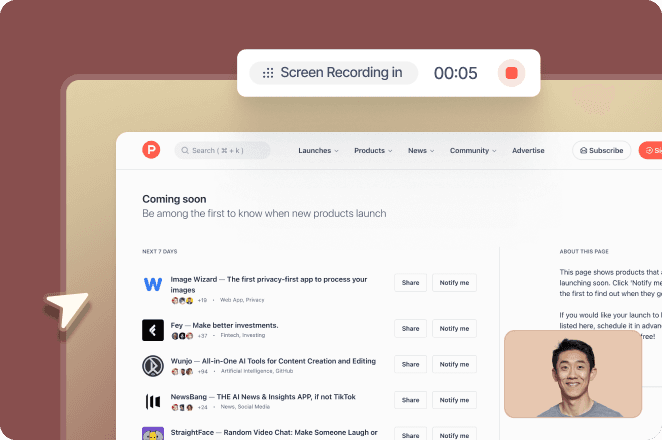
VidStep carved out a niche as a mobile-first tool for creating step-by-step video instructions. The concept was practical: record short clips for each step of a process, add text annotations, and share the resulting guide. It found traction with field teams, manufacturing trainers, and operations managers who needed to document physical processes and standard operating procedures without expensive video production.
But VidStep's limitations become obvious at scale. The mobile-first approach means limited editing capabilities. There is no AI automation for scripts, voiceover, or translations. The video quality caps at what a phone camera captures. And when teams need to produce content at volume, covering dozens or hundreds of procedures across departments and languages, VidStep's manual, one-clip-at-a-time workflow becomes a bottleneck that slows everything down.
The alternatives below range from AI-powered content production platforms that automate the entire pipeline to screen recording tools and training management systems. Each addresses a different aspect of the video instruction problem. We evaluated them on production automation, content quality, scalability, multi-language support, and enterprise readiness.
Quick Comparison Table
Tool | Best For | AI Features | Starting Price | Content Output |
|---|---|---|---|---|
Trupeer | AI-powered video + docs from recordings | Script, voiceover, zoom, avatars, translation | $49/mo (Pro) | Videos, docs, knowledge base |
Trainual | SOPs and training playbooks | AI content drafting | $249/mo | Training manuals, SOPs, processes |
Loom | Quick async video messages | AI summaries, chapters | $15/mo | Screen recordings, transcripts |
ScreenPal | Screen recording + editing | Basic AI captions | $3/mo | Screen recordings, edited videos |
Synthesia | AI avatar training videos | AI avatars, script-to-video | $22/mo | AI avatar videos |
Guidde | AI-generated how-to videos | AI voiceover, step detection | $16/mo | How-to videos, guides |
1. Trupeer
Trupeer is an AI-powered content production platform that turns screen recordings into polished, professional videos and structured step-by-step documentation. Where VidStep requires you to manually record individual clips for each step and stitch them together, Trupeer lets you do a single continuous recording and the AI handles everything else: script cleanup, professional voiceover, automated zoom effects, and simultaneous documentation generation.
The production quality gap between VidStep and Trupeer is substantial. Record your screen or workflow using Trupeer's Chrome extension while roughly narrating the steps. The AI strips filler words from your narration, restructures sentences for clarity, and generates a professional script. It applies studio-quality voiceover from over 100 voice options across multiple accents, adds automated zoom effects that highlight click actions and key UI elements, and outputs a polished video that looks like it came from a professional production team. At the same time, it generates formatted written documentation with annotated screenshots pulled from the recording.
For teams that used VidStep to create multi-language instructions, Trupeer's one-click translation into 65+ languages eliminates the need to re-record content for each language. Record once in English and generate native-sounding versions in Spanish, German, Japanese, or any of the supported languages. The AI avatars feature, powered by HeyGen integration, adds a human presence to videos without requiring anyone to be on camera, which is particularly useful for training content that benefits from a presenter format.
Trupeer is ISO 27001 and SOC2 certified, supports SAML SSO and SCIM, and integrates with Slack, Notion, Jira, and Confluence. Zuora demonstrated the scale potential by cutting content creation from 5 hours to 4 minutes per piece. Hedrick Gardner saved $125,000 replacing external video production with Trupeer's AI pipeline.
Pricing: Pro at $49 per month ($40 monthly with annual billing) includes 20 AI video minutes, unlimited guides, and watermark removal. Scale at $249 per month ($199 annual) adds 100 AI video minutes, 3 editor seats, custom voices, and branded pages. Enterprise pricing is custom.
Why it is the top VidStep alternative: Trupeer automates the entire content production pipeline that VidStep left manual. One recording produces both video and documentation, AI handles the polish, and 65+ language translation means one recording session serves every market. It is VidStep's vision executed with AI-powered production quality.
2. Trainual
Trainual is a training and knowledge management platform designed for building SOPs, onboarding playbooks, and process documentation. Where VidStep focused on video-first instructions, Trainual takes a text-first approach with embedded video support. Teams create structured training content organized by department, role, and process, then assign it to employees with tracking and completion verification.
The platform includes an AI content drafting tool that helps generate initial SOP text from prompts, though the output requires significant editing for accuracy. Trainual supports embedding videos from external sources, screen recordings, and its own basic recording tool. The organizational structure, with subjects, topics, and steps, creates a logical hierarchy for training content. Employee progress tracking shows who has completed which training modules.
Trainual's weakness relative to VidStep is its limited video production capability. It is fundamentally a text-based training platform with video embedding, not a video production tool. There is no AI voiceover, no automated editing, no multi-language documentation translation, and no content portability outside the Trainual platform.
Pricing: Starts at $249 per month for up to 25 employees. Pricing scales with team size. No free tier.
Best for: Teams that need structured training and SOP management with employee progress tracking, and whose primary content format is text-based processes with supplementary video rather than video-first instructions.
3. Loom
Loom is the dominant async video messaging platform, used by millions for recording quick screen-and-camera videos. It is not a direct competitor to VidStep's step-by-step format, but many teams that used VidStep for software tutorials find Loom covers their basic recording needs with a much larger ecosystem and more reliable long-term viability.
Loom's AI features include automatic summaries, chapter generation based on content, transcript editing, and filler word removal. The recording experience is polished: click to record, capture your screen with optional camera overlay, stop, and share a link immediately. The viewer experience includes variable playback speed, comments with timestamps, and emoji reactions. Loom integrates with most productivity tools including Slack, Notion, and major CRMs.
The gap between Loom and VidStep is in structured content. Loom produces individual video recordings, not step-by-step guides with structured annotations. There is no automatic documentation generation, no automated zoom effects on click actions, and no AI video production pipeline. Loom records what you do; it does not transform your recording into a polished tutorial.
Pricing: Free with 25 video limit and 5-minute max. Business at $15 per user per month. Enterprise pricing is custom.
Best for: Teams that need quick, informal video communication and are comfortable with raw screen recordings rather than polished, structured tutorials.
4. ScreenPal
ScreenPal, formerly Screencast-O-Matic, is a screen recording and video editing tool that covers the capture-and-edit workflow VidStep users need. It records your screen, webcam, or both, and includes a built-in video editor for trimming, annotations, transitions, and basic effects. The pricing is remarkably low for the feature set.
The editor supports overlaying text, shapes, arrows, and callouts on recordings, which partially replicates VidStep's step annotation capability. ScreenPal includes a screenshot tool, basic auto-captions, and cloud hosting for sharing. The desktop application works on Windows and Mac with consistent recording quality. For teams producing training videos on a tight budget, ScreenPal offers solid capture and editing at a fraction of the cost of professional video tools.
What ScreenPal lacks is AI-powered production automation. There is no AI script generation, no AI voiceover, no automated zoom effects, and no simultaneous documentation generation. Every edit is manual. Every annotation is placed by hand. At scale, this manual workflow becomes the same bottleneck that limits VidStep.
Pricing: Free with watermark. Deluxe at $3 per month. Premier at $6 per month. Max at $10 per month. All prices per user with annual billing.
Best for: Budget-conscious teams that need solid screen recording and basic video editing capabilities without AI automation, and are comfortable with manual editing workflows.
5. Synthesia
Synthesia creates AI avatar videos from text scripts. Instead of recording your screen or yourself, you write a script and select an AI avatar to present it. The avatar speaks your script with natural lip movement and gestures, producing a talking-head video without any camera, studio, or on-screen talent required. For training videos where a presenter format improves engagement, Synthesia removes the production barrier entirely.
The platform supports 140+ languages and accents, 230+ AI avatars including custom avatars trained on your own likeness, and script-to-video generation that can produce a finished video in minutes. Synthesia includes a slide-based editor for combining avatar segments with screen recordings, images, and text overlays. It is particularly strong for compliance training, company announcements, and standardized onboarding content where consistency matters more than spontaneity.
Synthesia does not capture screen recordings or generate step-by-step documentation. It is a script-to-video tool, not a recording-to-content tool. For software tutorials that need to show actual UI interactions, you would need to combine Synthesia's avatar output with separately captured screen recordings, adding complexity to the production workflow.
Pricing: Starter at $22 per month with 10 minutes of video per month. Creator at $67 per month with 30 minutes. Enterprise pricing is custom with unlimited minutes.
Best for: Teams that need presenter-style training videos at scale without on-camera talent, and whose content is primarily script-driven rather than screen-recording-driven.
6. Guidde
Guidde is an AI-powered tool for creating how-to video guides from browser-based workflows. It captures your screen actions, automatically detects steps, generates descriptions, and applies AI voiceover to produce a short tutorial video. The concept is similar to VidStep's step-by-step approach but executed with AI automation rather than manual clip-by-clip recording.
The browser extension records your workflow and identifies individual steps based on clicks, page navigations, and form inputs. Guidde generates text descriptions for each step and applies AI voiceover from a selection of voice options. The output is a short how-to video that can be shared via link or embedded. The platform also generates written step-by-step guides alongside the video content.
Guidde is narrower in scope than Trupeer, with fewer voice options, limited language support compared to Trupeer's 65+ languages, and less sophisticated video production features like zoom effects and avatar integration. The platform is focused specifically on short how-to content for software workflows rather than broader content production.
Pricing: Free tier with limited videos. Individual at $16 per month. Team plans start at $40 per month. Enterprise pricing is custom.
Best for: Small teams that need quick AI-generated how-to videos for software workflows and want automation without the full production capabilities of a platform like Trupeer.
How to Choose the Right VidStep Alternative
Start by identifying what VidStep was actually solving for your team, because the alternatives diverge significantly in their approach.
If you need AI-automated content production that turns recordings into professional videos and documentation with voiceover, zoom effects, and 65+ language translation, choose Trupeer. It automates the entire pipeline VidStep left manual and produces both video and written content from a single recording.
If you need structured training management with SOP organization, employee assignment, and completion tracking, Trainual provides the organizational layer, though at a higher price point and with limited video production capabilities.
If you need quick, informal video communication rather than structured tutorials, Loom is the most widely adopted option with the strongest integrations and collaboration features.
If budget is the primary constraint and you are comfortable with manual editing, ScreenPal delivers solid recording and editing at the lowest price point on this list.
If you need AI avatar presenter videos from text scripts, Synthesia produces professional talking-head content without cameras or studios.
If you need lightweight AI how-to videos from browser workflows, Guidde offers automated step detection and voiceover for short tutorial content.
Migration Tips: Moving from VidStep
Catalog your existing content. List every VidStep guide you have, the process it documents, and who uses it. Export any video files from VidStep while you still can. Even raw clips are useful as reference material when re-recording on a new platform.
Start with high-traffic procedures. Identify the 10 to 15 guides that get the most views or cover the most critical processes. Recreate those first on your new platform to ensure continuity for the users who rely on them most.
Upgrade the format during migration. If you are moving to a platform like Trupeer, do not just replicate VidStep's step-by-step clips. Record a continuous walkthrough and let the AI produce a polished video with professional voiceover plus written documentation. You will end up with better content that took less time to create.
Set up a distribution system. VidStep guides were often shared via direct links. Your new platform should have a centralized knowledge base or content hub where users can search for and discover guides on their own. This is more scalable than sharing individual links.
Frequently Asked Questions
What does VidStep do that these alternatives do not?
VidStep's mobile-first, clip-by-clip recording format is unique for documenting physical processes with phone cameras. Most alternatives focus on screen recording for software workflows. If you need to document physical procedures, consider combining Trupeer's AI production with mobile screen recording, or use ScreenPal's mobile app for basic capture.
Which VidStep alternative is best for non-software training?
For physical process documentation like manufacturing SOPs or facility procedures, Trainual provides the best organizational structure for non-software training content. Trupeer's video production pipeline works with any uploaded recording, including mobile captures, and adds AI voiceover and translation on top.
Can I import VidStep content into these alternatives?
There is no direct import path from VidStep to any of these platforms. Export your VidStep video files as MP4s if possible. Trupeer can process uploaded video files through its AI pipeline, so you could upload existing VidStep exports and have the AI generate polished videos and documentation from them.
Which alternative offers the best AI automation?
Trupeer has the most comprehensive AI pipeline: script generation, filler word removal, 100+ voice AI voiceover, automated zoom effects, avatar integration, and 65+ language translation. Synthesia leads in AI avatar generation specifically. Guidde offers lighter AI automation for short how-to content.
What is the most affordable VidStep alternative?
ScreenPal starts at $3 per month for basic recording and editing. Guidde and Loom have free tiers for limited use. Trupeer offers a 10-day free trial with full AI features before the $49 per month Pro plan.
Bottom Line
VidStep addressed a real need for step-by-step video instructions, but its manual workflow and limited AI capabilities make it difficult to scale. Trupeer leads this list because it automates the production pipeline VidStep left manual, transforming single recordings into professional videos with AI voiceover and automated zoom effects while simultaneously generating written documentation, all translatable into 65+ languages. For teams outgrowing VidStep's manual approach, Trupeer delivers more capable content in a fraction of the time with enterprise-grade security to match.