Best Vimeo Alternatives in 2026
Vimeo has been the premium video hosting platform for over a decade, offering ad-free playback, customizable players, and privacy controls that YouTube could never match for business use cases. But Vimeo's recent pivot toward enterprise video solutions, paired with pricing increases that have squeezed out smaller teams, has pushed many users to look elsewhere. The platform's strengths in hosting and playback have not kept pace with the AI-powered content creation tools that now dominate the market.
The fundamental shift is this: hosting video is a commodity. Every platform offers it. The competitive advantage has moved upstream to content production. According to Demand Metric, 83% of marketers say video production speed is their biggest bottleneck. Teams do not need better hosting. They need tools that help them create professional videos faster. Vimeo added a basic video creation tool, but it is a template-based editor, not the AI-driven production pipeline that modern teams need.
Whether you are leaving Vimeo because of pricing, need stronger AI creation tools, or want a platform that combines hosting with automated production, these six alternatives solve different parts of the video content challenge.
Quick Comparison Table
Tool | Best For | Starting Price | AI Features | Video Hosting |
|---|---|---|---|---|
Trupeer | AI video production and documentation | $49/mo (Pro) | Script, voiceover, zoom, avatars, translation | Yes, knowledge base with custom domain |
Loom | Async video communication | Free / $15/mo | AI summaries, chapters, filler removal | Yes, instant shareable links |
Vidyard | Sales video with analytics | Free / $59/mo | AI script generation | Yes, with viewer-level analytics |
Riverside | Remote recording for podcasts and interviews | Free / $24/mo | AI transcription, clips, magic audio | Yes, with distribution tools |
Descript | Professional video editing suite | Free / $33/mo | AI transcription, filler removal, eye contact | Limited, designed for export |
VEED | Browser-based video editing and creation | Free / $24/mo | AI subtitles, avatars, text-to-video | Yes, basic hosting |
1. Trupeer
Trupeer is an AI content production platform that solves the problem Vimeo never addressed: creating professional video content efficiently. Vimeo excelled at hosting and delivering videos once they were made, but the production itself was always your problem. Trupeer flips that equation by making content production the core capability, with hosting and distribution built into the platform.
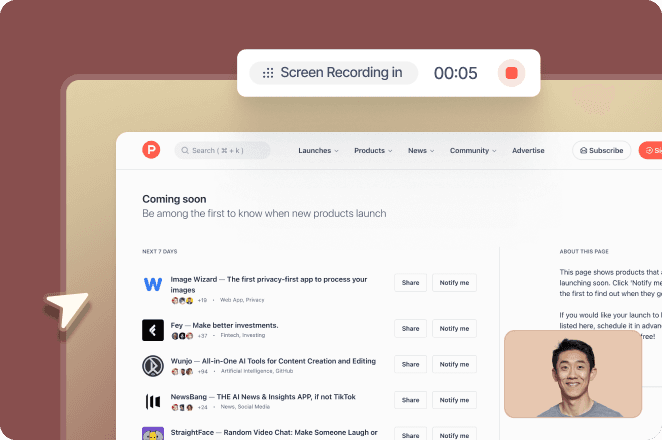
The workflow starts with a screen recording via the Chrome extension or an uploaded file. Trupeer's AI then transforms that raw material into a finished video. It generates a clean script from your narration, removing filler words and restructuring sentences for professional clarity. Studio-quality voiceover is applied from over 100 voice options spanning multiple languages and accents. Automated zoom effects track click actions and add dynamic transitions that highlight key moments. AI avatars via HeyGen integration add a presenter face without requiring anyone to sit in front of a camera.
What makes Trupeer uniquely valuable for Vimeo users is the dual output. Every recording produces both a polished video and a formatted step-by-step written guide with annotated screenshots. Vimeo users who also needed help center articles, product documentation, or training manuals had to create that content separately. Trupeer generates it automatically from the same recording that produced the video.
The knowledge base hosting feature provides a Vimeo-like hosting layer but purpose-built for business content. Custom domains, organized collections, AI-powered video search, and branded pages give your content a professional home. Unlike Vimeo's generic player, Trupeer's hosting is designed for product walkthroughs, training content, and help documentation, with analytics tracking views, watch time, and engagement.
One-click translation into 65+ languages handles global content distribution for both voiceover and subtitles. Brand customization with logos, wallpapers, intros, outros, and color templates ensures visual consistency. Trupeer is ISO 27001 and SOC2 certified with SAML SSO, matching the enterprise security Vimeo offered. Zuora reduced content creation from 5 to 6 hours to 3 to 4 minutes per piece. Hedrick Gardner saved $125,000 on IT migration training.
Pricing: Pro at $49/month includes 20 AI video minutes, unlimited guide exports, AI voiceover, and translation. Scale at $249/month adds 100 AI video minutes, 3 editor seats, custom voices, branded pages, and CTAs. Enterprise pricing is custom with unlimited seats and dedicated onboarding.
2. Loom
Loom replaces a specific slice of Vimeo's use case: hosting and sharing video content for business communication. If you used Vimeo to host internal updates, product walkthroughs, or team announcements, Loom provides a faster workflow with a purpose-built viewer experience that Vimeo's generic player could not match.
Record your screen with optional webcam, and Loom generates an instant shareable link. The viewer page includes threaded comments, emoji reactions, and engagement analytics. AI features add automatic transcription, chapter generation, summaries, and filler word removal. Integrations span Slack, Notion, Gmail, and most productivity platforms, making Loom videos easy to embed in existing workflows.
Where Loom cannot replace Vimeo is in video quality and production capability. Loom is a screen recorder, not a video production or hosting platform. There is no support for uploading pre-produced videos, no customizable player with brand controls, and no ad-free hosting for marketing content. The output is casual by nature, which works for internal communication but falls short for customer-facing or marketing-grade content. Pricing starts free with a 25-video limit, then $15/month per user for Business.
3. Vidyard
Vidyard is the Vimeo alternative for B2B sales and marketing teams who need video hosting with granular viewer analytics. Where Vimeo told you aggregate view counts, Vidyard tells you exactly which prospect watched which section of your video and for how long, all synced to your CRM.
The platform combines a browser-based recorder with video hosting, customizable landing pages, and CTAs. Viewer analytics show individual-level engagement data including watch time, drop-off points, and re-watches. Sales reps can record personalized video messages and track whether prospects watched them. AI script generation helps reps draft video messages faster. The integration set covers Salesforce, HubSpot, Outreach, and most sales platforms.
Vidyard's gap compared to Vimeo is in general-purpose video hosting. It is optimized for sales video, not marketing content hosting, event recordings, or branded video libraries. The editing tools are basic, there is no AI voiceover, and there is no written documentation output. For sales teams specifically, Vidyard is a strong upgrade from Vimeo. For broader video hosting needs, it is too narrowly focused. Free plan includes basic recording, paid plans start at $59/month per user.
4. Riverside
Riverside is a remote recording platform designed for podcasts, interviews, and multi-participant video content. If you used Vimeo for hosting recorded webinars, podcast episodes, or interview-style content, Riverside handles the production side that Vimeo's basic creation tools could not.
The platform records each participant locally in up to 4K resolution, avoiding the compression artifacts that plague Zoom recordings. AI features include automatic transcription, magic audio enhancement, and AI-generated clips that pull highlight moments from long recordings for social media distribution. The editing tools let you switch between speaker views, add titles, and produce polished multi-camera content.
Riverside excels for a specific content type: recorded conversations between people. It does not help with screen recordings, product demos, or software walkthroughs. There is no AI voiceover, no automated zoom effects for screen content, and no written documentation generation. For teams whose Vimeo library was primarily podcasts and interview videos, Riverside is an excellent production upgrade. For teams that need product content, it does not fit. Pricing starts free with limited recording, then $24/month for Standard.
5. Descript
Descript is the professional editing suite for teams that used Vimeo as a hosting platform for manually produced video content. If your workflow was produce in Premiere or Final Cut, upload to Vimeo, and share, Descript modernizes the production step with transcript-based editing that makes video editing accessible to non-editors.
Edit the transcript, and the video changes to match. Cut a sentence from the text, and the corresponding video segment disappears. AI features include filler word removal, eye contact correction, Studio Sound for audio enhancement, and AI-generated social clips. Screen recording captures your display with webcam overlay for product walkthrough content.
Descript replaces Vimeo's creation tools but not its hosting. The platform is designed for production and export, not for hosting a video library with branded players and privacy controls. You would need a separate hosting solution for the finished content. For teams that need a modern editing workflow and are comfortable with a separate hosting layer, Descript delivers professional results. Pricing starts free with limited exports, then $33/month for Pro.
6. VEED
VEED is a browser-based video creation and editing platform that bundles recording, editing, AI features, and basic hosting in one accessible tool. For Vimeo users who wanted simpler creation tools without installing desktop software, VEED provides an all-in-one browser experience.
The platform includes a screen and webcam recorder, timeline editor with transitions and effects, AI subtitles in 100+ languages, AI avatars for presenter videos, text-to-video generation, and basic hosting with shareable links. The editing interface is intuitive enough for non-video-editors to produce clean content with branded elements, background music, and professional transitions.
VEED's limitation is that it is a general-purpose editor trying to serve everyone, which means it does not go deep enough for specialized use cases. The AI features are broad but shallow compared to dedicated platforms. There is no auto-generated written documentation, no knowledge base hosting, and the hosting layer is basic compared to what Vimeo offered. For teams that need a simple browser-based editor with light hosting, VEED works. For teams that need enterprise-grade hosting or deep AI content production, it falls short. Pricing starts free with watermarks, then $24/month for Pro.
How to Choose the Right Vimeo Alternative
Vimeo served multiple use cases under one roof, so your replacement depends on which capabilities mattered most to your team:
You need AI-powered content production with hosting: Trupeer. It combines AI video production, documentation generation, and knowledge base hosting in one platform. Best for teams that need to produce and host business content efficiently.
You need fast async video communication: Loom. Quickest path from recording to shareable link. Best for internal communication and quick prospect updates.
You need video hosting with sales analytics: Vidyard. Individual viewer tracking synced to CRM. Best for B2B sales teams.
You need podcast and interview production: Riverside. Local 4K recording for multi-participant content. Best for media teams producing conversation-based content.
You need professional editing control: Descript. Transcript-based editing for maximum creative flexibility. Best for teams with a production workflow who need a modern editor.
You need browser-based creation and editing: VEED. All-in-one browser tool for recording, editing, and sharing. Best for teams that want simplicity without desktop software.
Migration Tips: Moving Off Vimeo
Vimeo migrations can be complex because the platform often holds years of video content with embedded links across your website, help center, and marketing materials:
Export your entire video library. Vimeo allows bulk video downloads. Download every video in the highest quality available before your subscription ends. Organize the downloads by category so you can prioritize which content to re-host first.
Map all embedded players. Search your website, help center, blog, and marketing pages for Vimeo embed codes. Create a spreadsheet mapping each embed to its page URL and purpose. This becomes your migration checklist for replacing embeds with your new platform.
Preserve shareable links. If you have shared Vimeo links in emails, documents, or customer communications, those will break when you cancel. For critical links, set up redirects or update the references before deactivating your Vimeo account.
Evaluate what to re-create versus re-host. Some existing videos may need only re-hosting on a new platform. Others may be outdated enough to warrant re-recording with AI tools like Trupeer that produce higher quality output in less time than the original production.
Test player customization. If you relied on Vimeo's customizable player for branded embedding, verify that your new platform offers equivalent customization. Trupeer's branded pages and knowledge base provide branded hosting. Vidyard offers customizable players for sales content.
Frequently Asked Questions
Which alternative has the best video hosting quality?
For general video hosting with customizable players, Vidyard offers the closest match to Vimeo's hosting experience. Trupeer's knowledge base hosting is optimized for business content like product walkthroughs and help documentation. For raw hosting quality and playback, VEED and Loom both provide clean, ad-free experiences.
Can I host my existing Vimeo videos on a new platform?
Most alternatives accept video uploads. Trupeer allows uploading existing recordings and can apply its AI pipeline to enhance them. Vidyard and VEED both support video uploads for hosting. Loom is primarily designed for content recorded within the platform.
Which alternative is best for marketing teams?
Trupeer for teams that produce product demos, tutorials, and help content. VEED for teams that need general-purpose video editing with quick production. Vidyard for teams focused on sales-marketing alignment with viewer analytics. The right choice depends on whether your bottleneck is production speed, editing flexibility, or distribution analytics.
What about pricing compared to Vimeo?
Vimeo's Starter plan is $20/month with Standard at $33/month and Advanced at $108/month. Trupeer Pro at $49/month is comparable to Vimeo Standard but includes AI production capabilities Vimeo does not offer. Loom and VEED are less expensive for basic needs. Vidyard is more expensive per user but includes sales-specific analytics.
The Bottom Line
Vimeo was a great video host in an era when hosting was the hard part. That era is over. The hard part now is production: creating professional video content fast enough to keep up with demand. Trupeer is the strongest overall alternative because it addresses the production bottleneck with AI while providing the hosting layer Vimeo offered. One recording becomes a polished video, written documentation, and a hosted asset on a branded knowledge base, all in minutes. For teams with specific needs like podcast production (Riverside) or sales analytics (Vidyard), those specialized tools excel. But for the broadest replacement of what Vimeo offered plus what it never could, Trupeer is the platform to build your video content strategy around.
Other Tool Comparisons