Vimeo vs Trupeer: Feature Comparison (2026)
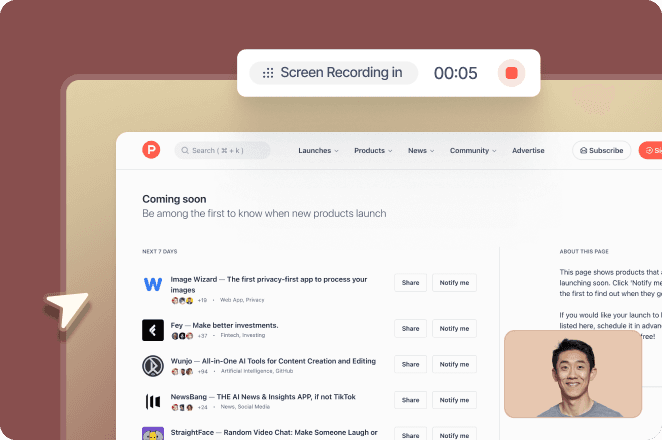
Vimeo has been around since 2004. It started as a video hosting platform for filmmakers, evolved into an enterprise video suite, and has recently bolted on AI features like script generation, teleprompter, and text-based editing. It does a lot of things. Trupeer does fewer things but does them with an entirely different philosophy. Instead of giving you a Swiss Army knife and trusting you to figure out which blade to use, Trupeer takes a single input, a screen recording, and automatically produces two finished outputs: a polished video and a complete written guide. That philosophical difference shapes every comparison below.
Gartner estimates that by 2026, 80% of enterprise software vendors will embed AI-generated documentation into their product delivery pipelines. The question is no longer whether to automate content production, but which automation approach matches your workflow.
The verdict: Trupeer wins this comparison for teams producing product documentation, training content, and knowledge base material. Vimeo is a broader video platform with strengths in hosting, streaming, and marketing video, but it cannot generate written documentation, translate content into 65+ languages, or auto-produce step-by-step guides from a recording. If your primary need is professional documentation and training content at scale, Trupeer's purpose-built AI pipeline delivers what Vimeo's general-purpose toolkit cannot.
This comparison is necessary because Vimeo's recent AI additions have made it look more like a documentation tool than it actually is. The AI Script Generator, Teleprompter, and text-based editing features create the impression that Vimeo can replace specialized documentation platforms. In some narrow scenarios, it can. But for teams that need automated documentation alongside video, multi-language translation, and knowledge base hosting, the gap between Vimeo's capabilities and Trupeer's is wider than the marketing materials suggest. If you're shopping beyond Vimeo, we've put together a separate roundup of Vimeo alternatives.
The Platform Divide: Horizontal vs Vertical
Vimeo is a horizontal video platform. It serves filmmakers, marketers, event organizers, educators, and enterprise communications teams. Its feature set reflects that breadth: OTT streaming, live events, video analytics, password-protected sharing, marketing integrations, and now AI-assisted editing. Each feature is designed to work across dozens of use cases, which means none of them go particularly deep for any single use case.
Trupeer is a vertical platform built specifically for documentation and training content production. Every feature is optimized for one workflow: turn a screen recording into polished professional content. The AI scripting is tuned for instructional narration, not marketing pitches. The zoom effects detect click actions in software UIs, not dramatic moments in a film. The documentation output generates step-by-step guides, not blog summaries. This vertical focus means Trupeer cannot replace Vimeo for live streaming a company town hall or hosting a film festival's submissions. But for the specific job of producing product documentation and training content, the vertical tool outperforms the horizontal one by a significant margin.
Understanding this divide is essential for making the right purchasing decision. If you need one platform that handles everything from marketing video to internal training to live events, Vimeo's breadth has value. If your primary need is efficient production of documentation and training content, buying a horizontal platform and hoping its features are deep enough is a recipe for frustration.
What Is Vimeo?
Vimeo is an all-in-one video platform that has evolved from its filmmaker roots into a comprehensive enterprise video solution. It offers screen recording through a browser-based tool that captures up to 4K resolution, a growing set of AI features, and extensive hosting and distribution capabilities.
The platform spans several product areas: screen and webcam recording, AI-assisted editing, video hosting with customizable players, live streaming and events, marketing integrations, and enterprise video management. Vimeo has invested heavily in AI features recently, adding a Script Generator, Teleprompter overlay, text-based video editor, automatic filler word removal, auto-generated titles, tags, chapters, and AI video summaries.
Key Features
Browser-based screen recorder capturing up to 4K resolution with webcam overlay
AI Script Generator that creates video scripts from prompts
Teleprompter overlay for reading scripts while recording
Text-Based Video Editor that lets you edit video by editing the transcript
Automatic filler word removal for cleaner narration
Auto-generated titles, tags, and chapters for better organization and discoverability
AI video summaries for quick content overviews
Customizable video player with branding, chapters, and CTA overlays
Live streaming and virtual events with registration and analytics
Integrations with Slack, Google Drive, Salesforce, HubSpot, Shopify, Zapier, and API access
Vimeo's strengths are real. The video hosting infrastructure is enterprise-grade. The customizable player is the best in its class for branded video experiences. The integration ecosystem is extensive. And the recent AI features, particularly text-based editing and filler removal, are genuinely useful quality-of-life improvements for video creators.
But there are significant limitations for documentation use cases. The most important AI features are locked behind the Standard plan at $25/month. The free plan is extremely limited: 1GB storage, 2 uploads per month, and watermarked output. There is no automatic step-by-step guide generation. There is no auto-generated written documentation of any kind. Translation is not a native feature. And costs escalate quickly at scale because pricing is per-seat and storage-based, so a team producing dozens of videos per month will hit plan limits fast.
What Is Trupeer?
Trupeer is an AI-powered content production platform that converts screen recordings into professional videos and step-by-step written documentation simultaneously. It is purpose-built for product documentation, training content, and knowledge base production.
The workflow is streamlined: record your screen using Trupeer's browser extension or upload an existing recording. The AI analyzes your narration, strips filler words, fixes grammar, generates a clean script, applies studio-quality voiceover from 100+ voices, adds automated zoom effects on click actions, and exports a polished video. In parallel, it produces formatted step-by-step guides with annotated screenshots. One recording, two complete outputs, minimal human intervention.
Key Features
AI script generation that removes filler, restructures sentences, and corrects grammar
Studio-quality AI voiceover with 100+ voices across multiple languages and accents
Automated zoom effects detecting click actions and applying dynamic magnification
AI avatars with hundreds of personas via HeyGen integration
One-click translation into 65+ languages for voiceover, subtitles, and documentation
Auto-generated step-by-step guides with annotated screenshots from recordings
Knowledge base hosting with custom domains and AI-powered video search
Brand customization with wallpapers, logos, color templates, intros, and outros
Analytics dashboard tracking views, watch time, and engagement
Interactive elements including clickable hotspots and embedded CTAs
Trupeer is ISO 27001 and SOC2 certified, supports SAML SSO for enterprise teams, and integrates with Slack, Notion, Jira, and Confluence. Pricing starts at $49/month for Pro ($40/month annual) and $249/month for Scale ($199/month annual). Zuora reported cutting content creation from 5 hours to 4 minutes, and Hedrick Gardner saved $125,000 on IT migration training.
Feature-by-Feature Comparison
Feature | Vimeo | Trupeer |
|---|---|---|
Screen Recording | Browser-based, up to 4K | Browser extension (Chrome, Safari, Arc, Edge); upload support |
AI Script Generation | AI Script Generator from prompts (Standard+) | AI rewrites actual narration: removes filler, fixes grammar, restructures |
AI Voiceover | No native AI voiceover generation | 100+ voices across 65+ languages |
Teleprompter | Yes, overlay while recording (Standard+) | No dedicated teleprompter (AI replaces narration post-recording) |
Text-Based Editing | Yes, edit video by editing transcript (Standard+) | AI-automated editing; manual transcript editing available |
Filler Word Removal | Automatic (Standard+) | Automatic, included in AI script generation |
Auto Zoom Effects | No | Yes, AI detects clicks and applies dynamic zoom |
AI Avatars | No | Hundreds of personas via HeyGen integration |
Auto Documentation | No | Yes, step-by-step guides with annotated screenshots |
Translation | No native translation | 65+ languages (voiceover, subtitles, and documentation) |
Auto Titles/Tags/Chapters | Yes, AI-generated | No auto-generated video chapters |
AI Video Summaries | Yes | No standalone video summaries |
Video Hosting | Enterprise-grade with customizable player | Knowledge base hosting with custom domains |
Live Streaming | Yes, with virtual events and registration | No |
Knowledge Base | No | Yes, hosted with AI-powered search |
Brand Customization | Custom player, colors, logo, end screens | Full brand kit: wallpapers, logos, intros/outros, color templates |
Analytics | Detailed video analytics, heatmaps, engagement | Views, watch time, engagement metrics dashboard |
Integrations | Slack, Google Drive, Salesforce, HubSpot, Shopify, Zapier, API | Slack, Notion, Jira, Confluence, API |
Free Plan | Yes (1GB, 2 uploads/month, watermark) | 10-day trial with full features |
Enterprise Security | SSO, advanced permissions (Enterprise) | ISO 27001, SOC2, SAML SSO, SCIM |
In-Depth Feature Analysis
1. Content Production Workflow
The fundamental difference between these platforms is what happens after you press the record button. With Vimeo, you record your screen, and then you have a video file. You can use text-based editing to clean up the transcript, remove filler words, and trim sections. You can add auto-generated chapters and titles. But the output is still a single video. If you also need written documentation, you write it separately. If you need voiceover in a different language, you record it separately. If you need zoom effects on key actions, you add them manually or use a different tool.
With Trupeer, you record your screen, and the AI generates two complete outputs automatically: a polished video with professional voiceover, smart zoom effects, and branded styling, plus a formatted step-by-step guide with annotated screenshots and numbered instructions. One input, two outputs, minimal manual work. If you need it in Japanese, you click translate. If you need an AI presenter, you select an avatar. The automation is end-to-end, not step-by-step.
For a marketing team producing brand videos for YouTube or social media, Vimeo's workflow is perfectly adequate and its hosting infrastructure is superior. For a product team producing 30 help articles and tutorial videos per quarter, Trupeer's automated dual-output pipeline produces both formats in the time Vimeo produces one, and with less manual effort.
2. AI Feature Depth
Vimeo's AI features are practical additions to a traditional video workflow. The Script Generator creates scripts from text prompts, which is useful for planning what to say before recording. The Teleprompter lets you read that script while recording. Text-based editing lets you refine the video by editing the transcript. Auto filler removal cleans up verbal tics. Auto titles, tags, and chapters improve organization and SEO. AI summaries provide quick overviews for viewers who want the gist without watching the full video. These are genuine productivity improvements.
But Vimeo's AI features operate independently. You use one, get a result, and then manually decide what to do next. There is no AI that takes your recording and orchestrates scripting, voiceover, zoom effects, and documentation generation as a single automated pipeline. Each feature is a point solution within a manual workflow.
Trupeer's AI is the workflow. The entire post-production pipeline is automated and orchestrated. The distinction matters because orchestration eliminates the cognitive overhead of deciding which tool to apply next, in what order, with what settings. With Vimeo, a team member needs to know the AI features exist, understand when to use each one, and execute them sequentially. With Trupeer, a team member records their screen and reviews the finished output. The skill floor for producing professional content drops dramatically.
3. Translation and Localization
Vimeo does not offer native translation for video content. If you need your product demo in Spanish, German, and Japanese, you are managing that process externally through translation vendors, separate voiceover recordings, or third-party dubbing tools. For companies operating in multiple markets, this is a significant gap that adds cost, time, and coordination overhead to every piece of content.
Trupeer translates voiceover, subtitles, and written documentation into 65+ languages with a single click. One recording of an English product walkthrough becomes a fully localized content package in French, German, Japanese, Portuguese, Hindi, Arabic, and dozens more. The voiceover is regenerated in the target language with natural-sounding AI voices, not just subtitles overlaid on English audio. For global teams, this is the feature that changes the economics of localization entirely.
Consider the math: a translation vendor charges $500 to $1,500 per video per language for professional dubbing. Localizing 10 training videos into 5 languages costs $25,000 to $75,000 through vendors. Trupeer includes translation in the platform subscription. For teams producing localized content at any meaningful volume, this alone justifies the platform investment.
4. Documentation Generation
This is the starkest difference in the comparison. Vimeo produces video. Only video. It does not generate written documentation, step-by-step guides, or any text-based content beyond video transcripts and AI summaries. If your team needs a help center article to accompany a tutorial video, someone writes it manually.
Trupeer generates step-by-step guides with annotated screenshots automatically from the same recording used for video. Each guide includes numbered steps, screenshots with highlighted UI elements, and explanatory text. This dual-output approach means one recording session produces content for two channels: video for visual learners and written guides for text-oriented users who prefer to scan steps rather than watch a video.
Research from TechSmith consistently shows that approximately 53% of users prefer written step-by-step instructions while 47% prefer video tutorials. By producing only video, Vimeo serves less than half of your audience's format preferences. Trupeer serves both from a single recording. For help centers and knowledge bases where user preference determines engagement, dual-format content directly impacts self-service resolution rates.
5. Pricing Structure and Scalability
Vimeo's pricing is tiered by features and storage. The Free plan offers 1GB storage, 2 uploads per month, and watermarked output, essentially a preview rather than a usable tier. Starter at $12/month adds basic storage and removes the watermark. Standard at $25/month unlocks the AI features. Advanced at $75/month adds analytics, live streaming, and enhanced security. Enterprise is custom-priced. The AI features that make Vimeo competitive with documentation tools are only available from $25/month and up.
Trupeer's Pro plan at $49/month ($40/month annual) includes the full AI pipeline: script generation, voiceover, zoom effects, documentation generation, translation, and avatars. The Scale plan at $249/month ($199/month annual) adds team features, custom voices, and expanded capacity.
At first glance, Vimeo is cheaper. $25/month for Standard versus $49/month for Trupeer Pro. But that comparison is misleading because the outputs are different. Vimeo Standard gives you AI-assisted video editing. Trupeer Pro gives you automated video production, written documentation generation, 65+ language translation, and knowledge base hosting. To replicate Trupeer's output using Vimeo, you would need Vimeo Standard ($25/month) plus a documentation tool ($15 to $50/month) plus a translation service ($500+ per batch) plus a knowledge base platform ($50 to $150/month). The true comparison is $49/month versus $200+ per month in stacked tools.
For a full tier-by-tier breakdown, see our pricing comparison. At scale, the gap widens further. Vimeo's storage-based pricing means costs grow with content volume. A team producing 50 videos per month will hit storage limits on lower tiers and need to upgrade. Trupeer's credit-based model (AI video minutes) is more predictable and resets monthly regardless of stored content volume.
6. Video Hosting and Distribution
This is Vimeo's strongest advantage. Twenty years of investment in video hosting infrastructure has produced an enterprise-grade platform with customizable players, adaptive streaming, password protection, domain-level privacy, detailed heatmap analytics, and a polished viewing experience. For marketing teams that need branded video experiences embedded across websites, social platforms, and email campaigns, Vimeo's hosting is best-in-class.
Trupeer's hosting is focused on knowledge base content. Videos and guides live on a branded custom domain with AI-powered search. It is optimized for documentation discovery, not marketing video distribution. You will not find Vimeo-level player customization, heatmap analytics, or OTT streaming capabilities in Trupeer.
If your use case is hosting a library of marketing videos, product launch announcements, and branded content for external audiences, Vimeo's hosting is superior. If your use case is hosting a knowledge base of help articles, training guides, and product documentation with search functionality, Trupeer's purpose-built approach is more appropriate. Many teams need both, which is why these tools are not always direct substitutes.
7. Integration Ecosystem
Vimeo's integration list is extensive: Slack, Google Drive, Salesforce, HubSpot, Shopify, Zapier, and full API access. The Zapier integration alone connects Vimeo to hundreds of additional tools. For marketing-centric workflows that touch CRM, e-commerce, and advertising platforms, Vimeo's ecosystem is broader.
Trupeer integrates with Slack, Notion, Jira, and Confluence, plus API access for custom connections. These integrations are specifically chosen for documentation and product team workflows. A product manager pushes an auto-generated guide to Confluence. A support engineer shares a troubleshooting video in a Jira ticket. An onboarding specialist posts a training walkthrough to a Slack channel. The integrations are fewer but more targeted for the documentation use case.
Neither platform's integration set is universally better. Vimeo wins for marketing and sales workflows. Trupeer wins for product, engineering, and support workflows. The right choice depends on which teams are producing and consuming the content. If you're evaluating other tools in this space, we've written comparable analyses for Loom and Vidyard.
8. Enterprise Security and Compliance
Vimeo offers SSO and advanced permissions on its Enterprise plan, with SOC2 Type 2 certification. The platform has been serving enterprise customers for years and has mature security controls including domain-level privacy, password protection, and granular sharing permissions.
Trupeer holds both ISO 27001 and SOC2 certifications and supports SAML SSO and SCIM provisioning. SCIM is particularly important for larger enterprises because it automates user lifecycle management: when someone joins or leaves the organization in your identity provider, their Trupeer access updates automatically. This reduces the security risk of orphaned accounts and the operational burden of manual user management.
Both platforms meet enterprise security baselines. Trupeer's SCIM support and dual ISO 27001 plus SOC2 certification give it a slight edge for organizations with strict compliance requirements and automated provisioning workflows. We've gone deeper on this topic in our enterprise readiness comparison.
9. Learning Curve and Team Adoption
Vimeo's breadth creates a learning curve. The platform has features for recording, editing, hosting, streaming, analytics, marketing, and team management. New users need to understand which features are relevant to their role and which plans unlock which capabilities. The AI features are powerful but require the user to know they exist and understand when to apply them. An L&D specialist creating training content uses a completely different subset of Vimeo than a marketer creating brand videos. The platform serves both, but neither gets a streamlined experience.
Trupeer's focused scope means the learning curve is shorter. Record your screen. Review the AI output. Publish. A new team member can start producing professional content through the documentation platform in their first session because the AI handles the production decisions that would otherwise require training. Brand templates ensure consistent output across the team without requiring each person to understand design principles or video editing techniques. For teams where content production is a secondary responsibility (engineers documenting features, support agents creating troubleshooting guides), Trupeer's low learning curve is a significant adoption advantage.
10. Measurable Business Outcomes
Vimeo publishes enterprise case studies focused on video hosting, live events, and marketing video performance. These are compelling for organizations evaluating Vimeo's hosting and streaming capabilities. For documentation-specific outcomes, the evidence is thinner because documentation production is not Vimeo's primary use case.
Trupeer has documented results specifically for documentation and training content production. Zuora cut production time from 5 hours to 4 minutes. Hedrick Gardner saved $125,000 on IT migration training. These outcomes directly address the value proposition that documentation teams care about: producing more content in less time with lower cost. For a procurement process where the buyer needs to justify ROI, Trupeer's published case studies align precisely with the use case being evaluated.
Detailed Pricing Breakdown
Vimeo Pricing Tiers
Free: 1GB storage, 2 uploads per month, watermarked output. No AI features. Useful for evaluation only.
Starter ($12/month): Expanded storage, watermark removed, basic analytics. Still no AI features.
Standard ($25/month): Unlocks AI Script Generator, Teleprompter, text-based editing, filler removal, auto titles/tags/chapters, AI summaries. The minimum viable tier for AI-assisted workflows.
Advanced ($75/month): Enhanced analytics with heatmaps, live streaming, virtual events, advanced security. For teams needing hosting and streaming alongside creation.
Enterprise (custom): SSO, advanced permissions, dedicated support, custom integrations. For large organizations with compliance requirements.
Trupeer Pricing Tiers
Free Trial (10 days): 10 AI video minutes, 5 AI guides, 3 video exports. Full feature access including voiceover, translation, avatars, and sharing.
Pro ($49/month, $40/month annual): 20 AI video minutes, unlimited guides and exports. Full AI pipeline with watermark removal, intros/outros, captions, and screenshot tools.
Scale ($249/month, $199/month annual): 100 AI video minutes, 3 editor seats. Team workspace, custom voices, branded pages, CTAs, and logos.
Enterprise (custom): Unlimited seats, custom brand templates, analytics dashboard, SAML SSO, SCIM, priority support.
TCO Comparison: Documentation Team, 40 Videos Per Month
Vimeo Advanced at $75/month gives you AI editing, hosting, and analytics. But to match Trupeer's output, add a documentation tool ($30 to $50/month), translation services ($500+ per language per batch), and additional knowledge base hosting ($50 to $100/month). Total: $200 to $400+/month before labor. Manual documentation writing adds 40 to 60 hours/month for 40 pieces of content.
Trupeer Scale at $199/month bundles video production, documentation generation, translation, knowledge base hosting, and analytics. Labor for 40 videos drops to 10 to 15 hours/month for recording and review. Net savings: $0 to $200/month in tooling plus 25 to 50 hours/month in labor, depending on current translation and documentation workflows.
Best Use Cases
Product Documentation Team
Elena manages documentation for a SaaS platform with 200+ help articles and 100+ tutorial videos. Every product update invalidates a portion of her content. With Vimeo, she can efficiently create and host polished videos, but every help article is written manually in a separate CMS. With Trupeer, each re-recording produces both the updated video and the updated written guide. She can manage it all in one documentation app, cutting her maintenance workload roughly in half and publishing directly from Trupeer instead of exporting to a separate platform.
Global Training Team
Raj leads L&D for a company with employees across 8 countries. Each training module needs localization into 6 languages. With Vimeo, he records the English version and then coordinates with translation vendors for each language, managing timelines, reviewing translations, and uploading localized versions separately. Budget: $3,000 to $9,000 per module across 6 languages. With Trupeer, Raj records once and clicks translate. Six localized versions, complete with native-sounding voiceover and translated documentation, are ready in minutes. He can even spin up training videos for each region without re-recording a single walkthrough. Budget: included in the subscription.
Marketing Video Team
This is Vimeo's home turf. Carla runs video marketing for a DTC brand. She needs branded video hosting with customizable players, detailed viewer analytics with heatmaps, integration with HubSpot for lead tracking, and Shopify for product page embeds. Vimeo delivers all of this with a mature, polished experience. Trupeer's knowledge base hosting does not serve this use case. For marketing-led video workflows, Vimeo is the right choice. The tools are not competing for the same buyer here.
Customer Success Team Building a Help Center
Omar runs CS for a mid-market SaaS company. His team fields 500 support tickets per month, and 40% are repetitive how-to questions. He needs a self-service help center with both video walkthroughs and written guides, searchable by customers. With Vimeo, he can host the videos but needs a separate knowledge base platform for the written content and the search experience. With Trupeer, Omar records walkthroughs and the AI generates both formats, letting his team build SOPs alongside video content that publishes to a branded help center with AI-powered search. The reduction in tool sprawl and manual content creation lets his team focus on building the library rather than managing the infrastructure.
Pros and Cons
Vimeo Pros
Enterprise-grade video hosting with customizable player, adaptive streaming, and privacy controls
Extensive integration ecosystem including Salesforce, HubSpot, Shopify, and Zapier
AI features including Script Generator, Teleprompter, text-based editing, and filler removal
Detailed video analytics with heatmaps and engagement tracking
Live streaming and virtual event capabilities for company communications
Free plan available for basic evaluation (limited but no time restriction)
Vimeo Cons
No auto-generated written documentation or step-by-step guides
No native translation for video content or subtitles
AI features locked behind Standard plan ($25/month minimum)
No automated zoom effects for software walkthroughs
No AI avatars for presenter-led content
Free plan is extremely limited (1GB, 2 uploads, watermarked)
Costs escalate at scale due to storage-based pricing
Broad feature set creates learning curve for focused use cases
Trupeer Pros
Dual output: polished video and step-by-step documentation from one recording
65+ language translation with one click for voiceover, subtitles, and docs
100+ AI voice options for studio-quality voiceover
Knowledge base hosting with custom domains and AI-powered search
AI avatars via HeyGen for presenter-led content without filming
Documented ROI: Zuora (5 hours to 4 minutes), Hedrick Gardner ($125K saved)
ISO 27001, SOC2, SAML SSO, and SCIM for enterprise deployments
Native integrations with Slack, Notion, Jira, and Confluence
Trupeer Cons
AI video minutes are credit-based and reset monthly
No live streaming or virtual event capabilities
Video hosting is knowledge-base-focused, not marketing-grade
Smaller integration ecosystem than Vimeo's Zapier-connected network
No free ongoing plan; 10-day trial only
Recording length limits per video (8 to 15 minutes by plan)
The Verdict
Vimeo and Trupeer are not direct substitutes. They overlap in screen recording and AI-assisted editing, but they diverge sharply in purpose and output. Vimeo is a video platform that has added AI features. Trupeer is an AI documentation platform that produces video as one of its outputs. The distinction matters because it determines what you get for your investment.
If your team needs marketing video hosting, live streaming, branded video players, and deep analytics across a variety of video types, Vimeo delivers capabilities that Trupeer does not offer. It is the right choice for marketing-led video workflows, company town halls, and branded content distribution.
If your team needs to produce product documentation, training content, and knowledge base material efficiently and at scale, Trupeer delivers what Vimeo cannot: automated documentation generation, 65+ language translation, knowledge base hosting, and AI avatars, all from a single recording. The production time savings documented by Zuora and the cost savings documented by Hedrick Gardner reflect real business outcomes that general-purpose video platforms are not designed to deliver. For documentation teams, the choice is clear.