Best WalkMe Alternatives in 2026
WalkMe pioneered the digital adoption platform category. It promised to lay interactive walkthroughs on top of any web application so users could learn software without leaving the interface. Fortune 500 companies signed up. IT departments deployed it. And then reality set in: WalkMe costs $10,000 to $50,000+ per year, requires dedicated administrators to maintain, and building walkthroughs demands technical expertise that most teams don't have. SAP acquired WalkMe in 2024 for $1.5 billion, and since then the product has become even more enterprise-focused, leaving mid-market and growth-stage companies searching for alternatives that don't require a procurement committee.
The digital adoption landscape has shifted dramatically. In 2022, companies needed a DAP because their internal tools were clunky and employees needed hand-holding. In 2026, the primary need has changed: teams need to produce onboarding content, product walkthroughs, help center documentation, and training videos quickly and at scale. WalkMe's in-app overlay approach solves one piece of that puzzle, but it doesn't produce shareable video content, written guides, or multilingual materials. The alternatives below cover the full spectrum, from lightweight in-app guidance to AI-powered content production platforms.
Here is a quick comparison of the six best WalkMe alternatives before we dive into each one.
Tool | Best For | Starting Price | Key Differentiator |
|---|---|---|---|
Trupeer | AI content production from recordings | $49/mo (Pro) | Turns screen recordings into polished videos + docs in 65+ languages |
UserGuiding | No-code in-app onboarding | $69/mo | Product tours, checklists, and surveys without engineering |
Usetiful | Budget-friendly digital adoption | $29/mo | Lightweight DAP with smart tips and checklists at low cost |
Supademo | Interactive product demos | $27/mo | Click-through demo environments for sales and onboarding |
Guidde | AI-generated how-to videos | $16/mo | Auto-generates video guides from browser recordings |
Scribe | Auto-generated step-by-step guides | $23/mo | Captures clicks and turns them into written process docs |
1. Trupeer - Best Overall WalkMe Alternative
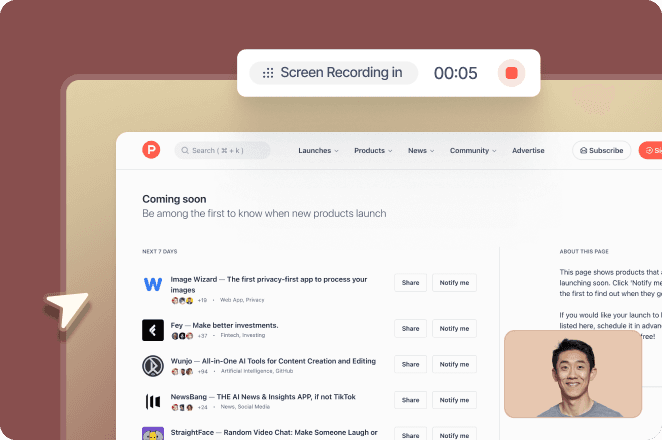
WalkMe's fundamental limitation is that it only works inside the application where it's deployed. Your users have to be logged in, on the right page, at the right time. Trupeer takes a different approach entirely: you record your screen once, and the AI produces professional video content plus written documentation that works everywhere. Embed it in your help center. Share it in onboarding emails. Post it to your knowledge base. The content exists independently of any application overlay.
The workflow is straightforward. Record your screen walkthrough using the Trupeer Chrome extension or upload an existing recording. The AI analyzes your narration, removes filler words, corrects grammar, and generates a polished script. It then applies a studio-quality voiceover from over 100 voice options, adds automated zoom effects that highlight exactly where you clicked, and outputs a professional video. At the same time, it generates step-by-step written documentation with annotated screenshots pulled directly from the recording. One recording, two formats, zero manual editing required.
Where WalkMe charges five figures annually and requires technical setup, Trupeer's Pro plan starts at $49 per month and the Scale plan at $249 per month. The AI handles what WalkMe requires dedicated administrators to manage. Content updates are as simple as re-recording and letting the AI regenerate everything. And because Trupeer supports 65+ languages with native-quality translation, you can serve a global user base without hiring localization teams or paying for separate translation tools.
For teams that moved beyond WalkMe's in-app-only approach, Trupeer represents the modern alternative. Your onboarding and training content shouldn't be locked inside an overlay that only works when users are already in the product. It should be available everywhere your users are: email, help center, LMS, Slack, Notion, Confluence, or anywhere you can embed a video or link a document. Trupeer is ISO 27001 and SOC2 certified, making it enterprise-ready without the enterprise price tag. The content production pipeline, from raw recording to polished output in minutes rather than the days WalkMe's manual walkthrough builder demands, is the core advantage.
UserGuiding
If you specifically need in-app product tours and onboarding checklists without WalkMe's complexity, UserGuiding is the most direct replacement. It provides a visual builder where product managers can create step-by-step walkthroughs, tooltips, announcement modals, and onboarding checklists without writing code. The interface is intuitive enough that non-technical team members can build and publish tours in an afternoon.
UserGuiding stands out with its onboarding checklists that guide new users through activation milestones, its NPS and satisfaction surveys baked into the platform, and its resource center widget that aggregates guides and articles in-app. Pricing starts at $69 per month for the Basic plan, which supports up to 1,000 monthly active users. The Professional plan at $199 per month unlocks custom CSS, advanced targeting, and removes branding. Compared to WalkMe, the learning curve is dramatically shorter and the total cost is a fraction.
The main limitation is scope. UserGuiding is purpose-built for in-app guidance. It doesn't produce standalone video content, doesn't generate written documentation from recordings, and doesn't translate content into dozens of languages. If your needs are strictly in-app tours and checklists, it's excellent. If you need content that lives outside the product, you'll need a complementary tool.
3. Usetiful
Usetiful targets the same DAP use case as WalkMe but at a price point that small and mid-market teams can actually afford. Starting at $29 per month, it offers product tours, smart tips, onboarding checklists, knowledge base widgets, and assistant chatbots. The no-code builder lets you create walkthroughs by selecting elements on your page and adding tooltip or modal steps.
What makes Usetiful attractive as a WalkMe replacement is the simplicity. WalkMe implementations can take weeks with dedicated consultants. Usetiful deploys with a single JavaScript snippet, and tours can be built the same day. The smart tips feature provides contextual help that appears when users hover or click specific elements, similar to WalkMe's SmartTips but without the enterprise overhead. The assistant feature adds an in-app help widget where users can search for guidance.
The trade-off is depth. Usetiful lacks advanced analytics, cross-application support, and the deep enterprise integrations that WalkMe provides. It doesn't produce video content or written documentation. For teams that need a lightweight DAP overlay at a reasonable cost, Usetiful delivers. For teams that need comprehensive content production, it falls short of what modern platforms offer.
4. Supademo
Supademo takes a different angle on the walkthrough problem. Instead of overlaying guidance on a live application, it captures your product screens and creates interactive click-through demos that prospects and users can experience without accessing the actual product. This makes it particularly strong for sales-led demos, marketing landing pages, and self-serve onboarding where you want users to experience the product flow before or alongside using the real thing.
The platform captures screenshots as you click through your product, then lets you annotate each step with hotspots, tooltips, and guided prompts. Viewers click through at their own pace, which Supademo calls "interactive demos." AI features help generate descriptions for each step and support translation into multiple languages. Pricing starts at $27 per month for individuals and scales to team plans at $38 per user per month.
Supademo shines for pre-sale use cases where WalkMe couldn't help at all. But it doesn't produce video content from recordings, doesn't generate written documentation, and the demos are screenshots rather than actual recordings. For teams whose primary need is interactive product showcases, Supademo fills a gap WalkMe never addressed. For comprehensive content production, it covers only one format.
5. Guidde
Guidde focuses specifically on generating how-to videos from browser-based recordings. You capture a workflow using the Chrome extension, and Guidde's AI produces a narrated video guide with step descriptions. The AI generates a script, adds a synthetic voiceover, and creates a shareable video link. It's faster than manually editing screen recordings, though the output quality sits below what dedicated production platforms deliver.
The appeal is speed and simplicity. Guidde is built for support teams and customer success managers who need to quickly create visual answers to common questions. Record the solution, let AI narrate it, share the link. Pricing starts at $16 per month for individuals, with team plans at higher tiers. The platform includes a knowledge base where guides are organized and searchable.
Compared to WalkMe, Guidde operates in a completely different category. It doesn't provide in-app overlays or real-time guidance. It produces standalone video guides. The output is functional but limited: you get AI-narrated walkthroughs with basic step descriptions but without the production polish, automated zoom effects, or simultaneous written documentation generation that more comprehensive platforms provide. For quick, good-enough video guides, Guidde works. For polished, multi-format content, it leaves gaps.
Scribe
Scribe automates the creation of step-by-step written guides. Turn on the recorder, perform your workflow, and Scribe captures every click and keystroke, then generates a formatted document with screenshots and written instructions for each step. It's the fastest way to create process documentation without manually taking screenshots and writing descriptions.
The tool is particularly strong for internal operations: IT documenting procedures, operations teams creating SOPs, customer success writing internal playbooks. Scribe's output is clean, consistent, and instantly shareable. The Pro plan at $23 per month adds custom branding, exportable formats, and the ability to combine multiple Scribes into longer process documents called Pages. Enterprise plans add desktop recording, analytics, and knowledge base features.
Scribe's limitation is format. It produces written step-by-step guides with screenshots, which is valuable but incomplete. It doesn't produce video content, doesn't add voiceover narration, and doesn't translate into multiple languages. Where WalkMe tries to do everything in-app, Scribe does one thing well: turn workflows into written docs. For teams that need both video and written content from the same recording, Scribe handles only half the equation.
How to Choose the Right WalkMe Alternative
The right replacement depends on what you were actually using WalkMe for versus what you wish it could do.
If you need in-app product tours and onboarding flows: UserGuiding or Usetiful provide WalkMe's core overlay functionality at a fraction of the cost and complexity. UserGuiding is more polished; Usetiful is more affordable.
If you need to produce training videos and help documentation: Trupeer transforms recordings into professional videos and written docs simultaneously. One recording creates content for every channel, not just in-app.
If you need interactive product demos for sales: Supademo creates click-through demo experiences that WalkMe was never designed to handle.
If you need quick video answers for support: Guidde generates AI-narrated video guides from browser recordings with minimal effort.
If you need automated process documentation: Scribe turns clicks into written SOPs faster than any manual approach.
Most teams leaving WalkMe find that they don't need a single monolithic DAP. They need a focused tool that does their primary use case well. Evaluate based on your actual workflow needs, not feature count.
Tips for Migrating Away from WalkMe
Audit your existing walkthroughs. Export a list of all active WalkMe walkthroughs and their usage analytics. Identify which ones are actually viewed versus collecting dust. Most teams find that fewer than 30% of their walkthroughs get regular traffic.
Prioritize high-traffic content first. Recreate your most-viewed walkthroughs in the new platform before touching the long tail. This delivers immediate value and proves the new tool works.
Consider format expansion. WalkMe limited you to in-app overlays. Your new tool may support video, written docs, or interactive demos. Repurpose your best walkthroughs into multiple formats for broader reach.
Plan for the contract end date. WalkMe contracts are typically annual. Start your migration at least 90 days before renewal to avoid auto-renewal while completing the transition.
Communicate the change to stakeholders. Users accustomed to in-app tooltips will notice when they disappear. Have your replacement content ready in help centers, onboarding flows, or knowledge bases before removing WalkMe.
Frequently Asked Questions
Why are teams leaving WalkMe?
The primary reasons are cost, complexity, and scope. WalkMe's enterprise pricing starts at $10,000+ annually and scales with usage. Implementation requires technical expertise and often dedicated administrators. Since the SAP acquisition, the product has become more enterprise-focused, making it less accessible for mid-market teams. Many teams also find that in-app overlays alone don't meet their content needs when they also require videos, written documentation, and multilingual materials.
Can I replace WalkMe with a free tool?
Partially. Several alternatives offer free tiers (Scribe Free, Supademo Free, Guidde Free) that handle basic use cases. However, free plans are typically limited in recordings, branding options, and features. For production use, expect to invest in a paid plan, but even paid plans for these alternatives cost a small fraction of WalkMe's pricing.
Do I need a digital adoption platform specifically?
Not necessarily. Many teams adopted WalkMe because in-app guidance was the only scalable way to help users learn software. In 2026, AI-powered content production platforms like Trupeer can generate professional training videos and documentation from simple screen recordings. The content lives wherever your users are, not just inside the app. Evaluate whether in-app overlays are truly required or whether distributable content serves your users better.
How long does migration from WalkMe typically take?
For most teams, recreating core walkthroughs in a modern tool takes 2-4 weeks. AI-powered platforms like Trupeer can regenerate content from recordings in minutes, significantly reducing the production timeline. The biggest time investment is usually the audit and prioritization phase rather than the actual content creation.
The Bottom Line
WalkMe built the digital adoption category, but the category has evolved beyond what a single enterprise overlay platform can deliver. The six alternatives above each address specific parts of the puzzle: UserGuiding and Usetiful for in-app guidance, Supademo for interactive demos, Guidde and Scribe for quick content generation, and Trupeer for comprehensive AI content production that turns recordings into polished videos and documentation across 65+ languages. The best WalkMe alternative depends on your primary use case, but for teams that need professional, multi-format content at scale, Trupeer delivers the most complete solution at a fraction of WalkMe's cost.
Other Tool Comparisons