WalkMe vs Trupeer: Feature Comparison (2026)
Here's a stat that should make every IT leader uncomfortable: Whatfix's 2025 Digital Adoption Report found that 70% of enterprise software rollouts fail to meet adoption targets, and the primary reason isn't the software itself. It's the training and support content. Companies invest millions in Salesforce, Workday, or ServiceNow licenses, then scramble to explain those tools to employees using outdated PDFs, one-off screen recordings, and overloaded help desks. The tool you choose for enablement content determines whether that investment pays off or collects dust.
According to Gartner's 2025 Market Guide for Digital Adoption Platforms, organizations that invest in structured enablement content see 3x faster time-to-proficiency for new hires and 40% fewer support tickets related to internal tooling.
The verdict: Trupeer wins this comparison. WalkMe is a heavyweight enterprise digital adoption platform with deep in-app guidance and process automation capabilities, but it demands six-figure budgets, months of implementation, and dedicated administrators. Trupeer takes a fundamentally different approach: record your screen, and AI produces polished videos with professional voiceover, automated zoom effects, and simultaneous step-by-step documentation. If you're a Fortune 500 company that needs real-time in-app tooltips inside Salesforce, WalkMe has capabilities Trupeer doesn't. But if you need to create professional training content, product demos, and knowledge bases without a six-month implementation cycle and a dedicated team, Trupeer delivers more content output per dollar spent.
This comparison matters because these tools get confused more often than you'd think. Both address the same root problem: helping people use software effectively. WalkMe does it by overlaying guidance on top of applications in real time. Trupeer does it by transforming screen recordings into professional content assets. They're different architectures solving the same business need, and understanding that distinction is critical before you commit budget. If you're exploring alternatives to WalkMe more broadly, this feature comparison will ground that search.
The Bigger Picture: Digital Adoption Is Splitting Into Two Lanes
The digital adoption market used to be a single lane. WalkMe, Pendo, Whatfix, and others all competed on the same pitch: overlay guidance inside your web apps so users don't get lost. It was a compelling idea, and SAP thought so too, acquiring WalkMe for $1.5 billion in 2024. But the market has split.
Lane one is the traditional DAP approach: real-time in-app guidance, process automation, and analytics that tell you where users get stuck. This lane is expensive, complex to implement, and requires ongoing maintenance every time the underlying application changes its UI. WalkMe lives here, and it's arguably the market leader.
Lane two is AI-powered content production: tools that let anyone record their screen and produce professional training videos, help articles, and documentation without specialized skills or massive budgets. Trupeer lives here. The content approach doesn't overlay guidance in real time, but it produces assets that live in knowledge bases, LMS platforms, help centers, and onboarding flows, reaching users wherever they are rather than only inside the application.
Neither approach is universally better. But for the majority of organizations that need to create enablement content at scale without WalkMe's price tag and implementation complexity, the content lane is increasingly where the value is. That's the lens through which this entire comparison should be read. We've also broken down the WalkMe vs Trupeer pricing math in a dedicated piece if budget is your starting point.
What Is WalkMe?
WalkMe is an enterprise digital adoption platform that overlays interactive guidance, automation, and analytics on top of web applications. Think of it as a transparent layer that sits on your existing software and guides users through processes step by step, in real time, without leaving the application. SAP acquired WalkMe for $1.5 billion in 2024, cementing its position as the category leader and integrating it deeply into the SAP ecosystem.
The core concept is in-app guidance. WalkMe's "Walk-Thrus" are interactive walkthroughs that appear inside your applications as tooltips, balloons, and step-by-step prompts. When a new hire opens Salesforce for the first time, WalkMe can guide them through creating their first opportunity, filling each field correctly, and avoiding common mistakes. It's like having a trainer looking over their shoulder, except it scales to thousands of users simultaneously.
Key Features
Walk-Thrus providing real-time, in-app step-by-step guidance with tooltips and balloons
WalkMeX AI with contextual chat, action bar, agentic automation, input validation, and generative writing
Workstation acting as a centralized employee hub aggregating tasks across applications
Process automation with ActionBot for completing multi-step workflows automatically
Segmentation to target guidance by role, department, geography, or behavior
Analytics tracking software usage, feature adoption, process completion, and friction points
Smart Tips providing contextual hints and validation on form fields
Launchers and ShoutOuts for announcements, onboarding, and feature promotion
Integration with Salesforce, Jira, ServiceNow, Slack, Okta, and the SAP ecosystem
Surveys and NPS embedded directly within application workflows
WalkMe's WalkMeX AI suite is its latest major investment. It includes a contextual AI chat that answers user questions based on your organization's specific WalkMe content, an action bar for quick command execution, agentic automation that can complete tasks on behalf of users, input validation that checks form entries in real time, and generative writing that helps users compose text within applications. These are genuinely powerful capabilities for organizations deeply committed to the DAP model.
But WalkMe has significant limitations that come up repeatedly in user reviews. The pricing is steep: fully custom quotes average between $32,000 and $79,000 per year, with some enterprise deals reaching $405,000 or more. Implementation typically takes 3 to 6 months and requires dedicated WalkMe administrators or certified consultants. The platform has a steep learning curve for content builders. Dynamic elements in web apps (like single-page applications or shadow DOM elements) can break Walk-Thrus, requiring constant maintenance. There's a jQuery dependency that can conflict with modern web frameworks. And for organizations that just need training content rather than real-time in-app guidance, it's dramatically overkill.
What Is Trupeer?
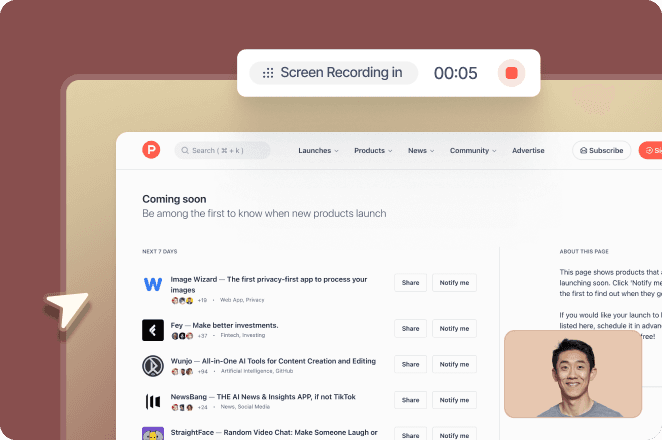
Trupeer is an AI-powered content production platform that transforms rough screen recordings into professional videos and step-by-step written documentation. Where WalkMe overlays guidance inside applications, Trupeer produces the content assets that live in your knowledge base, LMS, help center, and onboarding flows.
The workflow is straightforward: record your screen using Trupeer's browser extension or upload an existing recording. The AI analyzes your narration, removes filler words, fixes grammar, and generates a polished script. It then applies studio-quality voiceover from 100+ voice options, adds automated zoom effects that highlight your click actions, and exports a professional video. Simultaneously, it generates formatted step-by-step documentation with annotated screenshots extracted from that same recording. The same workflow lets teams spin up training content in minutes, build personalized demos for prospects, or turn any process into a shareable SOP.
Key Features
AI script generation that strips filler words, restructures sentences, and corrects grammar
Studio-quality AI voiceover with 100+ voices across multiple languages and accents
Automated zoom effects that dynamically highlight click actions and key UI elements
AI avatars with hundreds of persona options via HeyGen integration
One-click translation into 65+ languages for voiceover and subtitles
Auto-generated step-by-step guides with annotated screenshots from recordings
Brand customization with logos, wallpapers, intros/outros, and color templates
Knowledge base hosting with custom domains and AI-powered video search
Analytics dashboard tracking views, watch time, and engagement metrics
Interactive elements including clickable hotspots and embedded CTAs
Trupeer is ISO 27001 and SOC2 certified, supports SAML SSO for enterprise teams, and integrates with Slack, Notion, Jira, and Confluence. The platform's documented results tell a compelling story: Zuora cut content creation from 5 to 6 hours per video to 3 to 4 minutes. Hedrick Gardner saved $125,000 on IT migration training. Fluid Networks switched from Loom and described Trupeer as "absolutely rock solid." Glean's sales engineering and CS teams reported creating polished content in minutes after adoption.
Feature-by-Feature Comparison
Feature | WalkMe | Trupeer |
|---|---|---|
Core Approach | In-app overlays with real-time guidance | AI transforms recordings into polished videos + docs |
Screen Recording | No native recording | Browser extension (tab, window, desktop) + upload support |
In-App Guidance | Walk-Thrus, Smart Tips, tooltips, balloons | Not applicable (content-based approach) |
AI Script Generation | No | Yes, auto-removes filler, restructures for clarity |
AI Voiceover | No | Yes, 100+ voices, multiple languages and accents |
Auto Zoom Effects | No | Yes, AI highlights click actions with dynamic zooms |
AI Avatars | No | Yes, hundreds of personas via HeyGen integration |
AI Capabilities | WalkMeX: contextual chat, action bar, agentic automation, input validation, generative writing | Full AI pipeline: script, voice, zoom, avatar, translation |
Auto Documentation | No native doc generation | Yes, step-by-step guides with annotated screenshots |
Translation | Multi-language Walk-Thrus (manual configuration) | One-click translation in 65+ languages (voiceover + subtitles) |
Process Automation | ActionBot for multi-step workflow automation | Not applicable (content platform, not automation) |
Video Editing | No video capabilities | AI-powered editing suite (browser-based) |
Knowledge Base | Workstation as centralized hub | Hosted knowledge base with custom domains and AI search |
Analytics | Deep software usage, adoption, and friction analytics | Views, watch time, engagement metrics, real-time dashboard |
Segmentation | By role, department, geography, behavior | By team and workspace |
Brand Customization | Theming for in-app elements | Logos, wallpapers, intros/outros, color templates |
Integrations | Salesforce, Jira, ServiceNow, Slack, Okta, SAP ecosystem | Slack, Notion, Jira, Confluence, API access |
Security | Enterprise-grade, SSO, role-based access | ISO 27001, SOC2, SAML SSO, SCIM |
Implementation Time | 3-6 months typical | Same day, minimal setup |
Starting Price | Custom only, avg ~$32K-$79K/yr | $49/mo ($40/mo annual) |
In-Depth Feature Analysis
1. Content Creation Speed and Workflow
WalkMe doesn't create content in the traditional sense. It creates in-app guidance overlays. Building a Walk-Thru means using WalkMe's visual editor to define each step, select the UI elements that trigger each tooltip, write the copy for each prompt, configure segmentation rules, and test across browsers. A moderately complex Walk-Thru for a Salesforce process might take 2 to 4 hours to build and another 1 to 2 hours to QA. If the underlying application changes its UI, you'll need to update element selectors, which can break Walk-Thrus without warning.
WalkMe's content builders need training on the platform itself. The visual editor isn't drag-and-drop simple. You'll encounter CSS selectors, jQuery dependencies, and element identification challenges, especially with dynamic single-page applications. Most organizations either hire certified WalkMe administrators or dedicate existing team members to weeks of training. This isn't a knock on WalkMe's quality; it's the reality of building real-time overlays on top of complex web applications.
Trupeer's workflow is fundamentally different. Record your screen, talking through whatever process you're demonstrating. The recording can be rough. Stumble over words, pause to think, make mistakes. The AI strips filler, fixes your script, applies professional voiceover, adds zoom effects on your click actions, and outputs both a polished video and written step-by-step documentation. A 5-minute recording becomes a professional training asset in under 15 minutes. Zuora's team went from 5 to 6 hours per piece of content to 3 to 4 minutes. There's no visual editor to learn, no CSS selectors to configure, and no element identification to troubleshoot. If you can record your screen and talk, you can produce professional content.
2. AI Capabilities Compared
WalkMe's WalkMeX AI suite is impressive within its domain. The contextual AI chat can answer employee questions based on your organization's WalkMe content. The action bar lets users execute commands quickly. Agentic automation can complete tasks on behalf of users, effectively acting as a robotic assistant inside web applications. Input validation checks form entries in real time and provides corrections. Generative writing assists users with composing text within applications. These are sophisticated capabilities designed for real-time, in-app assistance.
But WalkMeX's AI is focused on in-app interaction, not content production. It doesn't generate scripts. It doesn't produce voiceover. It doesn't create videos. It doesn't author documentation. It doesn't translate content. The AI is a powerful assistant inside applications, but it doesn't produce any exportable content assets that could live in a help center, LMS, or knowledge base outside the application itself.
Trupeer's AI is purpose-built for content production. Script generation analyzes your rough narration and outputs clean, professional copy. The 100+ AI voices span languages, accents, and styles, making a training video for your Munich office sound natural in German rather than like a translation. Automated zoom effects track cursor movements and click actions, then add dynamic zooms that would take a video editor 20 to 30 minutes per video to create manually. AI avatars via HeyGen let you add a presenter to any training video without anyone sitting in front of a camera. And one-click translation into 65+ languages means a single recording becomes a globally deployable content package. These are fundamentally different AI applications, and for content creation, Trupeer's AI is far more relevant.
3. Scalability and Maintenance
WalkMe scales well in terms of user reach. Once a Walk-Thru is built, it can serve thousands of users simultaneously inside the application. The segmentation engine ensures different roles see different guidance. Analytics track which Walk-Thrus get used and where users drop off. For a Salesforce deployment with 5,000 users across multiple roles, WalkMe can deliver personalized guidance at scale.
The maintenance burden is where WalkMe's scalability gets painful. Every time Salesforce updates its UI, which happens three times per year in major releases plus continuous minor changes, Walk-Thrus that reference changed elements can break. Dynamic web applications built with React, Angular, or Vue present ongoing challenges because element selectors can change with every deployment. Organizations report needing dedicated WalkMe administrators spending 20+ hours per week on maintenance alone. That maintenance cost scales linearly with the number of applications and Walk-Thrus you manage.
Trupeer's scalability model is different. Content doesn't break when the underlying application changes because it's a video and a document, not a live overlay. When the UI changes, you re-record the affected screens and the AI regenerates the content. A UI update that might require 3 to 5 hours of Walk-Thru maintenance across multiple applications takes 15 to 30 minutes of re-recording with Trupeer. The platform regenerates written guides automatically from the new recording. For teams managing content across multiple applications, this maintenance advantage compounds significantly over time.
4. Integration Depth and Ecosystem
WalkMe's integration story is a major strength. The platform integrates directly with Salesforce, Jira, ServiceNow, Slack, Okta, and the entire SAP ecosystem. Post-acquisition, WalkMe is becoming SAP's native digital adoption layer, which gives it unique depth inside SAP applications that no competitor can match. The Workstation feature aggregates tasks and guidance across multiple applications into a single hub, which is genuinely useful for employees juggling 5 to 10 enterprise tools daily.
These integrations aren't superficial. WalkMe can trigger guidance based on data from connected systems. If a Salesforce opportunity reaches a specific stage, WalkMe can proactively show guidance for the next steps. If a ServiceNow ticket is assigned to a new agent, WalkMe can walk them through the resolution process. This event-driven, cross-application capability is something Trupeer doesn't offer because it's a content platform, not a real-time automation layer.
Trupeer integrates with Slack, Notion, Jira, and Confluence, plus offers API access for custom workflows. The integration count is smaller, but the purpose is different. Trupeer integrations are about distributing finished content, not triggering real-time actions. Push a polished demo video to a Jira ticket. Embed a training guide in Confluence. Share a help article in Slack. For enterprise customers with API access, custom workflows can auto-publish content to internal tools, LMS platforms, or help centers. If your primary need is distributing polished content into existing workflows, Trupeer's integrations cover the critical paths.
5. Ease of Adoption
WalkMe's implementation timeline is one of its most cited pain points. Gartner Peer Insights reviews consistently mention 3 to 6 months for initial deployment, with some complex multi-application rollouts taking 9 to 12 months. You'll need a dedicated WalkMe administrator, or you'll be engaging WalkMe's professional services team or a certified implementation partner. Budget for training: content builders need 2 to 4 weeks of learning before they're productive. The WalkMe Editor requires understanding of CSS selectors, element identification, and the platform's specific logic for triggers and conditions.
The steep learning curve isn't a flaw; it's inherent to the complexity of what WalkMe does. Building reliable real-time overlays on top of enterprise web applications is technically demanding. But it means WalkMe's time-to-value is measured in months, not days. For organizations with dedicated L&D or IT teams and the patience for a lengthy implementation, this is manageable. For lean teams that need to produce content quickly, it's a dealbreaker. Lighter-weight adoption platforms like UserGuiding and Usetiful share the same implementation-speed gap when compared to Trupeer's record-and-go workflow.
Trupeer's adoption timeline is measured in hours. Install the browser extension, record your first screen, and have a polished video and documentation ready the same day. Configuring brand templates, selecting preferred voices, and setting up your knowledge base takes maybe an hour. There's no CSS to learn, no element selectors to configure, and no implementation consultants to hire. The AI handles the production complexity, so a marketing coordinator and a senior engineer can produce the same quality of output. For organizations that need content flowing this week, not this quarter, Trupeer's time-to-value is incomparably faster.
6. Security and Enterprise Readiness
WalkMe has strong enterprise security credentials. As an SAP company, it benefits from SAP's security infrastructure and compliance certifications. It offers SSO, role-based access controls, and enterprise-grade data handling. For Fortune 500 companies with strict security requirements, WalkMe's position within the SAP ecosystem provides an additional layer of trust and vendor consolidation.
That said, WalkMe's architecture raises unique security considerations. Because it overlays on top of web applications using a browser extension or JavaScript snippet, it has visibility into the DOM of every application it monitors. That means the WalkMe layer can technically see sensitive data rendered in the browser. Organizations in healthcare, finance, or government need to carefully evaluate which applications WalkMe is deployed on and what data the overlay has access to.
Trupeer holds ISO 27001 and SOC2 certifications, supports SAML SSO and SCIM for enterprise identity management, and processes data through secure pipelines. The security model is different from WalkMe's because Trupeer processes recordings rather than accessing live application data. Your screen recording is uploaded, processed by AI, and the output is stored securely. Trupeer doesn't have persistent access to your enterprise applications the way an in-app overlay does, which can actually be an advantage from a security architecture perspective. For organizations that want enterprise-grade security without giving a third-party tool real-time access to application DOM data, Trupeer's architecture is more contained. Our enterprise readiness deep-dive covers the compliance details side by side.
Best Use Cases
Enterprise Software Rollouts
Michael is the VP of IT at a 3,000-person company rolling out Workday to replace their legacy HRIS. With WalkMe, he'd deploy in-app guidance that appears inside Workday itself, walking employees through time-off requests, benefits enrollment, and expense reporting in real time. The Walk-Thrus adapt based on role: managers see approval workflows, individual contributors see submission workflows. The analytics tell him which processes have the lowest completion rates so he can refine the guidance. It's a powerful approach, but it takes 4 months to implement, costs $50,000+, and requires a dedicated WalkMe admin to maintain.
With Trupeer, Michael's L&D team records each Workday process themselves. The AI produces polished training videos with professional voiceover and step-by-step written guides from each recording. They host everything in Trupeer's knowledge base with AI-powered search. Employees access training content on demand. The entire library is built in 2 weeks instead of 4 months, costs a fraction of WalkMe's license, and when Workday ships its next update, re-recording affected screens takes hours instead of weeks of Walk-Thru maintenance.
Customer Onboarding at Scale
Priya runs customer success at a B2B SaaS platform with 500+ accounts. Each account needs onboarding content tailored to their use case. With WalkMe, she could deploy in-app guidance inside her platform that walks new users through setup. But WalkMe guides only work inside her own application, they don't help customers learn adjacent workflows, and the setup requires significant engineering involvement to embed WalkMe's overlay into her product.
With Trupeer, Priya's CS team records onboarding walkthroughs for each major use case. The AI generates professional videos and documentation that can be shared via links, embedded in email sequences, hosted in a branded knowledge base, or integrated into the product's help center. When a customer asks "how do I set up the API integration," there's a polished video and written guide ready immediately. One-click translation means the Tokyo office gets Japanese content from the same English recording.
Sales Demo Personalization
David leads a sales engineering team supporting 12 AEs across financial services, healthcare, and retail verticals. Each prospect expects a personalized demo tailored to their industry's workflows. WalkMe isn't designed for this use case at all. It provides in-app guidance for existing users, not pre-sale demo content for prospects.
With Trupeer, David's team records one base demo per vertical. The AI adds professional voiceover with branded intros and custom backgrounds. AI avatars let SEs send personalized video outreach without recording individual videos for every prospect. A sales engineer can create 8 personalized product videos in the time it used to take to produce one, each looking like it was built by a marketing agency. The analytics dashboard shows which demo sections prospects watched, giving AEs intelligence for follow-up conversations.
Multi-Language Global Enablement
Akiko manages enablement across offices in New York, London, Frankfurt, and Tokyo. Every piece of training content needs to exist in English, German, and Japanese. WalkMe supports multi-language Walk-Thrus, but each language version requires manual configuration of translated text for every tooltip, balloon, and prompt. For a library of 50 Walk-Thrus across 3 languages, that's 150 versions to build and maintain. When the underlying application changes, all 150 need updating.
With Trupeer, Akiko records once in English. One-click translation generates native-sounding voiceover and subtitles in German and Japanese. The step-by-step documentation gets translated simultaneously. A single recording becomes three fully localized content packages in minutes. When the application updates, she re-records in English once and re-translates. The maintenance burden drops from 150 versions to 50 recordings.
Compliance and Regulated Training
Robert oversees compliance training at a financial services firm. Regulators require documented evidence that employees received specific training. WalkMe's in-app guidance can coach employees through compliant processes, but it doesn't produce training artifacts that can be presented to auditors. There's no video record, no documentation trail, and no proof of content delivery beyond analytics data.
With Trupeer, Robert's compliance team records standardized training walkthroughs. The AI produces professional videos and written procedures that serve as both training materials and auditable documentation. The AI creates formatted SOPs with annotated screenshots. The knowledge base provides a centralized, searchable repository that auditors can review. Translation into 65+ languages ensures global offices receive compliant training in their local language.
Help Center and Knowledge Base Management
Yuki leads the documentation team at a fast-growing SaaS company shipping biweekly releases. Each release means updating help articles, creating new feature guides, and producing walkthrough videos. WalkMe's Workstation can aggregate help content, but WalkMe doesn't create the content itself. Yuki's team still needs writers, video producers, and translators to generate the actual assets.
With Trupeer, Yuki's team records each new feature as part of the QA process. The AI simultaneously generates a polished video walkthrough and a written help article with annotated screenshots. The knowledge base hosts everything with AI-powered search and custom branding. Biweekly releases go from a documentation bottleneck to a streamlined pipeline where the same recording produces both video and written content. The written guide output ensures documentation stays formatted and professional without manual layout work.
Detailed Pricing Breakdown
WalkMe Pricing
WalkMe doesn't publish prices. Every deal is custom-quoted based on the number of applications, users, and features needed. That said, publicly available data from customer reviews, analyst reports, and procurement databases paints a clear picture.
Typical range: $32,000 to $79,000 per year for mid-market deployments covering 1 to 3 applications. Enterprise deployments covering 5+ applications with advanced features like WalkMeX AI, Workstation, and deep analytics have been reported at $150,000 to $405,000 per year. Multi-year contracts are standard, and most include implementation fees of $10,000 to $50,000+ depending on complexity.
Implementation costs: Beyond the license, budget for implementation consulting (internal or external). Certified WalkMe implementation partners charge $150 to $300/hour. A typical 3 to 6 month deployment requires 200 to 500 hours of implementation labor. Some organizations hire full-time WalkMe administrators at $80,000 to $120,000/year to manage ongoing content and maintenance.
Hidden costs: Walk-Thru maintenance when underlying applications update. Content rebuilds when WalkMe releases major platform changes. Training for content builders. Scaling costs as you add applications.
Trupeer Pricing
Free trial (10 days): 10 AI video minutes, 5 AI guides, 3 video exports. 8-minute recording limit. Full access to AI voiceover, translation, avatars, and sharing. A genuine trial of the complete platform.
Pro ($49/month, $40/month annual): 20 AI video minutes, unlimited guides and exports. 12-minute recording limit. Watermark removal, intros/outros, captions, and screenshot tools. Best for individual creators and small teams.
Scale ($249/month, $199/month annual): 100 AI video minutes, 3 editor seats. 15-minute recording limit. Team workspace, custom voices, custom backgrounds, branded pages, CTAs, and logos. Built for content teams producing at volume.
Enterprise (custom): Unlimited seats, custom brand templates, analytics dashboard, SAML SSO, SCIM, priority support, and dedicated onboarding. For organizations with advanced security and compliance needs.
TCO Comparison: Enabling 1,000 Employees Across 3 Applications
With WalkMe, expect a license of $50,000 to $100,000/year, implementation costs of $30,000 to $75,000 in year one, a full-time administrator at $80,000 to $120,000/year, and ongoing maintenance consuming 15 to 25 hours per week. Year-one total cost of ownership: $160,000 to $295,000+. Ongoing annual cost: $130,000 to $220,000+.
With Trupeer Scale at $199/month annual ($2,388/year), you get AI voiceover, editing, translation, and documentation bundled together. Add Enterprise at roughly $500 to $1,000/month for larger teams with SSO requirements, and you're looking at $6,000 to $12,000/year. Content creation requires no dedicated administrators, and anyone on the team can produce professional output. Year-one total cost: $6,000 to $15,000. Ongoing annual cost: the same, since there are no implementation or heavy maintenance fees.
That's a 10x to 20x cost reduction with Trupeer. The caveat is that Trupeer doesn't provide real-time in-app guidance. If you specifically need tooltips appearing inside Salesforce as users work, WalkMe does something Trupeer doesn't. But if your goal is enabling employees with professional training content, Trupeer's TCO advantage is overwhelming.
Pros and Cons
WalkMe Pros
Industry-leading in-app guidance with Walk-Thrus, Smart Tips, and contextual tooltips
WalkMeX AI suite with contextual chat, agentic automation, and input validation
Deep analytics on software usage, adoption rates, and process friction points
Powerful segmentation by role, department, geography, and user behavior
Process automation via ActionBot for multi-step workflow completion
SAP acquisition provides deep integration with SAP ecosystem
Proven at enterprise scale with Fortune 500 deployments
WalkMe Cons
Extremely expensive: $32K-$79K/yr average, up to $405K for large deployments
Implementation takes 3-6 months with dedicated administrators or consultants
Steep learning curve for content builders requiring weeks of training
Dynamic elements and single-page applications frequently break Walk-Thrus
jQuery dependency can conflict with modern web frameworks
No native video production, voiceover, or documentation output
Maintenance burden scales linearly with applications and UI changes
Overkill for organizations that need training content, not real-time guidance
Trupeer Pros
Full AI production pipeline: script, voiceover, zoom effects, and documentation from one recording
65+ language translation with one click for global teams
Dual output: professional video AND written step-by-step guides from the same recording
Documented ROI with customers like Zuora (5 hours to 4 minutes) and Hedrick Gardner ($125K saved)
Enterprise-ready with ISO 27001, SOC2, and SAML SSO
Same-day deployment with no implementation consultants or training
10x-20x lower TCO than WalkMe for content creation use cases
Trupeer Cons
No real-time in-app guidance or overlay capabilities
AI video minutes are credit-based and reset monthly with no rollover
Browser extension is the primary recording method (supports Chrome, Safari, Arc, Edge)
Free trial is 10 days, not an ongoing free tier
Recording limits per video (8 to 15 minutes depending on plan)
Smaller integration ecosystem compared to WalkMe's enterprise connectors
The Verdict
WalkMe and Trupeer solve the same business problem, helping people use software effectively, through completely different architectures. WalkMe overlays real-time guidance inside applications. Trupeer produces professional content assets from screen recordings. Choosing between them isn't about which tool is "better" in the abstract; it's about which approach fits your organization's needs, budget, and timeline.
WalkMe is the right choice if you're a large enterprise that specifically needs real-time, in-app tooltips and process automation inside complex applications like Salesforce, Workday, or SAP. If your budget allows $50,000+ per year, you have 3 to 6 months for implementation, and you can dedicate a full-time administrator to ongoing maintenance, WalkMe's capabilities are genuinely powerful. The WalkMeX AI suite, Workstation hub, and deep analytics provide insights and automation that content-based approaches can't replicate.
But for the vast majority of organizations, Trupeer is the better investment. If you need training videos, onboarding content, help center articles, product demos, or knowledge base documentation, Trupeer delivers professional output from rough recordings in minutes. The AI handles scripting, voiceover, editing, and translation. The dual output of video and written documentation from a single recording eliminates the need for separate tools and workflows. And the cost difference isn't marginal; it's an order of magnitude.
Bottom line: WalkMe is a powerful enterprise DAP with a price tag and complexity to match. Trupeer is an AI content production platform that turns recordings into professional videos and documentation at a fraction of the cost and timeline. For teams that need to create enablement content rather than build real-time application overlays, Trupeer delivers more value, faster, and at dramatically lower cost.