Trupeer Blog
ISO-Compliant Work Instruction Format: What to Include and How to Structure
In the manufacturing world, ensuring every process is executed flawlessly is crucial. A single misstep in work instructions can lead to costly errors and production delays. For companies aiming for ISO certification, adhering to the stringent requirements of ISO work instructions is non-negotiable. ISO-compliant work instructions not only ensure consistency and quality but also enhance operational efficiency. According to a recent study, companies that implemented standardized work instructions observed a
15% reduction in production errors
. This significant improvement underscores the importance of having well-structured, ISO-compliant work instructions. Whether you're a plant manager, quality assurance officer, or operations director, understanding how to create and maintain these documents is vital. what makes a work instruction ISO-compliant, the benefits it brings, and how Trupeer.ai can simplify this process for you. Teams weighing tools often start with a Loom alternatives comparison before standardizing on a workflow.
Why does ISO-compliant work instruction matter?
ISO-compliant work instructions are integral to maintaining high-quality standards across industries. They ensure that all processes are performed consistently, which is crucial for maintaining product quality and customer satisfaction. For stakeholders like quality managers and compliance officers, ISO compliance represents a commitment to excellence. It ensures that every team member follows the same guidelines, reducing variability and enhancing output quality. Without proper work instructions, there's a risk of deviation from standard procedures, leading to inefficiencies and potential non-compliance with regulatory requirements.
Also, in an operations workflow, ISO compliance helps in simplifying processes by providing clear, concise guidance on task execution. It reduces the training time for new employees as they have a clear understanding of the steps involved. This is particularly beneficial in industries with high turnover rates or where rapid scaling is necessary. also, ISO-compliant work instructions facilitate audits and reviews, making it easier for organizations to demonstrate adherence to quality standards. By ensuring that all processes are documented and standardized, businesses can minimize errors and improve overall efficiency, ultimately leading to increased profitability and a stronger market position.
What are the benefits of ISO-compliant work instruction?
Embracing ISO-compliant work instructions brings numerous advantages to your organization, from improved efficiency to enhanced compliance.
Enhanced Process Consistency. ISO-compliant work instructions ensure that every task is performed the same way, every time. This consistency leads to higher quality outputs and knowledge base one that your team can rely on.
Improved Training Efficiency. New employees can be onboarded more rapidly with clear, detailed instructions. This reduces the learning curve and ensures that all team members are up to speed quickly.
Reduced Error Rates. With precise instructions, the likelihood of mistakes decreases significantly. This not only saves time but also reduces costs associated with rework and waste.
Facilitated Compliance Audits. During audits, having ISO-compliant work instructions demonstrates your commitment to quality and process adherence, making the audit process smoother and more efficient.
Increased Operational Efficiency. Standardized instructions simplify operations, resulting in faster project completion and higher productivity rates across departments.
Scalability. As your business grows, ISO-compliant work instructions provide a framework that supports expansion without compromising quality or efficiency. using an AI video platform can further enhance this scalability by offering dynamic instructional content.
Which Trupeer features help you create ISO-compliant work instructions?
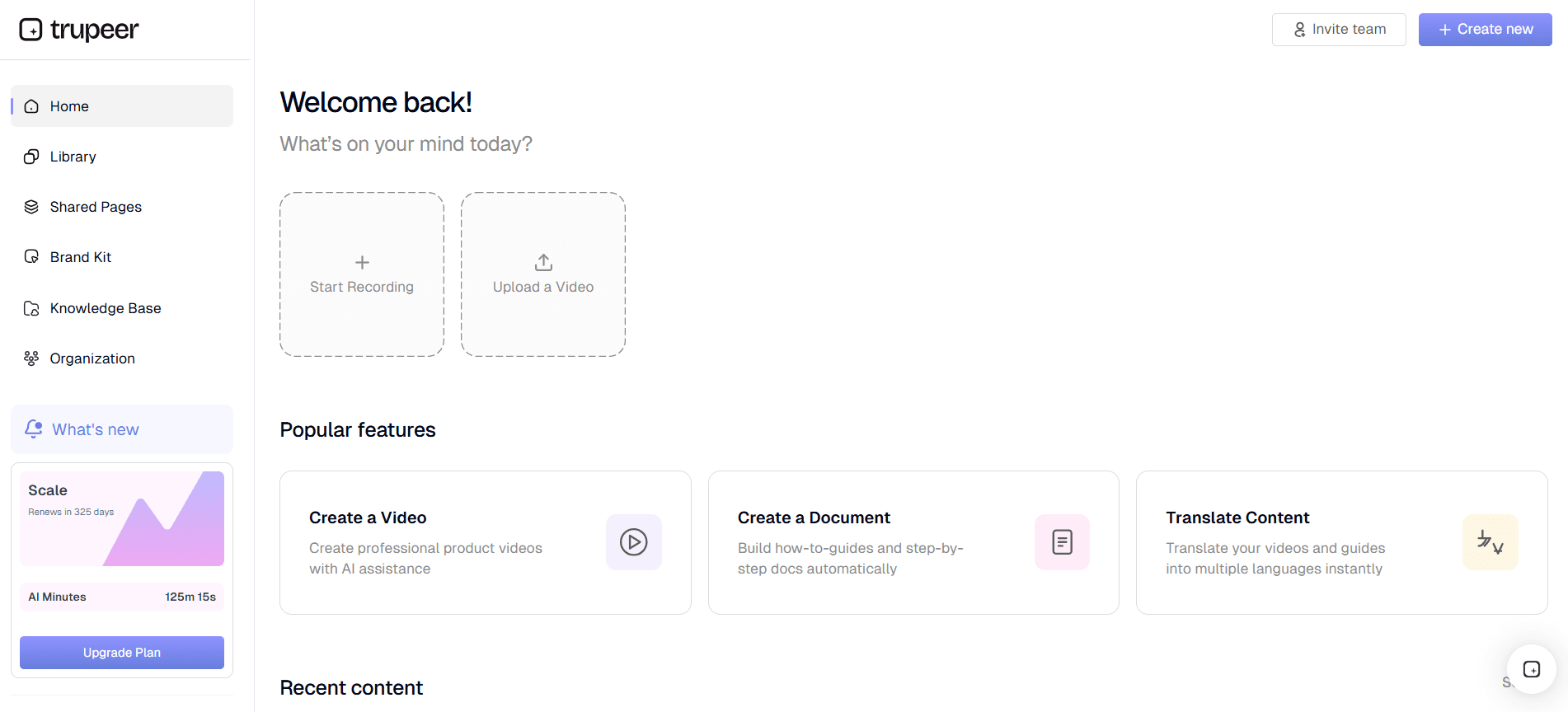
Trupeer.ai offers a suite of features designed to simplify the creation and management of ISO-compliant work instructions, ensuring your documentation is always up-to-date and accessible.
Automatic SOP generation from any recording
Trupeer's ability to automatically generate SOPs from any recording is a big shift for creating ISO-compliant work instructions. By capturing every detail of a process, this feature ensures that no step is missed. Once a recording is made, Trupeer processes and converts it into an edit-ready document. This capability significantly cuts down the time needed to draft detailed instructions manually. It also allows for quick updates, ensuring your work instructions remain current as processes evolve.
Auto-updating documentation tied to the underlying recording
With Trupeer's auto-updating documentation feature, any changes made to the process recordings automatically reflect in the related work instructions. This ensures that your documentation is always aligned with the latest operational practices. This feature is crucial for maintaining ISO compliance, as it eliminates the risk of outdated instructions being used on the shop floor. By linking documentation to recordings, Trupeer provides a dynamic and responsive solution for managing work instructions.
AI translation into 40+ languages with lip-sync
For global organizations, Trupeer's AI translation and dubbing capabilities are invaluable. They allow work instructions to be translated into over 40 languages, complete with lip-sync for video content. This ensures that non-English speaking employees can access and understand instructions in their native language, promoting inclusivity and minimizing misunderstandings. This capability supports companies in meeting ISO requirements across different regions and language preferences.
AI-searchable knowledge base with timestamp deep-links
The AI-searchable knowledge base feature allows you to index every recording with deep links at specific timestamps. This makes it easy to locate precise moments within a video that correlate with detailed instructions. Employees can quickly find the information they need without sifting through entire documents. This feature enhances the usability of work instructions, making them a practical resource for everyday operations.
Shared pages / client-facing portals
Trupeer enables you to create shared pages and client-facing portals, offering an easy way to distribute work instructions to both internal teams and external stakeholders. This feature is particularly useful for sharing best practices with partners or clients without compromising on compliance standards. By providing a centralized access point for all documentation, Trupeer helps maintain transparency and facilitates collaboration, ensuring everyone is aligned and informed.
How do you create ISO-compliant work instructions step by step with Trupeer?
Step 1: Record the Process
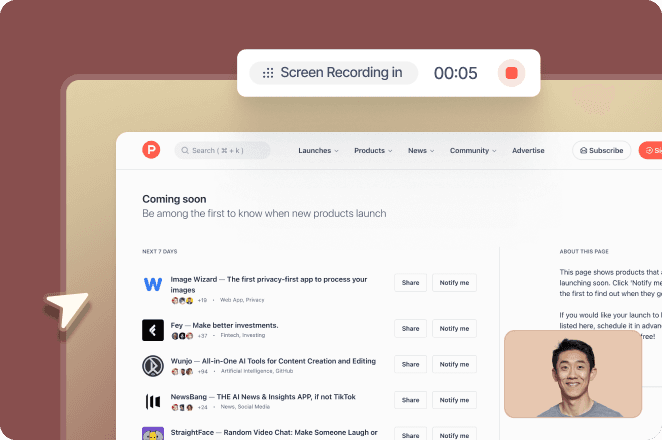
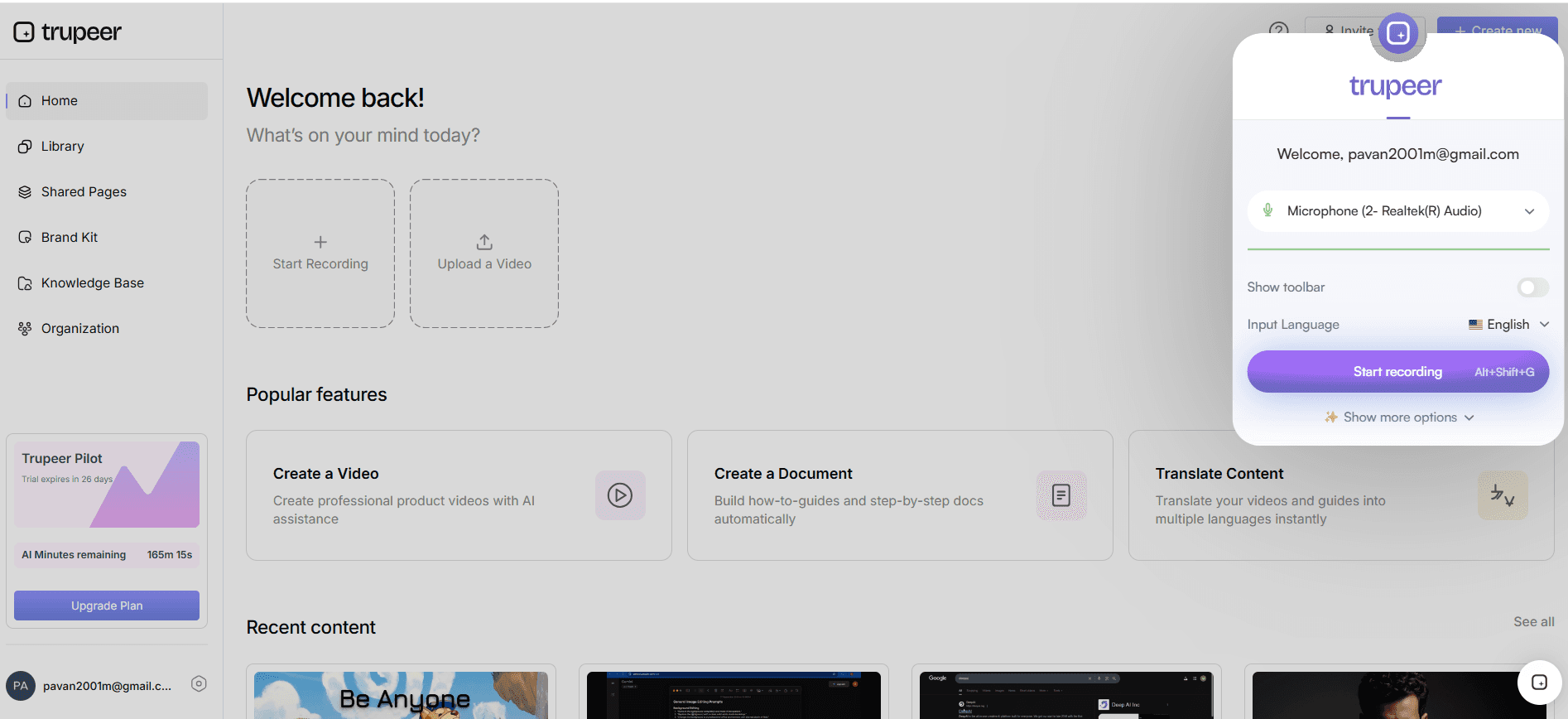
Begin by capturing the process you want to document using Trupeer's AI screen recording with auto-zoom and click detection. Open Trupeer's browser-based recorder, select the screen you wish to capture, and start recording. The tool will automatically highlight major actions and clicks, ensuring critical steps aren't missed. This method is ideal for visual processes, providing clarity that static documents can't. Expect this step to take as long as the process itself, plus a few minutes for setup. If multiple processes need recording, repeat this step for each. Ensure a quiet environment if using automatic AI narration to avoid background noise interference.
Step 2: Generate the Initial SOP
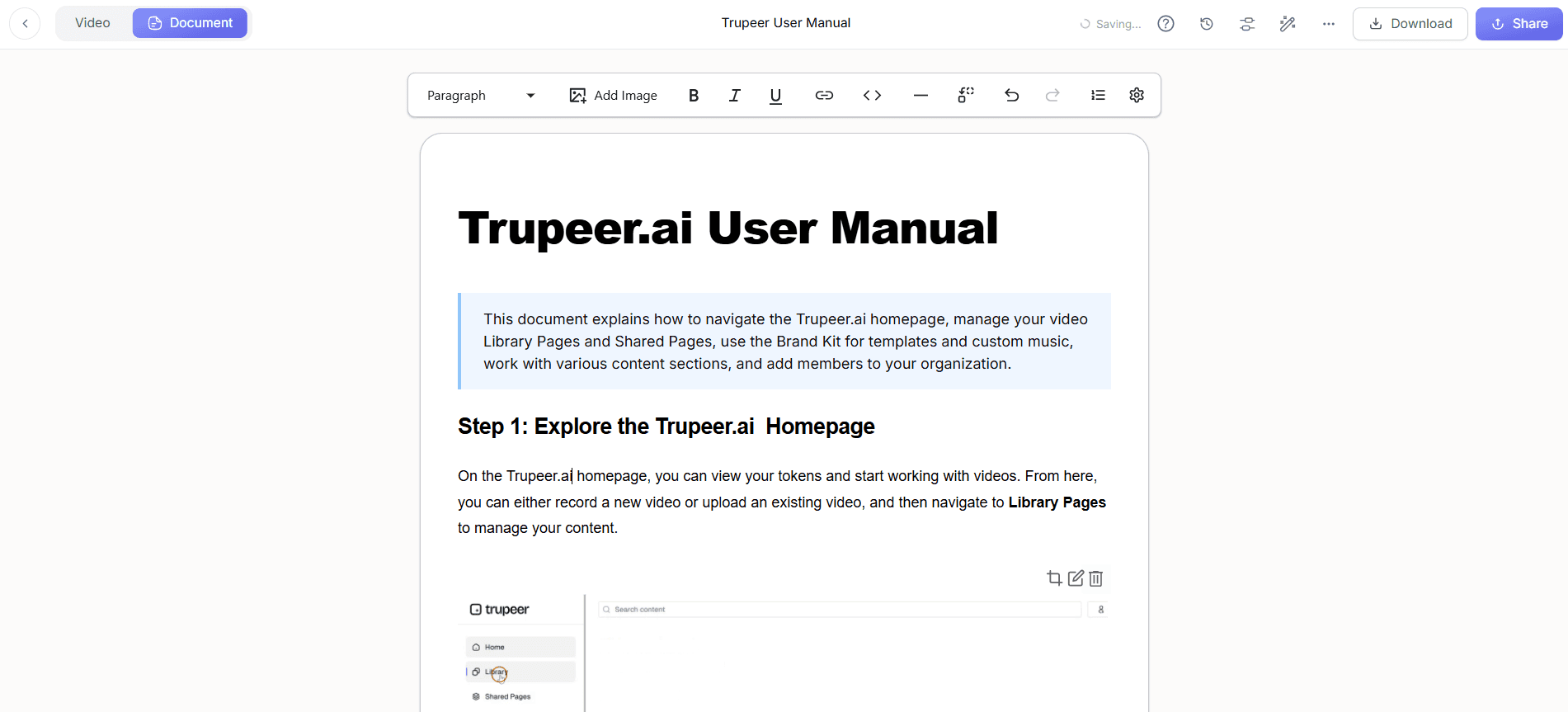
Once your recording is complete, use Trupeer's automatic SOP generation feature to convert your video into a draft work instruction. This feature automatically transcribes the video and organizes it into a structured document. Navigate to the "Generate SOP" option within your recorded file, and Trupeer will process the data in seconds. Review the draft for completeness, ensuring all steps are captured accurately. This draft serves as a baseline, which you can refine and customize. The initial SOP generation typically takes under a minute, allowing for rapid iteration. For a deeper look, our guide on instructional design covers the adjacent playbook.
Step 3: Edit and Enhance the Documentation
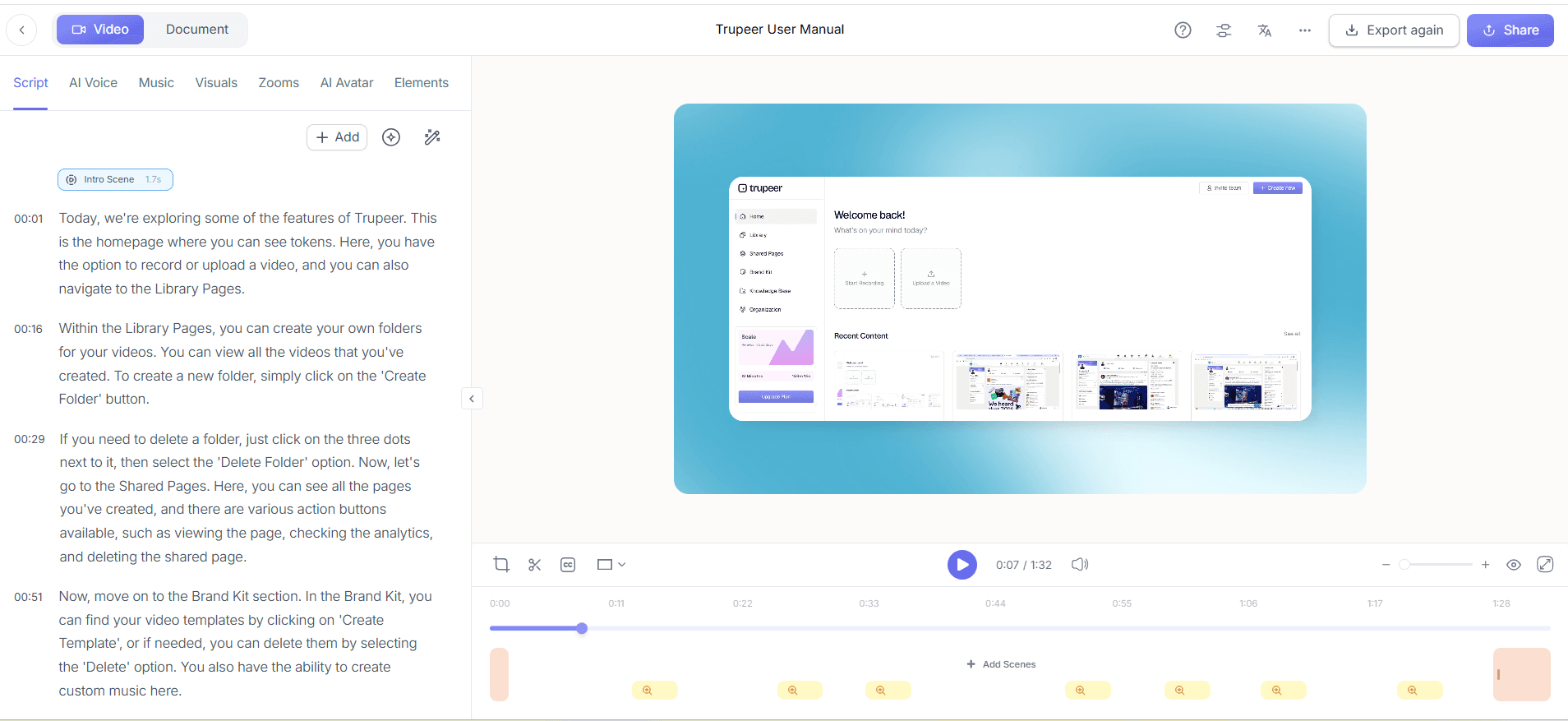
With the draft SOP ready, proceed to refine it using Trupeer's editing and enhancement tools. Here, you can remove filler words, adjust the AI-generated voiceover for clarity, and add custom AI avatars or talking-head videos for sections that benefit from additional explanation. Open the editing interface, select "Enhance," and choose from the available options. This editing process can take 15-30 minutes, depending on the complexity of the content and the enhancements desired. Ensure that the final document is clear and concise, adhering to ISO standards while being understandable for the intended audience.
Step 4: Translate for Global Teams
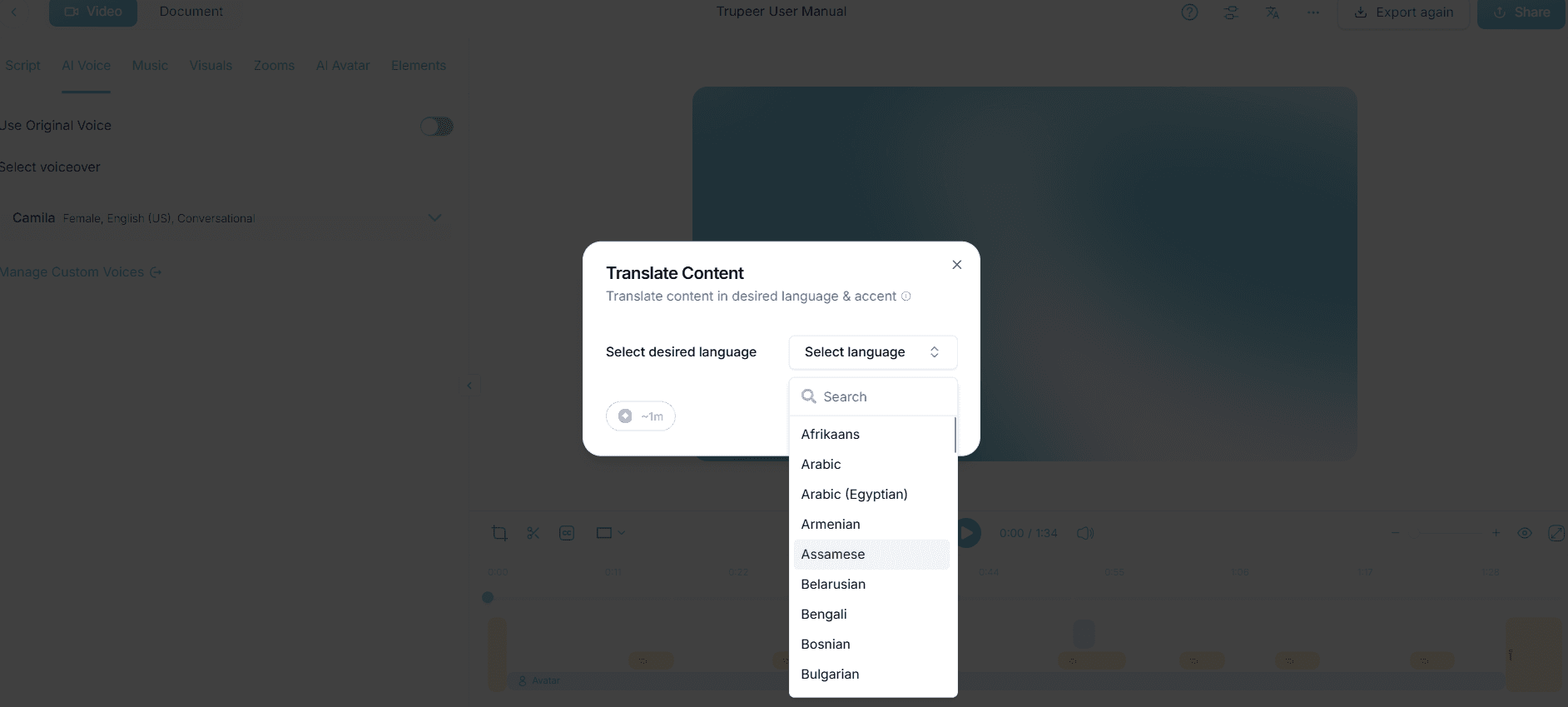
If your organization operates globally, translation becomes essential. use Trupeer's AI translation into 40+ languages with lip-sync to create multilingual work instructions. Select "Translate" from the Trupeer dashboard, choose your target languages, and let the AI handle the rest. This ensures that non-English speaking employees understand the instructions just as well as their English-speaking counterparts. The translation process is quick, often completing in under five minutes per language. Verify the translations for cultural nuances or specific technical terms that might require manual adjustments.
Step 5: Distribute via Knowledge Base
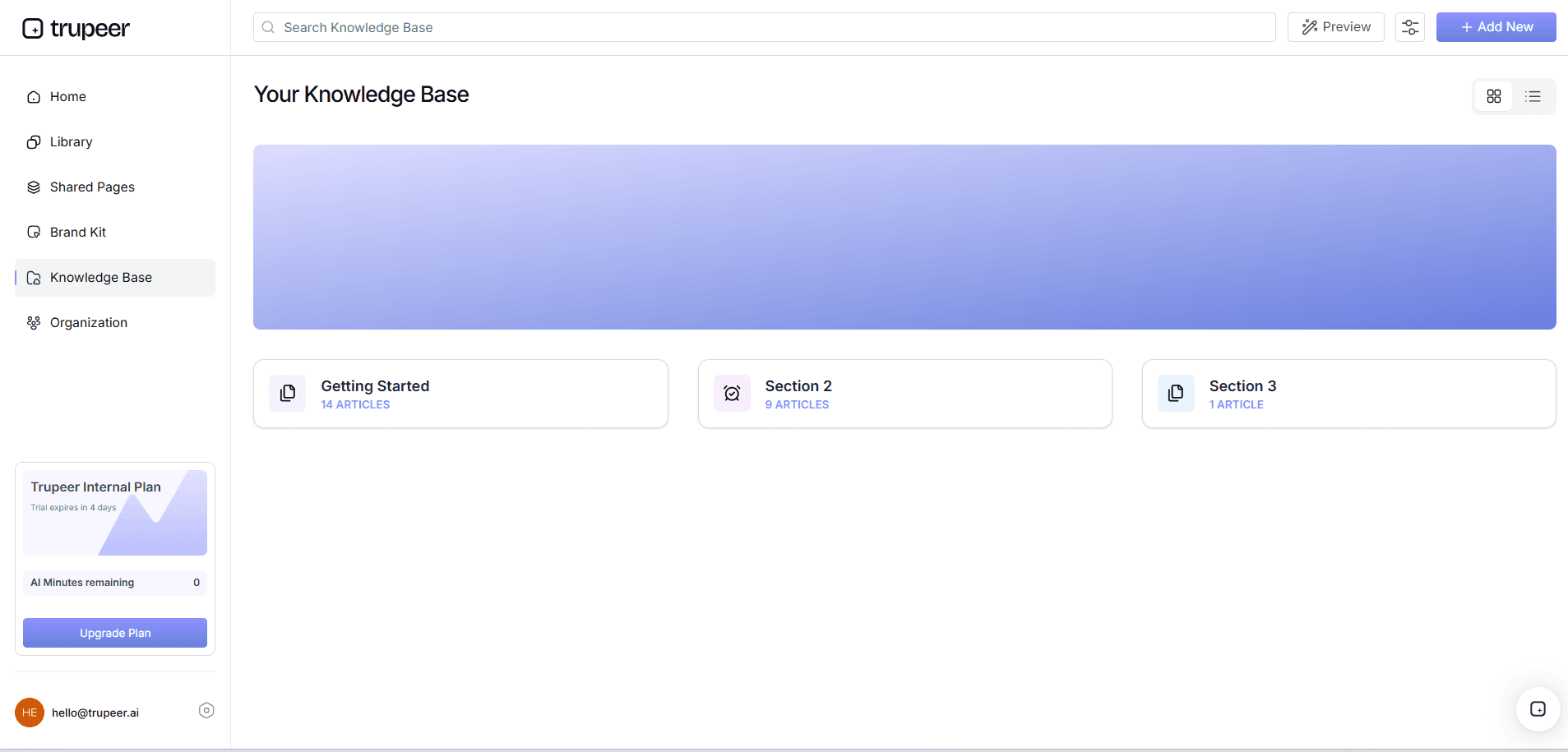
Once your work instructions are finalized, distribute them using Trupeer's AI-searchable knowledge base. This feature allows employees to access instructions via a centralized platform, with timestamp deep-links for video content. Upload your documentation to the knowledge base, ensuring appropriate tagging for easy retrieval. This step ensures that the instructions are not only accessible but also easily navigable, reducing time spent searching for information. The setup is intuitive, with the entire process typically taking about 10 minutes. Encourage team members to familiarize themselves with this system to maximize its benefits.
Step 6: Maintain and Update Regularly
Finally, ensure your work instructions remain up-to-date with Trupeer's auto-updating documentation tied to the underlying recording. When changes occur in the process, re-record the necessary sections and let Trupeer automatically update the linked documents. This capability ensures documentation evolves with your operations without manual intervention. Schedule regular reviews every quarter to identify areas needing updates, ensuring compliance with ISO standards. This proactive approach minimizes lapses in document accuracy, supporting continuous improvement and operational excellence.
What tips help you create ISO-compliant work instructions?
Creating ISO-compliant work instructions requires attention to detail and consistent application of best practices. Here are some tips to enhance your documentation process.
Standardize your format. Use a consistent template and style for all work instructions. This improves readability and ensures compliance with ISO standards.
Include visual aids. Enhance clarity by incorporating diagrams, flowcharts, or screenshots where applicable. Visuals help convey complex information efficiently.
Prioritize clarity over brevity. While concise instructions are important, never sacrifice clarity. Ensure every step is detailed enough to avoid misinterpretation.
Engage stakeholders early. Involve relevant team members during the drafting phase to ensure accuracy and relevance. This collaborative approach can identify potential oversights early.
use technology. use tools like Trupeer's instruction manual creator for simplified document creation and management.
Regularly review and update. Schedule routine reviews of your work instructions to ensure they reflect current practices and comply with any new ISO updates.
Test instructions in real scenarios. Before finalizing, have a team member follow the instructions to identify any gaps or ambiguities.
When SOPs come into the same conversation, a Scribe alternatives comparison helps clarify the scope.
Frequently asked questions
How do you ensure ISO-compliance in work instructions?
Ensuring ISO-compliance in work instructions involves adhering to specific guidelines that ISO sets out for documentation. This includes using a clear, standardized format, ensuring that instructions are complete and accurate, and maintaining up-to-date documents. It's crucial to regularly audit work instructions to confirm they meet these requirements, and to involve all relevant stakeholders in this process. using technology, like Trupeer's tools, can significantly aid in maintaining compliance by automating updates and providing clear, structured outputs that align with ISO standards.
What should be included in ISO-compliant work instructions?
ISO-compliant work instructions should include several key elements: a title that clearly identifies the process, a purpose or objective section, detailed step-by-step instructions, any necessary safety precautions, and a list of required materials and equipment. also, including diagrams or visuals can help clarify complex steps. It's also important to include document control information, such as revision dates and approval signatures, to maintain a record of changes and ensure that the most current version is in use. This thorough approach helps meet ISO documentation standards effectively.
Why is it important to update work instructions regularly?
Regularly updating work instructions is crucial to maintain accuracy and relevance, ensuring that they reflect the current best practices and any changes in the process. Outdated instructions can lead to errors, inefficiencies, and safety risks, potentially compromising ISO compliance. Regular updates also demonstrate a commitment to continuous improvement, a core principle of ISO standards. using features like Trupeer's auto-updating documentation helps automate this process, ensuring that instructions are always aligned with the latest operational changes without requiring manual intervention.
Can Trupeer help with multilingual work instructions?
Yes, Trupeer can significantly aid in creating multilingual work instructions through its AI translation features. It offers translation into over 40 languages, complete with lip-sync for video content. This ensures that instructions are accessible and comprehensible to a diverse workforce, supporting compliance with ISO standards globally. By providing accurate translations swiftly, Trupeer helps bridge language barriers, enhancing understanding and reducing the risk of misinterpretation. This capability is particularly beneficial for multinational organizations that need to maintain consistent quality standards across different regions.
Does Trupeer support video-based work instructions?
Absolutely, Trupeer excels in supporting video-based work instructions. Its features include AI screen recording and auto-zoom, which capture detailed video content that can be transformed into comprehensive instructions. The platform also supports video hosting and integration with video localization tools, allowing for dynamic and engaging instructional content. This not only enhances the clarity of instructions but also caters to different learning styles, ensuring that all employees can benefit from the material. Video-based instructions are especially effective in demonstrating complex processes visually.