Trupeer Blog
Summarise

Why sales role-play training matters
Reps learn by doing, and there's no substitute for the real-time experience of handling objections and guiding potential customers through the sales process. A rep who's answered a pricing objection a hundred times in practice is far more equipped than one who's only read about it in theory. Despite this, many sales organizations neglect role-playing due to logistical challenges: coordinating live sessions across different time zones is challenging, reps often feel anxious about performing in front of peers, and managers may become fatigued from repeatedly playing the role of a customer. However, AI role-play tools have mitigated most of these challenges, and async video coaching provides a platform where managers can still give feedback without the need for immediate interaction.
The impact of structured role-play, whether live or AI-driven, is significant. Teams that adopt these practices see an acceleration in the ramp-up of new reps by 20-40% and enjoy a 10-15% increase in win rates on competitive deals. These improvements are not just theoretical; they're backed by data from organizations successfully implementing these strategies. The framework and tool choices discussed here reflect what's effective in 2026, incorporating reusable scripts and documentation to ensure a cohesive training approach.
The 6 role-play scenarios every rep should practice
1. The discovery call opening
In a discovery call, reps have a mere 90 seconds to make a compelling first impression and earn the prospect's trust to look deeper. This initial interaction is crucial because it sets the tone for the entire conversation. Reps should practice this opening until it feels both natural and tailored to the Ideal Customer Profile (ICP). The opening should be scored based on three criteria: framing, relevance, and the hook. The framing needs to establish the context, the relevance should address the prospect's specific needs, and the hook must be compelling enough to engage the prospect and encourage further discussion.
2. The pricing objection
Pricing objections are a staple of sales conversations, with reps often hearing "you're too expensive" on a weekly basis. To effectively navigate these objections, reps should practice three core responses: reframing the conversation to focus on value, comparing the price to the cost of inaction, and proposing a smaller starting scope as a compromise. The key to mastering this scenario lies in maintaining calmness, being specific with responses, and clearly outlining the next steps. By practicing these techniques, reps can transform a potential deal-breaker into an opportunity to reinforce the product's value.
3. The competitor comparison
In competitive markets, reps frequently encounter situations where prospects are already using or considering alternatives. It's essential for reps to speak knowledgeably about their two or three main competitors without disparaging them. This requires honesty and fact-based differentiation, allowing reps to highlight what makes their offering unique while respecting the prospect's current choice. Scoring should focus on how well reps handle the common "we already use X" opener and guide the conversation towards their unique strengths.
4. The multi-stakeholder loop
B2B deals often involve multiple stakeholders, typically between 4 and 7. Reps must practice mapping out the buying committee and addressing objections from various personas, including finance, legal, and end-users. Successful navigation of this scenario requires awareness of each stakeholder's role and concerns, crafting tailored messaging, and taking ownership of the next steps. This practice helps reps manage complex deals more effectively by ensuring all voices are heard and addressed appropriately.
5. The silent stakeholder
In meetings, the decision-maker who remains silent often holds significant influence and can be a blocker. Reps need to practice strategies to engage this individual without causing embarrassment or discomfort. This involves careful question design, appropriate pacing, and skillful redirection to encourage participation. Scoring in this scenario should focus on the rep's ability to ask insightful questions and create a comfortable environment for the silent stakeholder to express their views.
6. The closing conversation
Closing is notoriously challenging to simulate because without a real deal, the stakes don't feel genuine. Using historical deals as scenarios can inject realism into the practice. Reps should be evaluated on their confidence, specificity, and their ability to handle last-minute objections. Mastery of the closing conversation is critical, as it directly impacts the conversion of prospects into customers.
Feature comparison: role-play and coaching tools
Tool | Best for | Scoring type | Async support |
|---|---|---|---|
Trupeer | Async video feedback | Manager review | Yes (native) |
Second Nature | AI buyer simulations | AI + manager | Yes |
Quantified | Behavioral scoring | AI (vocal, pacing) | Yes |
Hyperbound | Cold call practice | AI | Yes |
Gong | Coaching off real calls | AI call analysis | Yes |
Mindtickle | Certification + coaching | Manager scorecard | Yes |
Highspot | Pitch practice | AI + manager | Yes |
Tool breakdowns
1. Trupeer (async video coaching)
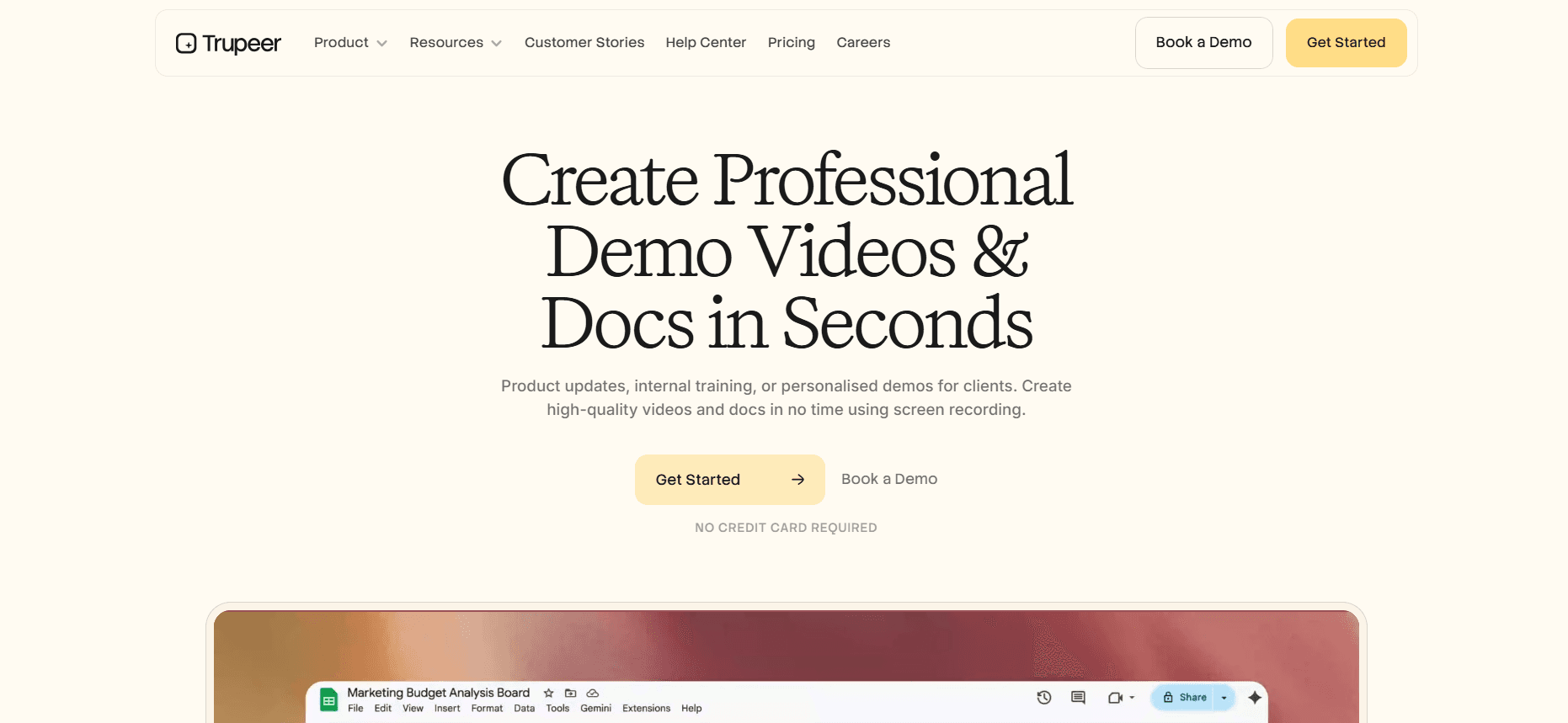
Trupeer is an ideal choice for teams needing flexibility. Reps can record their role-plays or real pitches, allowing managers to review them asynchronously with timestamped comments. This setup aligns with the reality of coaching: managers who can't always schedule live sessions with every rep. Trupeer works excellently when paired with an AI role-play tool, providing a blend of practice with automated feedback and human insights.
Pros: Reps can practice on their schedule, and managers can review at their convenience, making it highly flexible and efficient.
Cons: It's not a standalone AI role-play tool, so it requires integration with other tools like Second Nature for a comprehensive training solution.
2. Second Nature
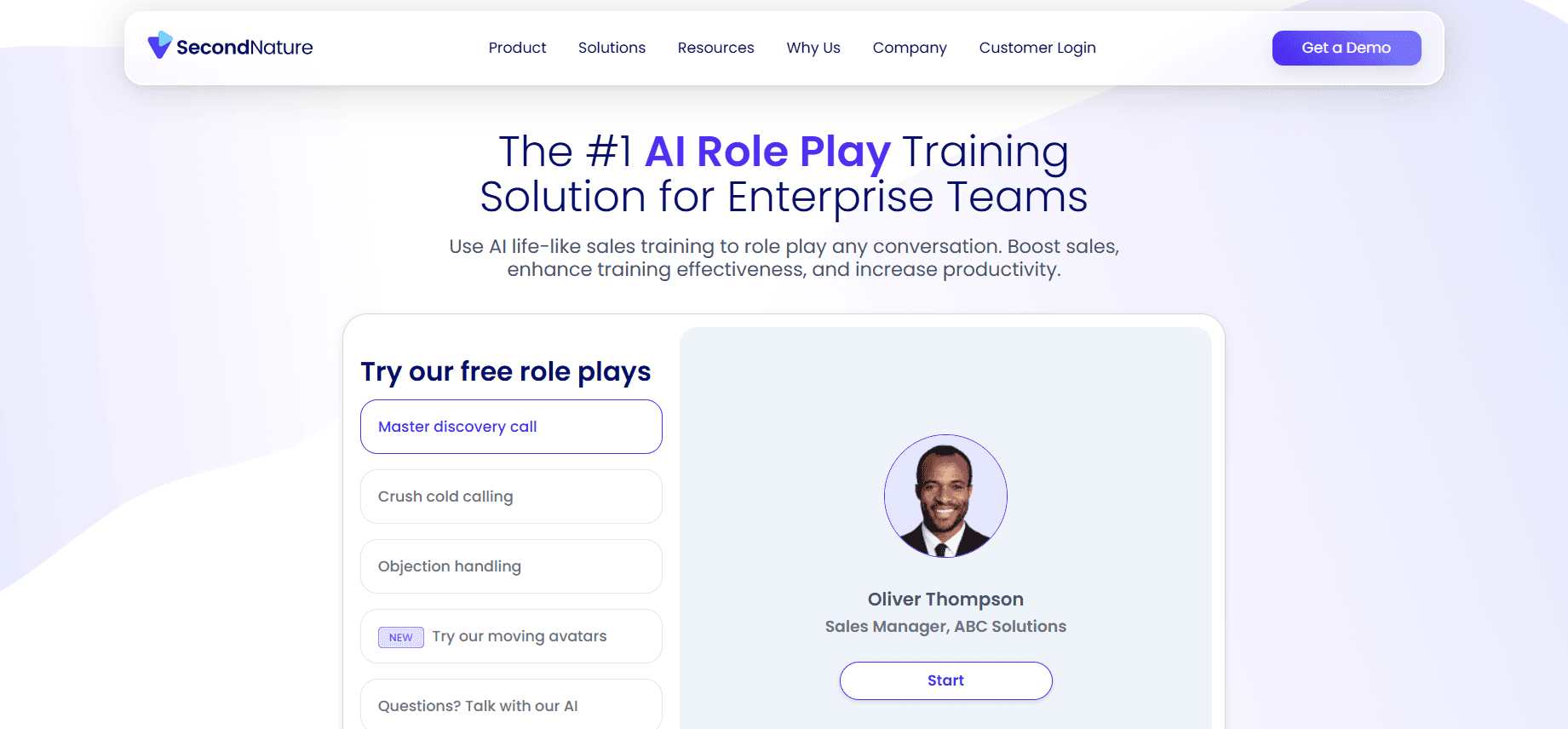
Second Nature sets the standard for AI role-play tools. Reps can practice their pitches with AI avatars that mimic real buyer interactions, providing a realistic and engaging practice environment. Setup is straightforward and can be completed in less than an hour, making it accessible for teams looking to implement role-play quickly.
Pros: Offers realistic buyer simulations and auto-scoring, allowing unlimited practice opportunities without the need for constant managerial oversight.
Cons: While excellent for structure, it doesn't replace the nuanced feedback that human coaches can provide.
3. Quantified
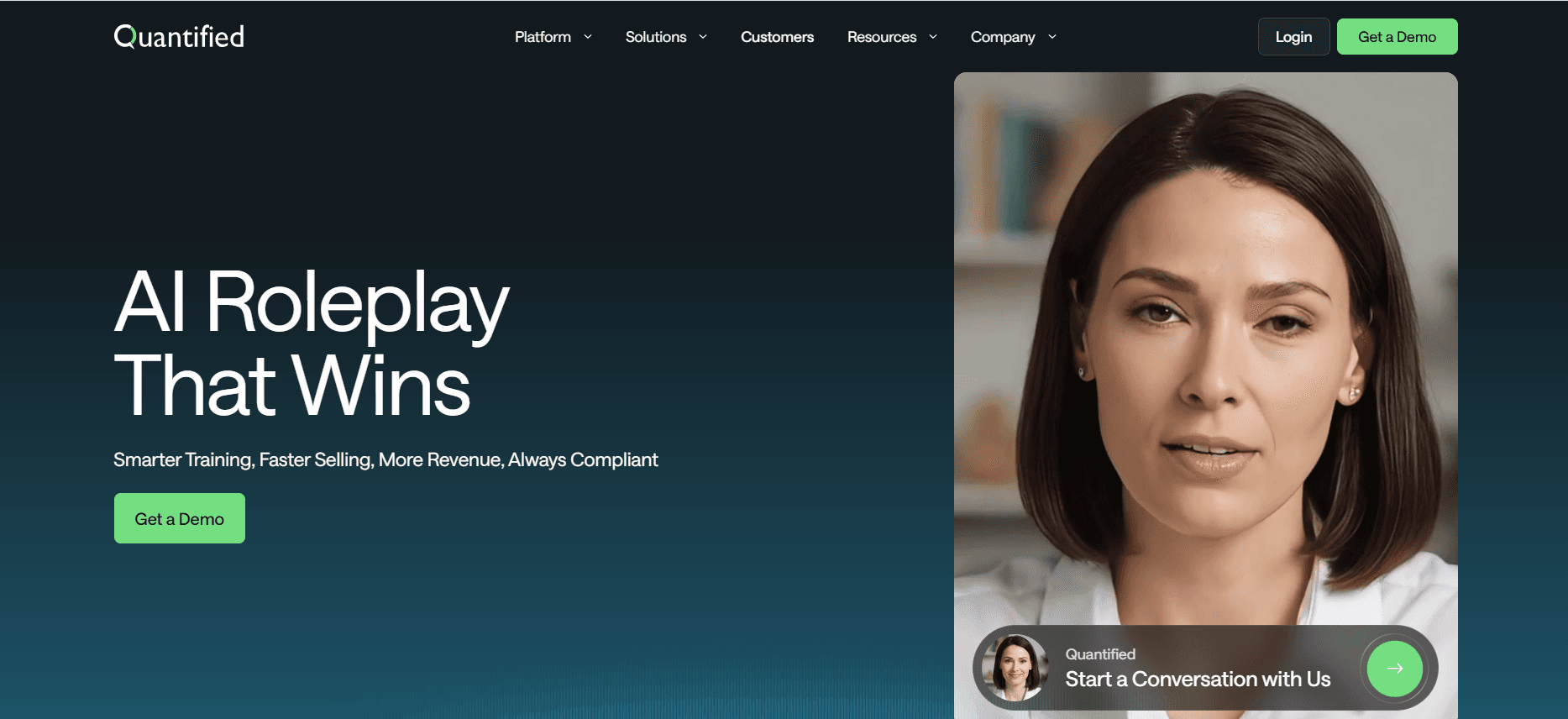
Quantified emphasizes behavioral scoring, focusing on vocal tone, confidence, and pacing. It's particularly beneficial for reps early in their careers who need feedback on their presence and delivery.
Pros: Provides a unique perspective on rep performance, especially valuable for SDRs ramping up.
Cons: Its scope is limited to behavioral aspects and doesn't address content or strategy.
4. Hyperbound
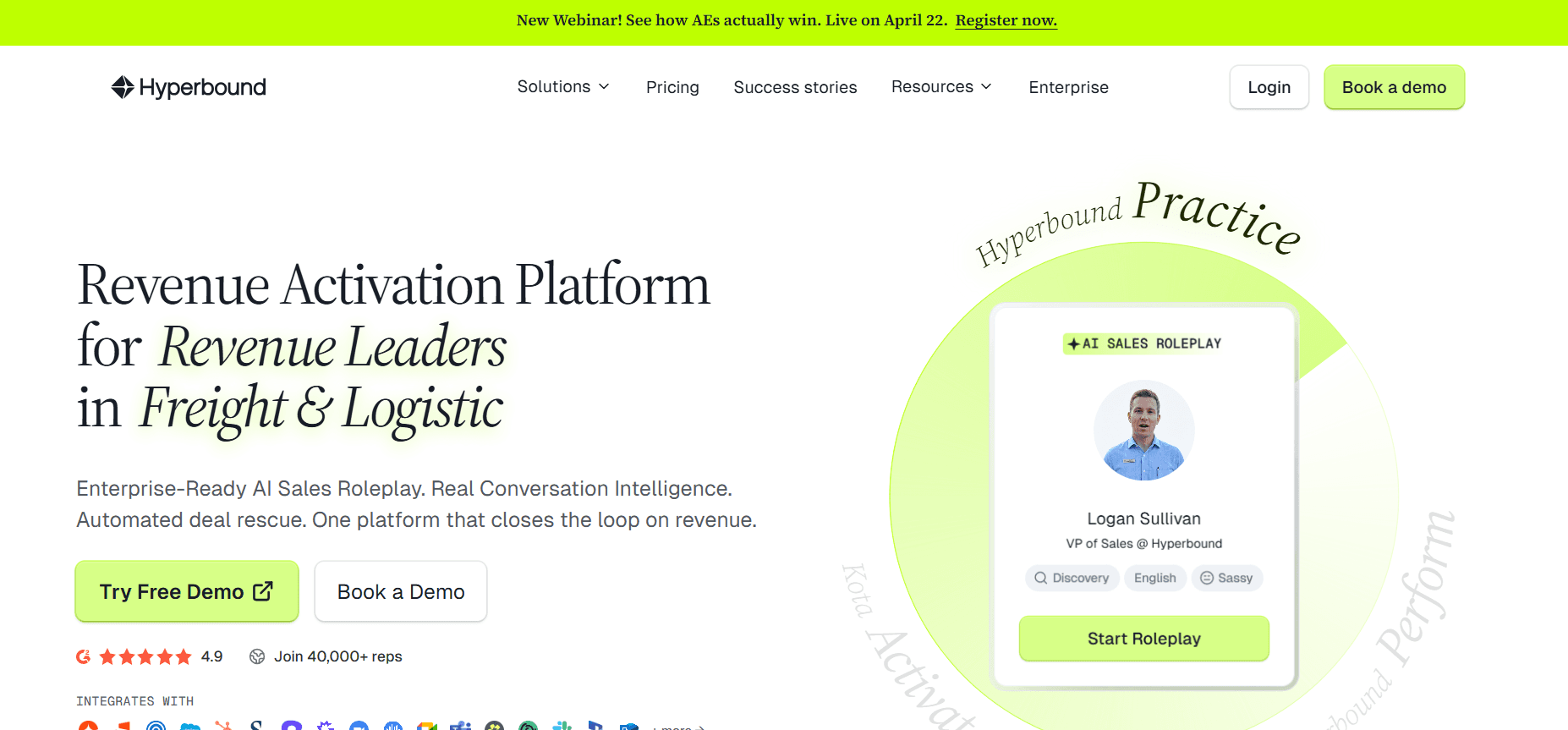
Hyperbound is tailored specifically for cold calling scenarios. It features AI prospects who answer calls, provide pushback, and test reps' ability to handle rejection live, offering a targeted experience for outbound sales teams.
Pros: Offers realistic objection handling, making it ideal for outbound-focused teams.
Cons: Its narrow focus on cold calls limits its application for broader sales training.
5. Gong
Gong specializes in coaching based on real call data rather than simulations. It's most effective when combined with practice tools for new reps who haven't yet accumulated call experience.
Pros: Delivers insights from actual deal situations, backed by mature analytics that can provide deep insights into sales interactions.
Cons: Can be expensive and requires a sufficient volume of real calls to deliver value.
6. Mindtickle
Mindtickle incorporates role-play within its comprehensive readiness platform, making it a good fit for teams already using it for certifications.
Pros: Integrates role-play with learning paths and certifications, simplifying the training process.
Cons: Its extensive platform can be overwhelming, with role-play being just one of many features.
7. Highspot
Highspot's Pitch IQ evaluates rep recordings against predefined rubrics. It's particularly advantageous for teams using Highspot for content management.
Pros: Offers rubric-based scoring and integrates smoothly with its content library, enhancing the learning experience.
Cons: Heavily relies on existing Highspot infrastructure, making it less suitable as a standalone tool.
In-depth analysis: how to build a role-play program that sticks
The practice-to-feedback loop
Effective role-play training hinges on the practice-to-feedback loop. Reps don't improve through practice alone; they need timely feedback to refine their skills. The most successful programs shorten this loop: a rep practices a scenario on Monday, the manager reviews it on Tuesday, and the rep applies the feedback in another practice session by Wednesday. This cycle is far more effective than a high volume of practice without feedback.
Slow feedback cycles can kill adoption. If a rep records their practice and waits a week for feedback, they've often moved on mentally. However, quick feedback maintains momentum and learning. Async review tools like Trupeer, which allow managers to provide feedback promptly and without the need for lengthy review sessions, are crucial for maintaining this loop. Pairing Second Nature's AI scoring with Trupeer's managerial feedback creates a highly effective and efficient training cycle.
Consistency is key. Sporadic practice leads to sporadic improvement. A weekly practice cadence maintained for at least a quarter leads to significant behavioral changes and measurable improvements in ramp time and sales performance.
Scripts versus scenarios
While many sales organizations provide their reps with scripts, the most effective trainers build scenarios. The difference is critical: a script provides the exact words to say, while a scenario presents a situation with potential branching outcomes. Reps who rely solely on scripts can sound robotic when conversations deviate from the script. In contrast, those who practice scenarios develop the flexibility to handle unexpected twists and turns in conversations.
Scenarios are effective because they closely mirror real-world deals. Instead of relying on generic scenarios, use data from your most recent deals: which discovery questions were effective, which objections caused trouble, and when competitors were mentioned. Scenarios drawn from real data are more relatable and prepare reps for the actual challenges they'll face in the field.
Scoring that matters
While behavioral scores such as talk ratio, pace, and use of filler words are easy to collect, they're often insufficient for meaningful coaching. Outcome scores, which assess whether the rep successfully secured a next meeting or obtained clear qualification answers, are more challenging to measure but provide much more valuable insights. A balanced approach is necessary, but greater emphasis should be placed on outcomes. A rep who maintains perfect talk ratios but fails to move deals forward remains a concern.
Challenges and how to handle them
Rep resistance to recording themselves. Reps may feel uncomfortable recording themselves, fearing judgment or criticism. Normalize the process by having managers record themselves first, demonstrating that everyone is subject to the same process. When leadership participates, it sets the tone for the team.
Manager capacity. Managers who are already stretched thin might struggle to find time for additional coaching responsibilities. Restructuring their one-on-ones around a consistent coaching cadence can help allocate time more efficiently, ensuring coaching doesn't fall by the wayside.
AI buyer personas feeling fake. Early implementations of AI role-play often felt rigid and scripted. While newer tools have improved, they still have limitations. Use AI for high-volume practice sessions and reserve human review for addressing nuances that AI might miss.
Coaching fatigue. Repeatedly practicing the same scenarios can lead to boredom and reduced engagement. To combat this, rotate themes regularly: focus on discovery one week, objections the next, and closing strategies after that. This keeps the training dynamic and engaging for reps.
Must-have features in a role-play tool
Practice mode reps can access on demand, not just on manager schedule, ensuring flexibility and frequent practice opportunities.
AI buyer personas that respond with realistic pushback, providing a challenging and enriching practice environment.
Scoring rubrics you can customize without vendor services, allowing for tailored evaluations that reflect your specific sales context.
Async review for manager feedback on practice recordings, enabling timely feedback without the need for live sessions.
Scenario library built from your actual deal data, ensuring relevance and practical application for reps.
Certification tie-in so practice translates to territory or pipeline access, providing a clear path from training to tangible outcomes.
Mobile support for field reps who practice in the car, ensuring that training is accessible regardless of location.
Use cases and personas
SDR practice: Anika, SDR Manager, 18-person team
Anika leads a team of SDRs who previously dreaded role-play due to the public nature of team meetings. By transitioning to Second Nature for private AI-driven practice and using Trupeer for manager feedback, the practice volume increased significantly. Reps now engage in 15 practice sessions per week, compared to just 2 previously. As a result, their first-meeting-to-second-meeting conversion rate on cold outbound calls improved by 28% over the course of a quarter.
Enterprise AE ramp: Dmitri, Enablement Director, 80-rep enterprise team
Dmitri's team of new Account Executives traditionally took an average of 4.5 months to ramp up. He implemented a role-play program featuring 20 scenarios drawn from the company's last 50 deals. Reps practiced each scenario using Second Nature, recorded their best attempts on Trupeer for manager feedback, and had to certify out of each scenario before handling active deals. This approach reduced ramp time to 2.8 months and increased year-one quota attainment from 48% to 71%.
Competitive displacement: Lucia, Sales Director, 40-rep mid-market team
Lucia's team frequently encountered a new competitor in 40% of their deals. To address this, she developed a specialized role-play focused on countering the competitor's three strongest selling points. The team practiced weekly for a quarter, resulting in their win rate against this competitor rising from 28% to 44%. For more on coaching tool options, see this guide.
Best practices for sales role-play programs
Use your own deals as source material. Generic scenarios often lead to generic skills. Tailor your training to reflect real challenges your team faces.
Mix AI practice with human feedback. AI provides the volume and consistency, but human feedback offers the critical nuance needed for deeper learning.
Weekly cadence, not monthly. Regular, consistent practice ensures skills are honed and maintained, leading to better long-term results.
Rotate themes quarterly. Focus on different aspects of sales such as discovery, objections, closing, and competitive strategies to keep training fresh and engaging.
Tie scoring to outcomes. It's not about perfecting behavioral metrics but about achieving tangible results, like securing meetings or improving qualification.
Frequently asked questions
Is AI role-play as good as live role-play?
In terms of practice volume, AI role-play is comparable to live role-play. It allows reps to practice frequently without the need for a partner. However, it can't replace the nuanced feedback that a human coach can provide. The most effective training programs combine both AI-driven practice for volume and human-led coaching for detailed guidance.
How often should reps role-play?
New reps should engage in role-play weekly to rapidly build their skills, while experienced reps may benefit from biweekly sessions to maintain and refine their abilities. Additionally, role-play should be conducted whenever there are significant changes to the playbook to ensure all reps are up-to-date with the latest strategies.
What scenarios should I start with?
Begin with the fundamentals: the discovery call opening, addressing the top pricing objection, and handling a top competitor comparison. These scenarios cover the most common challenges reps face and provide a solid foundation for further skill development.
How do I get managers to actually coach?
Integrate coaching into the manager's responsibilities by including it in their performance scorecard. When coaching minutes are measured and tied to their evaluation, managers are more likely to prioritize it. This approach ensures that coaching becomes a part of the organizational culture rather than an optional activity.
Can reps practice on their own?
Yes, and self-practice is encouraged. AI role-play tools make it easy for reps to practice independently at their convenience. This flexibility allows reps to refine their skills and confidence without the pressure of immediate peer or managerial oversight.
Final word
Sales role-play is most effective when it's consistent, based on realistic scenarios, and includes prompt feedback. Modern tools eliminate the scheduling and embarrassment issues that plagued traditional live role-play programs. Teams that commit to a weekly practice schedule grounded in their own deal data consistently outperform those that don't. By building a structured and dynamic role-play program, sales organizations can achieve faster ramp times and higher win rates, delivering tangible improvements in sales performance.