Trupeer Blog
AI Video Translation Accuracy: How to Evaluate and Improve Output Quality
Imagine you're leading a multinational marketing campaign. Your team has produced a compelling promotional video in English, but you need it translated into Spanish, French, and Mandarin to reach your global audience. The stakes are high. Mistranslations can lead to misunderstandings, or worse, damage to your brand's reputation. Inaccurate translations can also inflate costs due to rework and potential loss of business opportunities. According to a study,
companies can lose up to 40% of their global revenue due to inadequate translations.
This is where AI video translation tools come in, promising speed and cost-efficiency. But not all tools are created equal. You'll need to evaluate the output quality meticulously to ensure your message is consistent across languages. This guide is designed to help you understand how to assess translation accuracy and improve your workflow to produce reliable translations. Teams weighing tools often start with a Loom alternatives comparison before standardizing on a workflow.
Why does AI video translation accuracy matter?
In an interconnected world, reaching a global audience has never been more critical. Businesses spanning various sectors, from e-commerce to entertainment, rely on accurate translations to communicate effectively across cultural and linguistic barriers. Misinterpretations in translation can lead to costly errors, such as misleading product information or culturally insensitive content. This can damage brand credibility and customer trust. For instance, a marketing video with poor translation can confuse potential customers, leading to a drop in engagement and conversion rates. In response to growing demands, companies are increasingly turning to AI adoption to simplify and enhance their translation workflows.
The impact of translation accuracy is particularly significant in sectors like healthcare, legal, and finance, where precise communication is paramount. A mistranslated medical video could lead to severe consequences, affecting patient care and safety. Similarly, in legal contexts, inaccuracies can result in misunderstandings of contractual terms. Therefore, ensuring high-quality translations is not just about maintaining professionalism but also about safeguarding the interests and safety of stakeholders. AI tools promise to enhance translation efficiency, yet their accuracy can vary. This makes it essential for organizations to carefully evaluate these tools to ensure they meet the required standards of precision and reliability.
What are the benefits of accurate AI video translation?
Accurate AI video translation provides numerous advantages that enhance both operational efficiency and audience reach.
Wider audience reach. By translating videos into multiple languages, businesses can tap into new markets and demographics, significantly expanding their potential audience base.
Improved engagement. Videos that speak in the viewer's native language are more likely to resonate, leading to higher engagement rates and better audience retention.
Cost efficiency. Automating the translation process reduces the need for human translators, which can lead to substantial cost savings, especially for large-scale projects.
Faster turnaround times. AI-powered tools can translate content in a fraction of the time it would take a human, allowing businesses to release multilingual content swiftly.
Consistency across languages. AI tools can ensure that the same tone and style are maintained across different languages, providing a consistent brand voice globally.
Enhanced video prospecting. Accurate translations can turn prospects into customers by providing clarity and understanding of product offerings.
Teams ship this workflow end-to-end using Trupeer's AI video platform, which turns raw recordings into polished output without an editor.
Which Trupeer features help you evaluate and improve AI video translation accuracy?
Trupeer offers a range of capabilities that can significantly enhance the quality and efficiency of AI video translation. These features ensure that your translated content is accurate, culturally relevant, and professionally presented.
AI translation into 40+ languages with lip-sync
Trupeer's AI translation capability allows you to translate video content into over 40 languages while synchronizing lip movements with the dubbed audio. This feature ensures that your video translations appear natural and engaging, maintaining audience interest. The tool is designed for smooth integration, providing quick and reliable translations that are visually and audibly in sync, which is crucial for maintaining viewer trust and engagement.
AI dubbing for non-English audiences
This feature enables you to replace the original audio with translated voiceovers, making your videos accessible to non-English speaking audiences. Trupeer's AI dubbing offers high-quality voiceovers by using advanced voice synthesis technologies. This ensures that the dubbed audio matches the tone and pace of the original, preserving the video's intended impact. It's particularly useful for educational content, where clarity and accuracy are essential.
AI voice cloning from a short sample
With Trupeer's voice cloning, you can maintain consistency in speaker voice across different languages. By analyzing a short audio sample, the platform can replicate the speaker's voice for translations. This feature is valuable for maintaining brand consistency and personalized customer experiences. It allows for a smooth viewing experience, as the cloned voice can mirror the original speaker's emotion and intonation.
AI-searchable knowledge base
An AI-searchable knowledge base indexes every recording with timestamp-level deep links. This feature makes it easy to locate specific content within videos, which is particularly helpful when managing large volumes of translated content. It ensures that users can quickly find relevant information, improving accessibility and usability.
AI voiceover in 65+ natural voices
Trupeer provides AI-generated voiceovers in over 65+ natural voices, allowing you to choose the voice that best fits your content's style and audience. This feature is essential for tailoring video content to different cultural contexts, ensuring that the tone and emotional delivery are appropriate for each target audience. It's also beneficial for creating a more immersive and engaging video experience.
How do you evaluate and improve AI video translation accuracy step by step with Trupeer?
Step 1: Capture the video
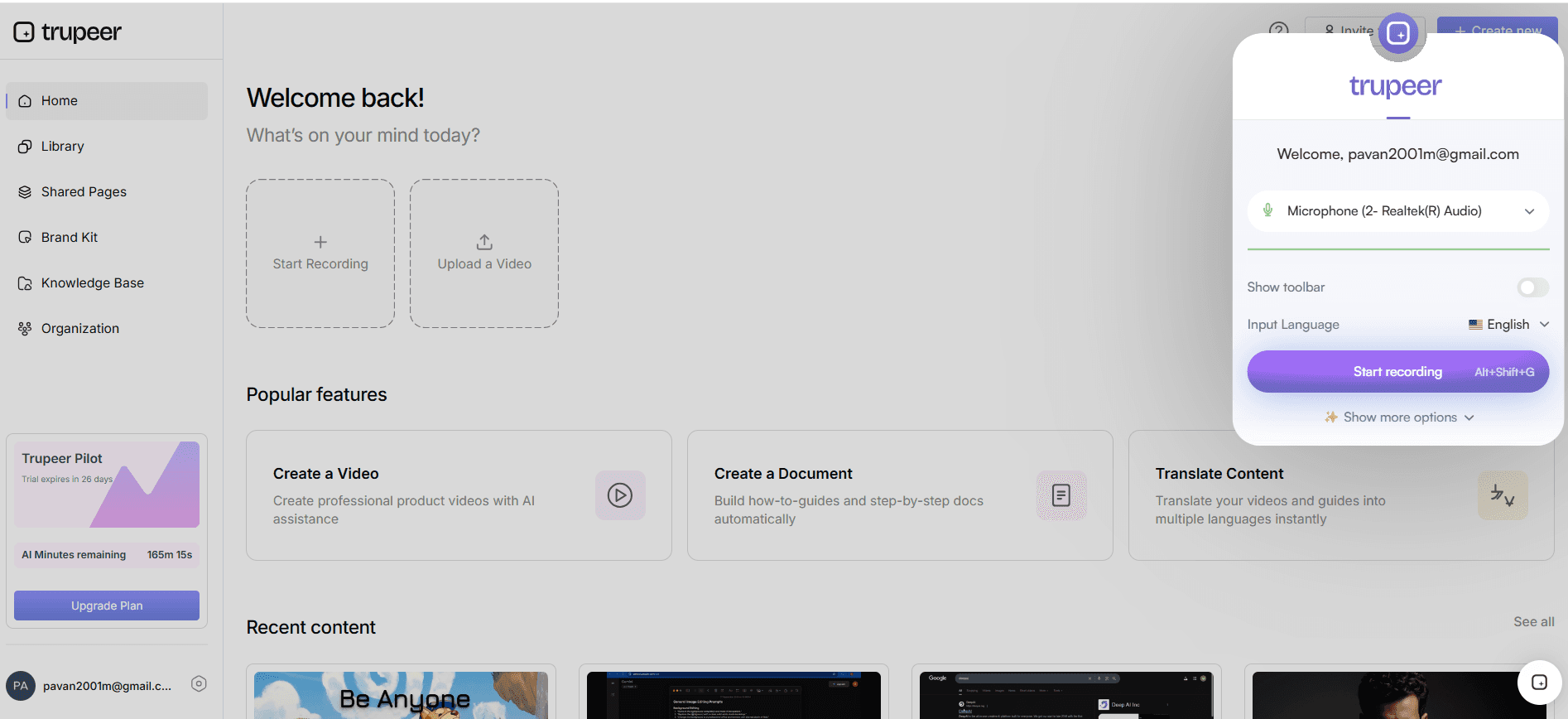
Begin by recording your original video using Trupeer's browser-based recorder or desktop app. Choose the AI screen recording option with auto-zoom and click detection to capture high-quality visuals. This ensures that every important detail is highlighted, making subsequent translations clearer and more impactful. The recording process is intuitive; after selecting your recording preferences, click "Start Recording" to begin. Trupeer captures every interaction on screen, and once you're done, click "Stop Recording." The platform automatically saves the recording to your library, ready for translation.
Step 2: Remove unwanted audio elements
Before translating, clean up your audio with Trupeer's automatic filler-word removal feature. This tool eliminates unnecessary pauses and fillers like "um" and "ah," ensuring that the audio is crisp and clear. Select your recording, then choose the "Edit Audio" option. Trupeer processes the audio swiftly, typically within a couple of minutes, producing a polished version without distractions. This step is crucial for maintaining clarity and reducing translation errors, as filler words can confuse AI translation algorithms. Many teams pair this with a documentation platform that generates written guides from the same recording, so the pitch and the how-to stay in sync.
Step 3: Translate the video
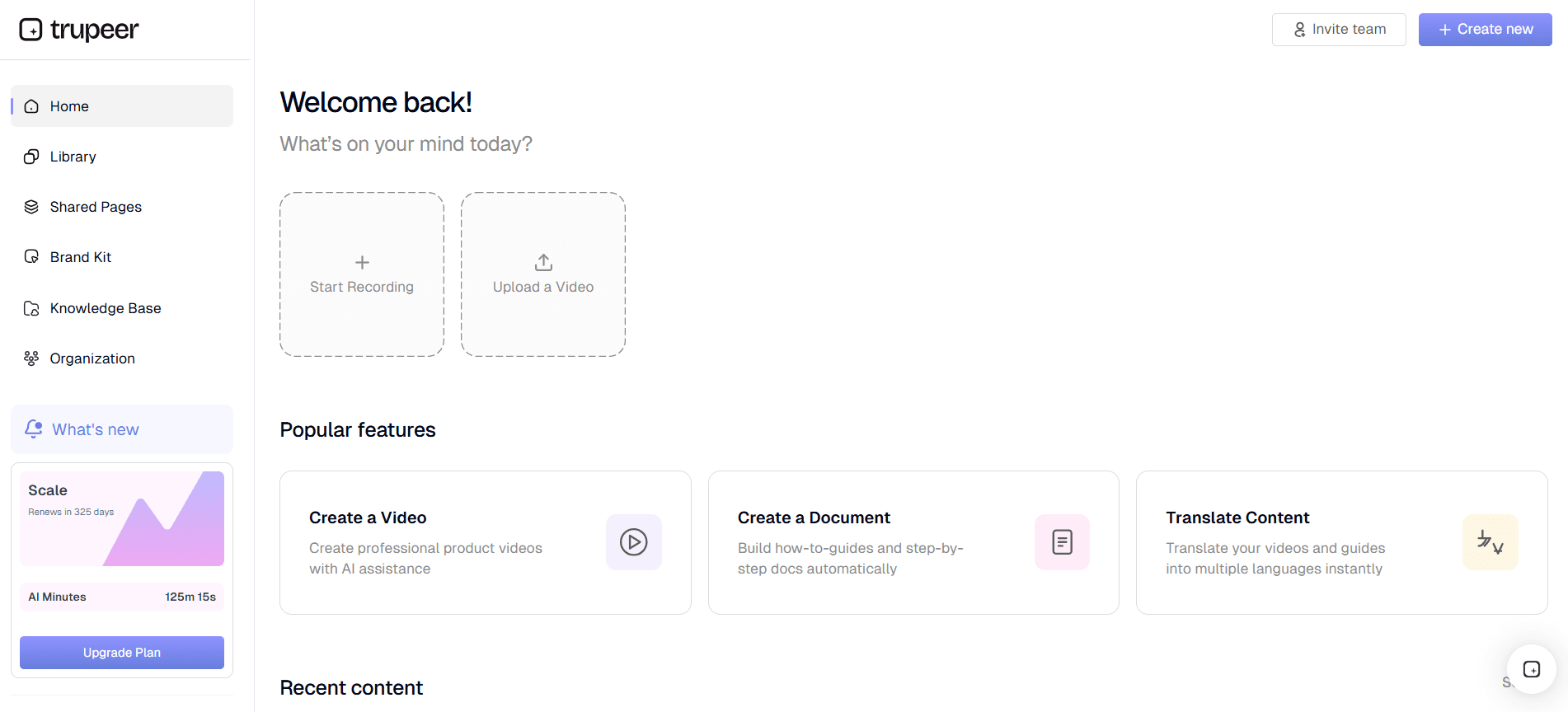
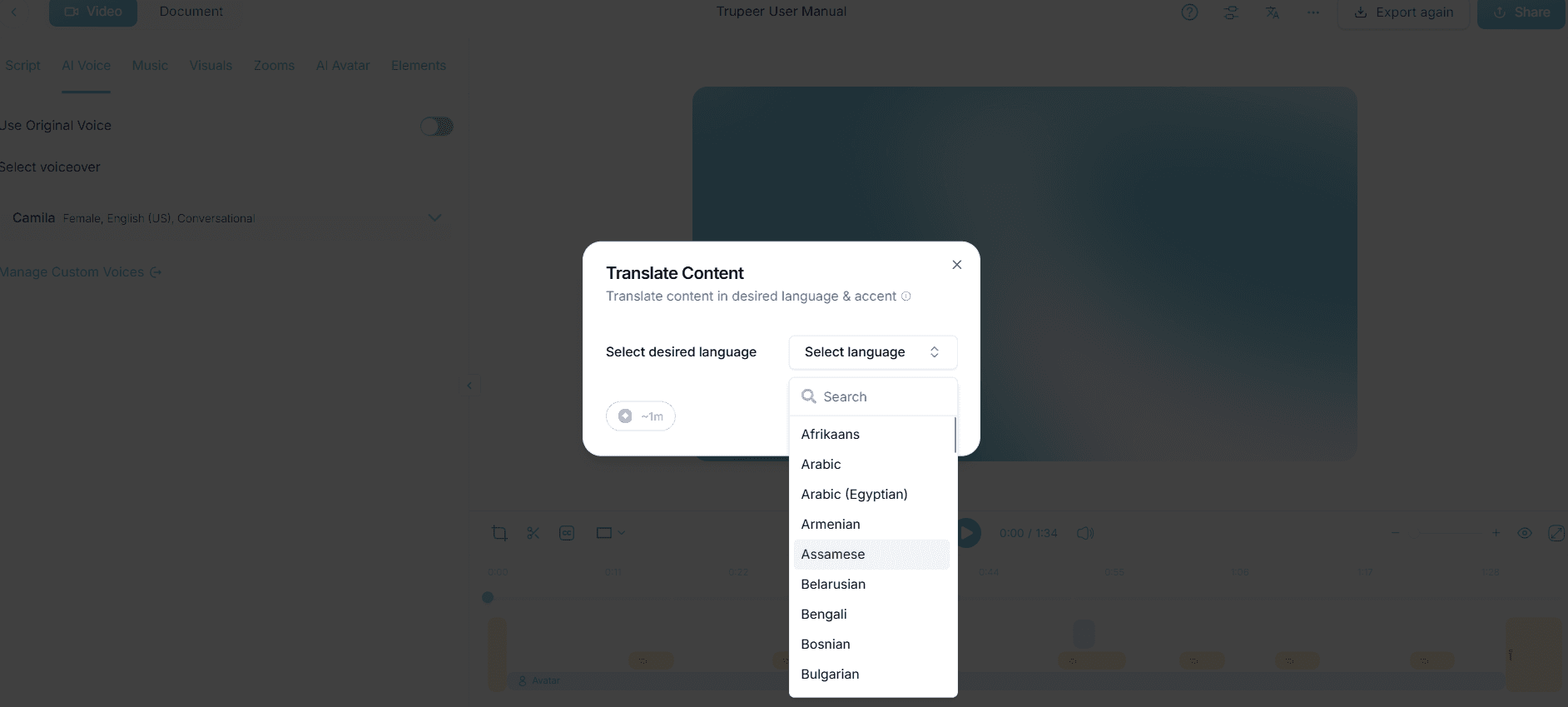
Now, use Trupeer's AI translation feature to translate your video into the desired languages. Access the "Translate" tab and select from over 40 languages. Trupeer automatically incorporates lip-sync technology, aligning translated audio with the speaker's lip movements. This process takes a few minutes per language, depending on the video's length. The outcome is a smooth, natural-looking translation that enhances viewer engagement. Be sure to review the translated scripts for any nuances or cultural references that might need adjustment.
Step 4: Apply voice cloning
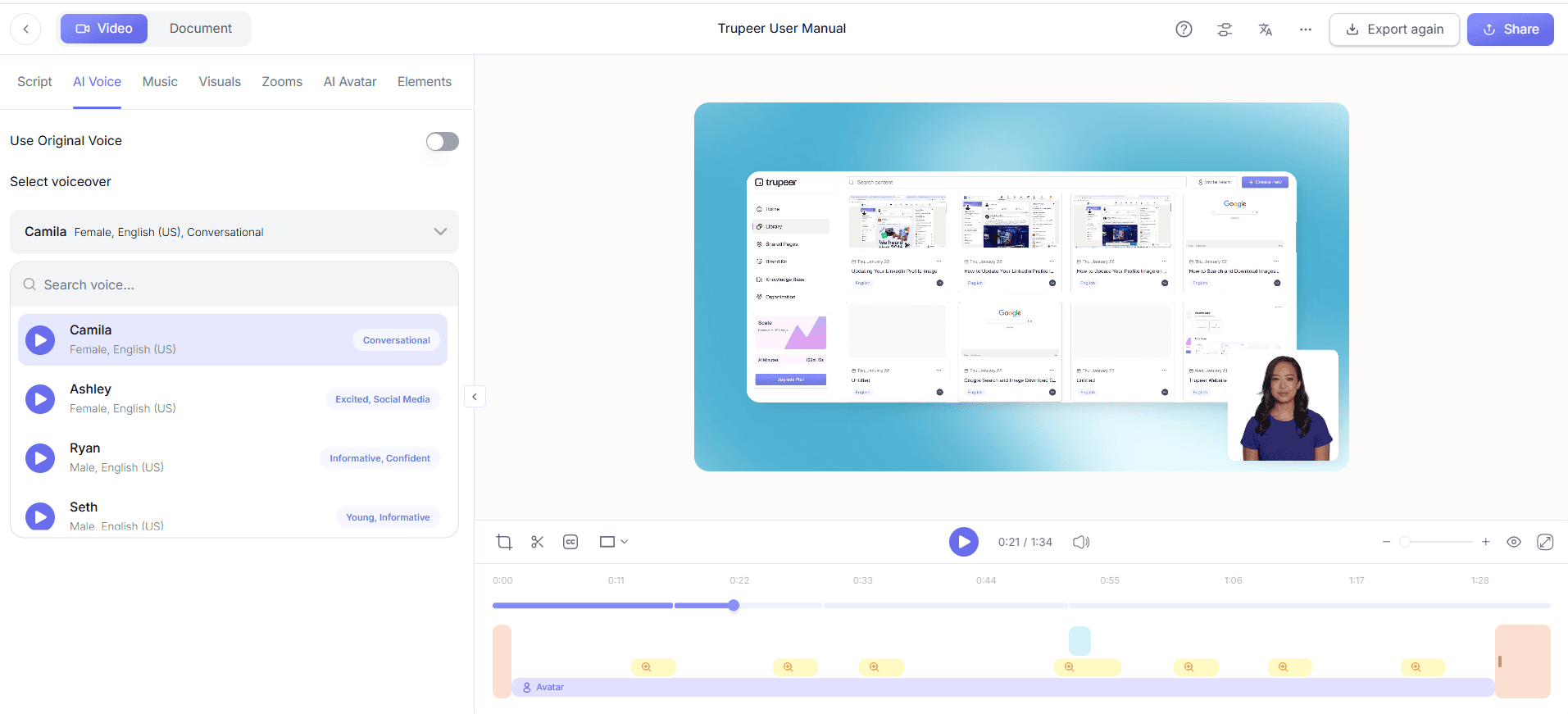
To maintain speaker consistency across languages, use Trupeer's AI voice cloning feature. This capability allows you to clone the original speaker's voice from a short sample and apply it to the translated audio. Simply upload the sample in the "Voice Clone" tab and let Trupeer do the rest. The cloning process is quick, usually under ten minutes, and results in a personalized translation that mirrors the original speaker's tone and style. This is particularly effective for maintaining brand voice and credibility. For a deeper look, our guide on ai video editing covers the adjacent playbook.
Step 5: Review and refine
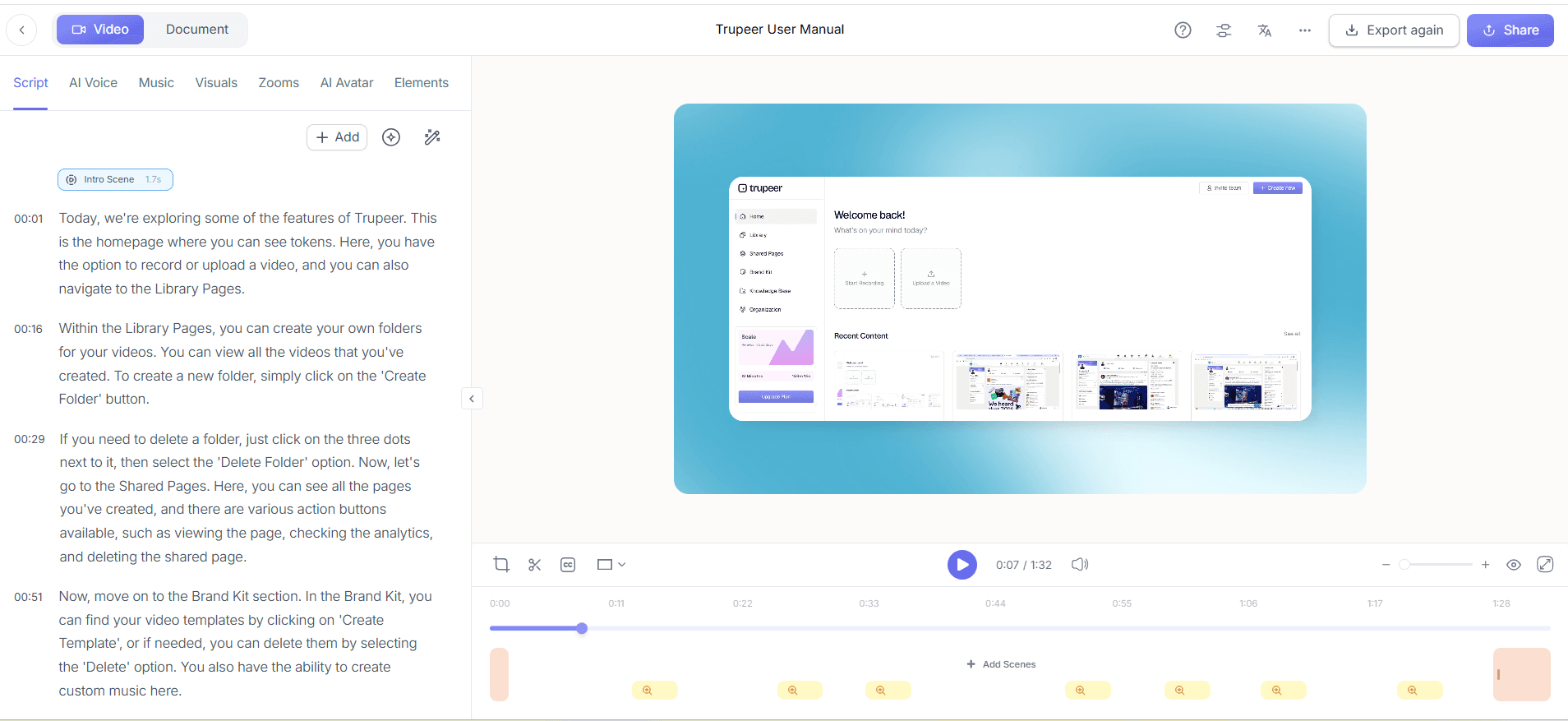
After translation, it's essential to review the output for accuracy and cultural appropriateness. Use Trupeer's collaborative review and approval workflows to simplify this process. Share the translated video with team members or language experts directly from the platform. Reviewers can add comments and suggest edits, ensuring that the final product is polished and precise. This collaborative approach minimizes errors and enhances the overall quality of your translations.
Step 6: Distribute and analyze
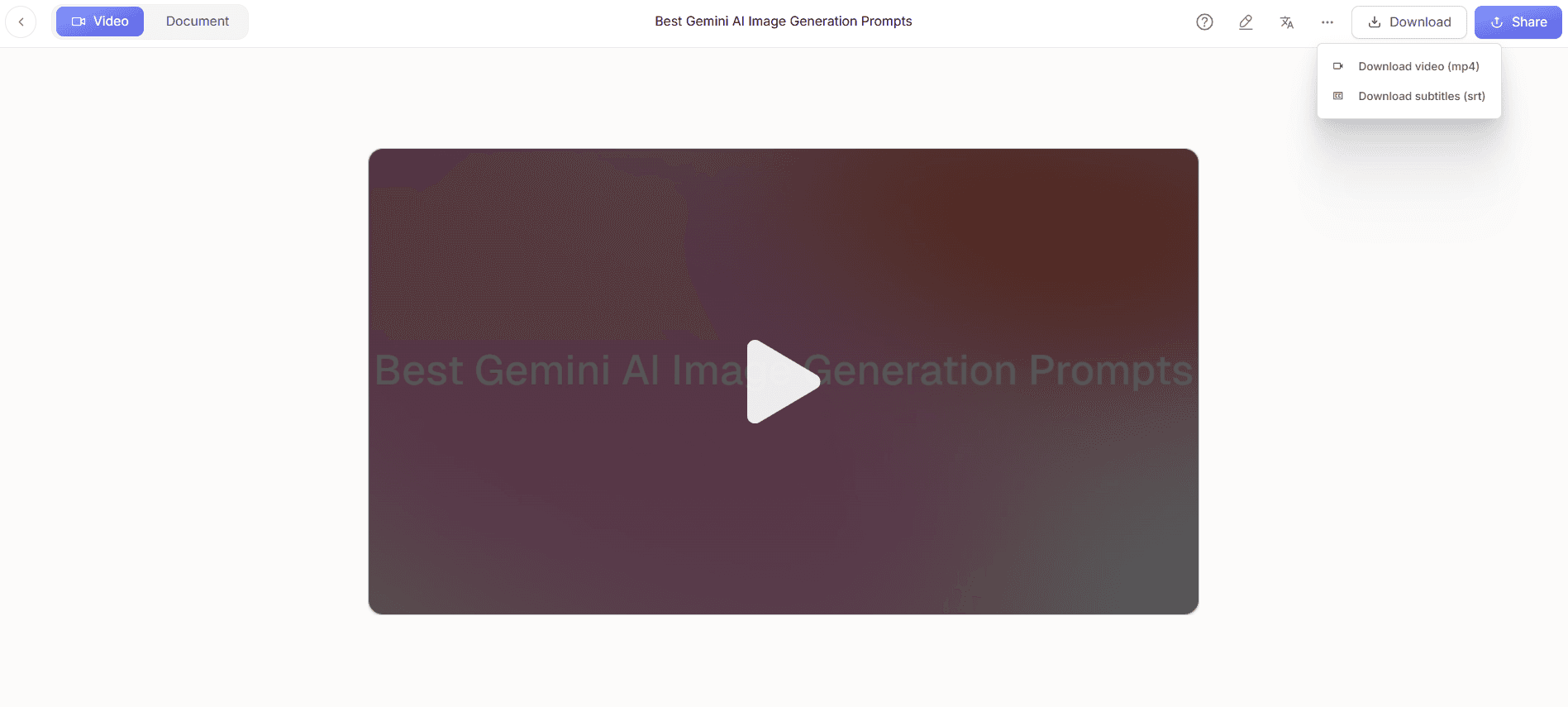
Once your video is finalized, distribute it using Trupeer's custom-domain hosting or shared pages for easy access. Monitor engagement through Trupeer's viewer analytics, which provide insights into viewer behavior, drop-off rates, and heatmaps. These metrics are invaluable for assessing the effectiveness of your translations and identifying areas for improvement. Adjust your strategies based on these insights to continually refine your translation processes and outcomes.
What tips help you evaluate and improve AI video translation accuracy?
Improving AI video translation accuracy involves strategic planning and execution. Here are some practical tips to ensure your translations are precise and effective.
Consistent script preparation. Before recording, draft a clear and concise script. Consistency in scriptwriting aids accurate translation.
use voice tone adjustments. Use Trupeer's auto video editor tool to adjust the tone and pace of the voiceover, ensuring it matches the original delivery.
Engage native speakers. Involve native speakers in the review process for cultural and contextual accuracy.
use branded templates. Employ Trupeer's brand kits to maintain visual consistency across translations, reinforcing brand identity.
Monitor engagement metrics. Analyze viewer analytics to assess the effectiveness of translations and identify improvement areas.
Iterate based on feedback. Regularly update translations based on viewer feedback and changing market dynamics.
Compare industry tools. Conduct a Scribe alternative comparison to identify the best tool features that meet your needs.
Frequently asked questions
How does AI video translation work?
AI video translation works by using advanced machine learning algorithms to convert spoken language in videos into different languages. The process typically involves speech recognition, text translation, and speech synthesis. First, the AI transcribes the video's audio into text. Then, it translates the text into the desired language. Finally, the translated text is converted back into speech using a synthesized voice, often aligned with the original speaker's lip movements. AI tools like Trupeer enhance this process by offering features like voice cloning and lip-sync, ensuring translations are both accurate and natural.
What factors affect AI video translation accuracy?
Several factors can impact the accuracy of AI video translations. The quality of the original audio, including clarity and background noise, plays a significant role. Complexities in language, such as idioms or cultural references, may challenge AI translation algorithms. The AI's training data set, which influences its understanding of context and nuances, is crucial. also, the use of voice cloning and lip-sync technology can enhance accuracy by maintaining consistency in tone and delivery. Ensuring high-quality input and using advanced AI features can significantly improve translation outcomes.
Can AI video translation handle multiple dialects?
Yes, many AI video translation tools can accommodate multiple dialects, though the level of support varies. Advanced systems, like those employed by Trupeer, are trained on diverse datasets that include various dialects and accents. This enables them to recognize and accurately translate different regional variations. However, the success rate can vary depending on the dialect's prevalence in the training data. For subtle dialects, it may still be beneficial to involve native speakers for review and refinement. Ensuring your AI tool supports specific dialects is essential for accurate translation.
Why is lip-sync important in video translation?
Lip-sync is crucial in video translation because it ensures that the translated audio aligns with the speaker's mouth movements, creating a natural viewing experience. This synchronization helps maintain the video's authenticity and viewer engagement, as mismatched audio can be distracting and reduce credibility. Lip-sync technology is especially important in videos where visual cues are integral to understanding, such as instructional content or narratives. By aligning translated audio with visual elements, tools like Trupeer enhance the overall quality and effectiveness of video translations.
Does Trupeer support AI video translation for all industries?
Trupeer's AI video translation capabilities are versatile and cater to a wide range of industries, including marketing, education, healthcare, and entertainment. The platform's features, such as voice cloning, AI dubbing, and lip-sync, are designed to meet the diverse needs of different sectors. Whether you need to translate a marketing video for international audiences or localize educational content, Trupeer provides the tools necessary for accurate and engaging translations. However, industry-specific jargon may require custom adjustments or additional human review to ensure precision.