4.8/5
AI Documentation Tool for Internal and External Documentation
Create internal and customer-facing documentation from the same workflow. One recording, two versions, written for two audiences.
Try Trupeer free

Most teams document the same workflow twice. The internal version gets written for the team, the customer-facing version gets written separately by someone else, and the two slowly stop describing the same thing.
Trupeer is an AI documentation tool for internal and external documentation that lets teams record a workflow once and create versions for both internal teams and customers. The two start from the same capture, so they cover the same steps even though they read differently.
What Is an Internal and External Documentation Tool?
Software that takes one recorded workflow and helps you produce documentation for two audiences from it, rather than writing each version from scratch.
The source is a recording of the process being performed. AI generates the steps and screenshots from that capture, which gives you a draft that already contains everything both versions need. You then adapt it: the internal version keeps the technical detail and team context, the external version is simplified into customer-facing language with anything internal removed. The finished versions publish to different destinations, usually an internal knowledge base and a public help centre. Trupeer uses screen recordings as the source, generating editable step-by-step documentation that can then be adapted for internal or customer-facing use.
Internal vs External Documentation
They describe the same workflow for readers who need very different things.
Internal documentation | External documentation |
|---|---|
Assumes product knowledge | Assumes little or none |
Uses internal terminology and system names | Uses the words customers actually use |
Includes technical context and why it works that way | Focuses on completing the task |
May include shortcuts and escalation notes | Customer-safe instructions only |
Lives in an internal wiki or knowledge base | Lives in a help centre or support portal |
The steps are the same. The framing, vocabulary and level of detail are not, which is why writing them separately feels necessary and why they drift once you do.
One Source, Two Audiences
The alternative to writing twice is starting both versions from the same capture. The workflow is recorded once; the internal and external documents are two presentations of it.
Separate documentation workflow | One-source workflow |
|---|---|
Internal workflow recorded or written separately | One workflow capture |
Customer article created separately | External version derived from the same source |
Screenshots captured twice | Screenshots reused from the source |
Updates tracked independently | The changed workflow is the refresh point for both |
The source stays the same; the audience-specific context changes.
That reduces the risk of documentation drift at the source: both versions begin from the same observed steps rather than from two people's separate accounts of the same process.
How Internal and External Documentation Works
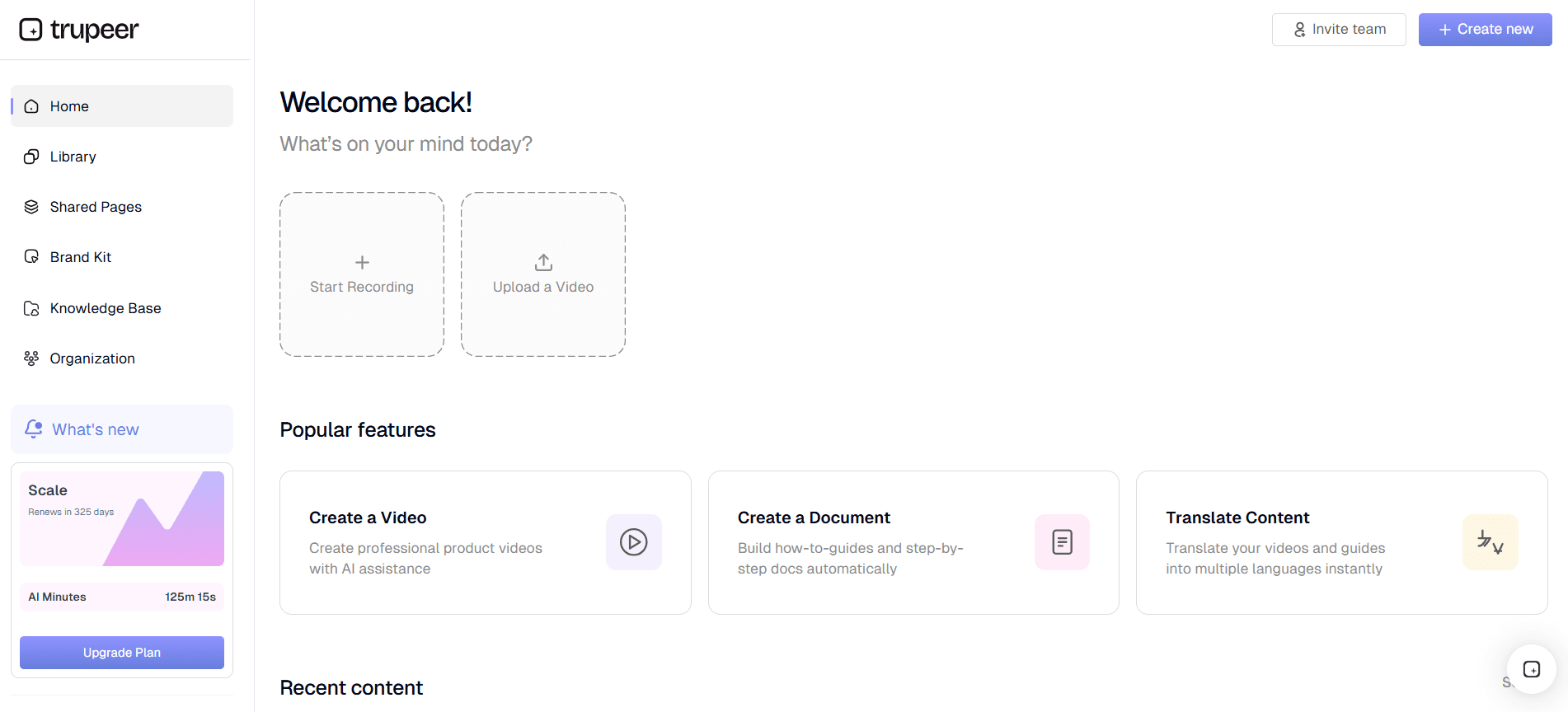
Step 1: Record the workflow once
Capture the process in your browser, or upload a recording you already have. One capture serves both audiences, so there is no second session to schedule.
Step 2: Generate the documentation from one source
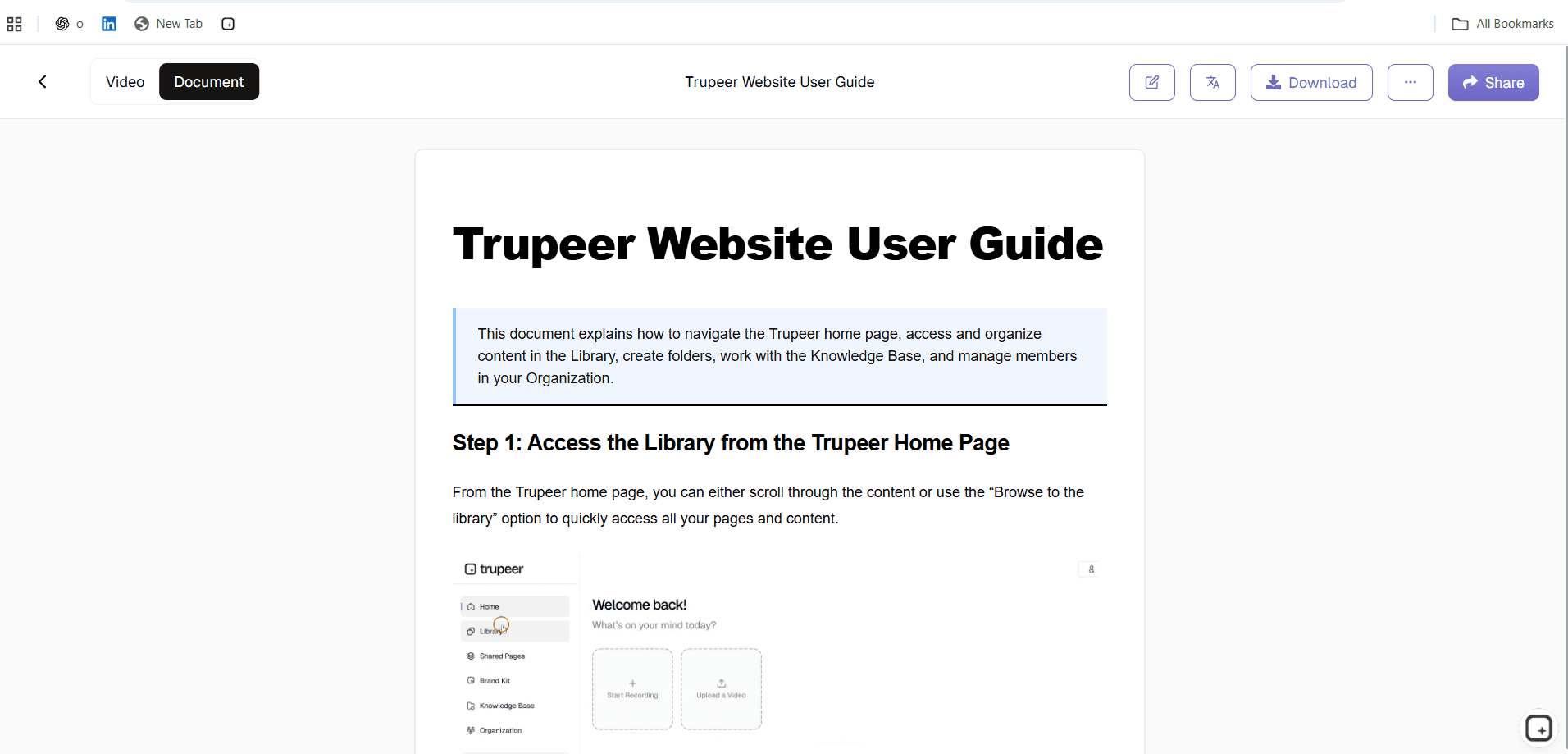
AI turns the recorded actions into structured steps, moving you from a raw workflow capture to an editable documentation draft. Trupeer produces that draft with a screenshot for each action. That single draft is the source both versions come from, containing every step either audience needs.
Step 3: Adapt and publish each version
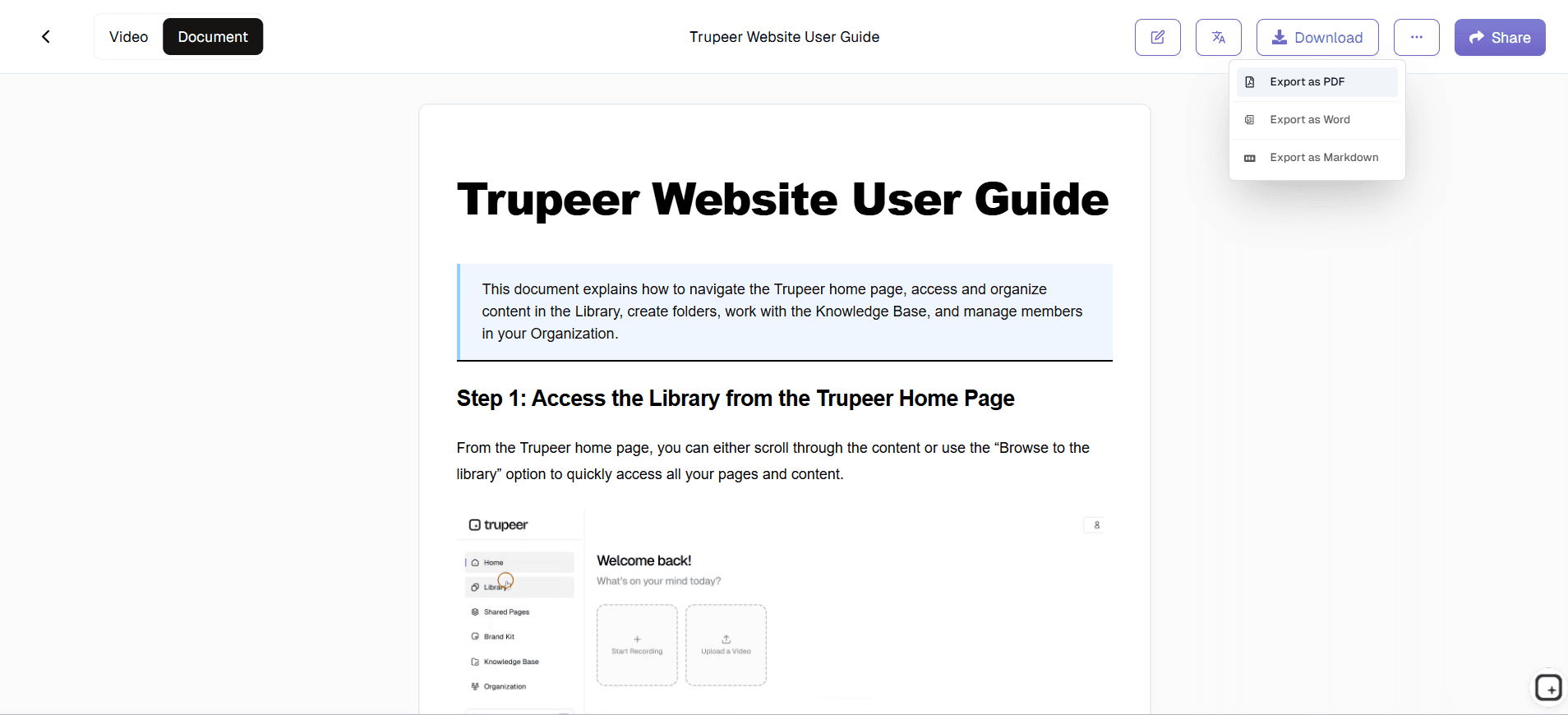
The generated draft stays editable, so you adapt it per audience: keep the technical detail and escalation notes internally, simplify the wording externally, and blur or replace anything that should not leave the building. Publish the internal version where your team looks and the external one to the help centre, or export either to PDF or Word.
What You Can Create With Trupeer
The same recording adapts into each of these:
Internal SOPs: the full workflow with system names, escalation paths and the context your team already has
Customer-facing help articles: the same steps in customer language, with internal detail removed and screenshots cleaned
Product walkthroughs: a narrated video from the same capture, as a secondary output alongside the written versions
Support documentation: internal troubleshooting with the escalation path, and the public resolution guide without it
Internal training: enablement material for support and sales from the same workflow customers will follow
Customer onboarding guides: the setup process as a customer performs it, from the capture your team already made
Why Use Trupeer for Internal and External Documentation?
One recording instead of separate documentation sessions for each audience
Screenshots generated from the actual workflow rather than captured twice by hand
Editable output, so audience-specific changes happen in the draft rather than in a rewrite
Written documentation and video from the same capture, with video as a secondary output
Before and After
Before: a SaaS company releases a new billing workflow. Product writes an internal SOP. Support separately writes a help-centre article. Two people document one workflow, and later the two versions can drift apart.
After: one screen recording produces both. The internal version carries the technical workflow, team context and escalation detail. The external version carries simplified customer instructions with screenshots and customer-safe wording. When the billing screen changes, re-record the affected workflow and update both versions from it.
Where This Applies
Product releases: an internal handoff for support and sales, and a customer help article, from the same feature walkthrough
Support documentation: internal troubleshooting with escalation paths, and a public resolution guide without them
Software onboarding: internal training for the team, customer onboarding for new accounts
Process changes: an internal SOP describing what the team does, and an external notice describing what changes for the customer
Feature documentation: product and engineering context internally, task instructions externally
What Changes Between the Two Versions
Terminology: system and internal names become the words customers use
Assumed knowledge: the external version cannot assume familiarity with your admin screens or data model
Escalation and shortcuts: internal-only paths come out of the customer version
Screenshots: internal tooling, account identifiers and anything sensitive gets blurred or replaced
Scope: the internal version often covers edge cases the external one deliberately omits
Destination: one goes to the internal knowledge base, the other to the help centre
Keeping the Two Aligned
The reason internal and external documentation diverge is that they are maintained separately. Someone updates the internal SOP after a change and nobody tells the person who owns the help article.
Working from one recorded workflow narrows that gap: when the process changes you re-record the affected part and update both versions from the same source, rather than remembering which downstream documents depend on it. It is not automatic, and somebody still has to notice the process changed.
What This Does Not Do
It does not decide what customers should and should not see, rewrite internal language into customer language without review, or keep the two versions synchronised by itself. The judgement about what leaves the building is a person's, every time.
For checking a generated draft before publishing, see AI documentation accuracy. For documenting product features specifically, see the AI product documentation tool.
Create Both Versions From One Recording
Create internal and customer-facing documentation from the same workflow recording with Trupeer. Try Trupeer free.
What you can do
One capture, two versions
The internal and customer-facing documentation start from the same recorded workflow, so both cover the same steps.
Audience-specific editing
Change wording, formatting and images per version, and blur or replace anything that should not appear in customer-facing documentation.
Publish to different destinations
Send the internal version to your knowledge base and the external one to your help centre, or export either to PDF or Word.
How to create internal and external documentation
Step 1
Record the workflow once in your browser, or upload a recording you already have.
Step 2
Generate the documentation with screenshots, then shape an internal version with technical detail and an external version in customer-facing language.
Step 3
Edit each version, remove anything internal from the customer copy, and publish to your knowledge base and help centre.
Frequently Asked Questions
What is an AI documentation tool for internal and external documentation?
Software that takes one recorded workflow and helps you produce documentation for two audiences from it: an internal version for your team and a customer-facing version, rather than writing each from scratch.
What is the difference between internal and external documentation?
They usually describe the same workflow but differ in assumed knowledge, terminology, level of detail, what is safe to show, and where they are published. The steps match; the framing does not.
Can one recording be used for both internal and external docs?
Yes. The recording supplies the steps and screenshots, and both versions are adapted from that single draft rather than written separately.
Can Trupeer create customer-facing documentation from a workflow recording?
It generates the draft from the recording. You then adapt it for customers: simplify the wording, remove internal terminology and escalation paths, and blur or replace anything that should not be public.
Can I edit the internal and external versions separately?
Yes. The generated draft is editable, so each version can carry different wording, detail and images while covering the same steps.
More Tools