4.8/5
Best Enterprise Documentation Software
Enterprise documentation software that produces both a video walkthrough and a written documentation article from the same screen recording, in the same job.
Try Enterprise Documentation Software
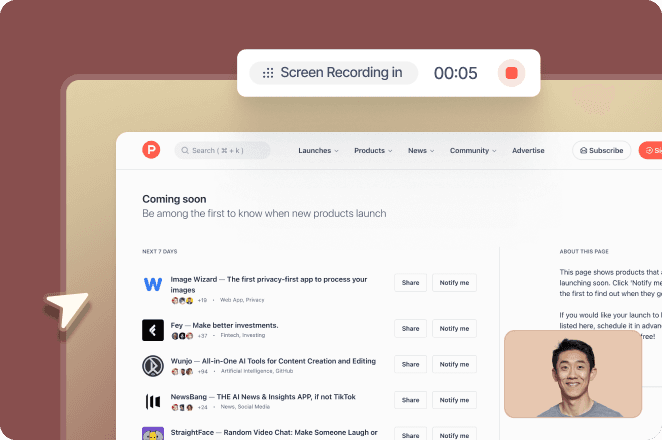
Trupeer AI is enterprise documentation software that produces both a video walkthrough and a written documentation article from the same screen recording, in the same job. A technical writer, L&D specialist, or subject expert records the workflow once, and Trupeer AI generates the MP4 video and the PDF or Word document together. Most documentation software in this category produces one format or the other: screen-recorder tools like Scribe and Tango generate written guides from recorded clicks, video tools like Loom and Vidyard produce screen-recorded video. Trupeer AI produces both formats from the same recording, which is what most enterprise documentation programs actually need but rarely have.
Enterprise documentation software that produces both video AND written documentation from one recording.
Brand kit enforces visual consistency across thousands of internal docs.
Translate documentation into 65+ languages from the same source recording.
Output ships as MP4, PDF, or Word, ready for any documentation platform the enterprise already uses.
Update by re-recording the changed step. The library propagates the update automatically.
What Trupeer AI produces as enterprise documentation software
A technical writer, L&D specialist, IT enablement lead, or operations subject expert opens the documentation generator and records a workflow in the browser. Trupeer AI handles the post-production. Filler words go. Cursor jitter smoothing makes the recording look like a polished demo rather than a debug session. Zoom and cursor effects highlight the parts of the screen the reader needs to act on. A draft MP4 video and a draft written documentation article arrive in the editor together, with screenshots and numbered steps inside the written version. If the documentation changes often, the enterprise sales software is easy to keep current because it's built from the recording rather than written by hand.
The two outputs come from the same source, so the video and the written documentation stay synchronized as facts. If the recording shows a four-step approval workflow, both the video and the written article describe the same four steps in the same order, with consistent terminology pulled from the custom glossary. Brand kit applies the corporate logo, colors, fonts, and intro and outro slides. Voiceover is generated from the spoken track or from a typed script, with dozens of voice options and custom voice cloning available for organizations that want a single consistent narrator across the documentation library.
How the enterprise documentation software works in three steps
Three steps cover the production flow: one recording in, one editor pass, one ship action. No second writer, no separate video editor, no third tool to assemble the article.
Step 1: Record the workflow or upload an existing video
Start a screen recording in the browser, or upload an existing video file the team already has (Zoom recordings of process walkthroughs, MS Teams demo recordings, raw screen captures from previous attempts). Trupeer AI works on whatever footage exists. A typical enterprise documentation article comes from a 5 to 12 minute recording, which is faster than writing a documentation article from scratch.
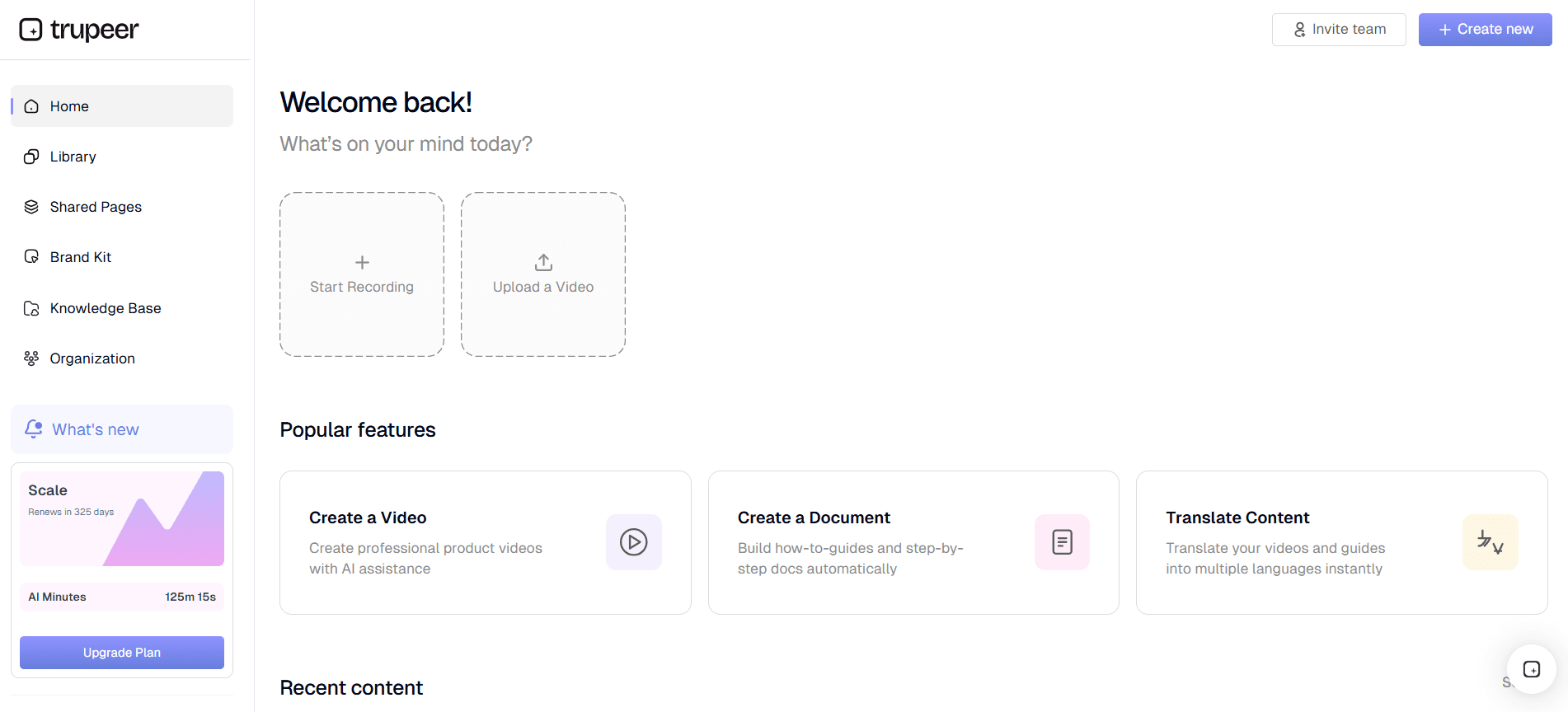
Step 2: Trupeer AI generates the video and written documentation
Filler words, pauses, and "let me find that file" moments get removed. Zoom and cursor effects highlight the screen regions readers need to focus on. A draft video and a draft written documentation article appear in the editor together. The custom glossary catches internal product names, system names, and acronyms before the AI transcribes them incorrectly.
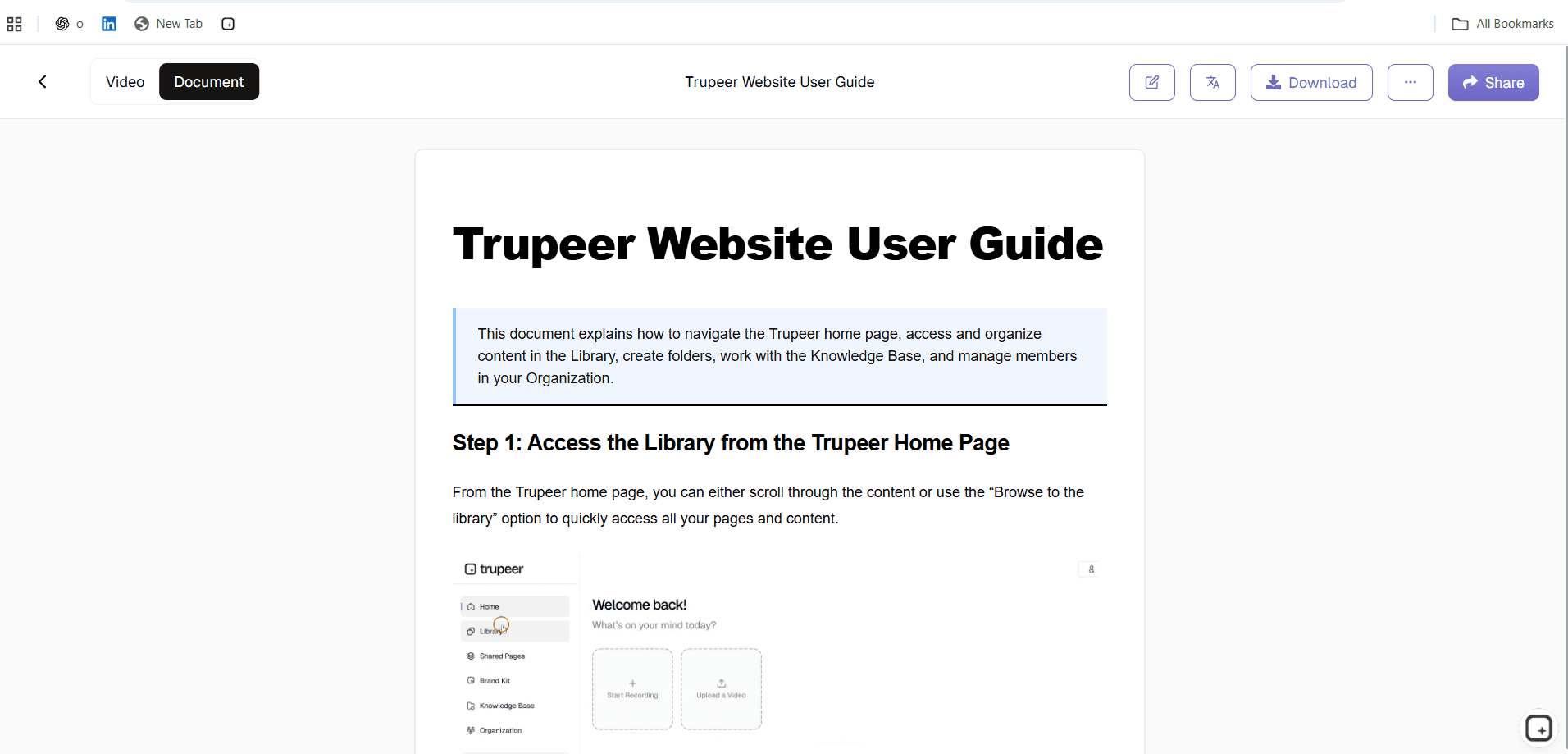
Step 3: Brand, translate, ship
Apply the brand kit so the documentation matches the enterprise's existing visual standards. Translate into the languages the workforce operates in (Spanish, Portuguese, Hindi, Mandarin, French, German, Japanese, or any of 65+ languages). Ship the MP4 to the internal video portal, the PDF or Word document to the knowledge base, or share both via a Shared Page link the team can drop into Slack, the company wiki, or the help center.
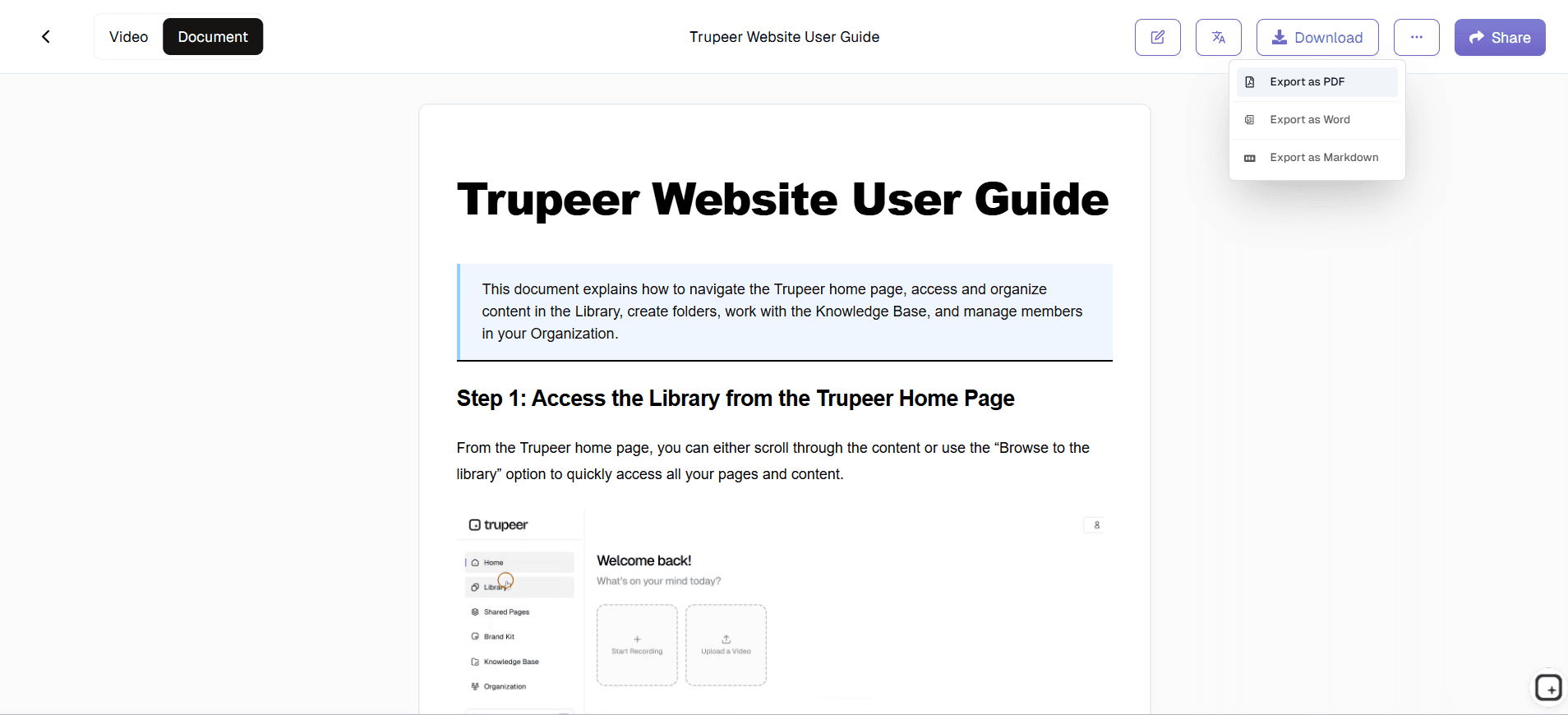
Who actually uses this enterprise documentation software
The person who opens this tool inside a large organization is usually a technical writer, a documentation team lead, an L&D specialist, an internal communications manager, an IT enablement specialist, or a subject expert with documentation responsibility. They open it when product documentation has to be produced for a system rollout, when training materials need to ship for the next compliance cycle, when a process change has to propagate across regional offices, or when the documentation team needs to clear a backlog of articles that has been growing for two quarters.
Different functions use it for different content categories. Technical writing teams produce product documentation, software documentation, system documentation, and integration walkthroughs (paired with the team's actual API reference docs, since Trupeer AI does not auto-generate API references from code). L&D teams produce training documentation and matching modules. IT enablement teams produce system rollout documentation and admin guides. Internal communications produces policy explainers and change management documentation. HR produces onboarding documentation and policy guides. Operations produces standard operating procedure documentation and process guides. The same documentation tools serve every function, which keeps the central content production stack simple.
Documentation categories this enterprise documentation software handles
Enterprise documentation typically falls into several categories, all of which work with the same recording-to-doc flow. Product documentation for internal teams using the company's internal tools. Technical documentation software output for systems engineers, developers, and IT staff. Process documentation software output for standard operating procedures across operations, finance, and HR. Training documentation for L&D modules paired with employee training videos. Compliance documentation for regulated industries that have to demonstrate they trained employees on specific policies. Change management documentation for system migrations, organizational shifts, and process updates. IT documentation software output for admin guides, internal platform walkthroughs, and tooling rollouts.
For broader enterprise technical documentation work, Trupeer AI handles the production layer. The team's existing documentation infrastructure (the knowledge base platform, the LMS, the internal wiki, the developer portal) stays where it is. Trupeer AI fills it with multimedia content the team can produce 10x faster than the manual writing-plus-screenshotting workflow. A technical writer who could previously ship two articles per week often ships eight or ten with this approach, since the time-consuming parts (screenshotting, writing the prose, recording a matching video) collapse into a single recording-and-review pass.
Where Trupeer fits next to Scribe, Tango, Loom, and other documentation software
Documentation software in this category typically produces one format. Scribe and Tango produce written guides from recorded clicks, with auto-generated screenshots and numbered steps. Loom and Vidyard produce screen-recorded video, with editing tools but no matching written document. Guidde sits between the two, producing video plus a clickable interactive guide. MadCap Flare, Paligo, Heretto, and Adobe FrameMaker handle traditional technical writing workflows for structured documentation, mostly used by larger documentation teams producing complex product manuals.
Trupeer AI is the AI documentation software that produces both video and written documentation from the same recording, which is the format combination most enterprise documentation programs actually need. The video lives in the LMS or video portal, the written documentation goes into the knowledge base or wiki, and both stay synchronized because they come from the same source. For teams already using Scribe or Tango for written guides, Trupeer AI adds the matching video output. For teams already using Loom or Vidyard for video, Trupeer AI adds the matching written documentation. Teams that need to keep a traditional structured writing documentation tool like MadCap or Paligo for product manuals typically use Trupeer AI for the everyday process and training documentation that makes up the bulk of an enterprise documentation library.
Brand consistency, translation, and updates for enterprise documentation programs
Enterprise documentation programs face three production challenges traditional documentation software handles poorly. Brand consistency across thousands of internal docs (every video and document needs to look like it came from the same company). Language coverage for employees in multiple countries (Spanish for the Mexico office, Hindi for Bangalore, Portuguese for São Paulo, German for Berlin). Update propagation when a process changes (a small UI change in the underlying system breaks documentation that took weeks to write). Trupeer AI addresses all three at the production layer. Brand kits enforce visual consistency. Translation covers 65+ languages applied to both video and written documentation in the same job. Updates work by re-recording just the changed step, so a small change propagates without rebuilding the entire article.
For organizations with security and procurement review requirements, the Trupeer AI Trust Center documents the platform's security posture, data handling practices, and current certification status. Custom voice cloning at the enterprise tier means one corporate narrator's voice can carry across the entire documentation library, regardless of which department produced the content. Pairing this enterprise documentation software with the Trupeer AI SOP builder covers both the everyday documentation production and the standard operating procedure layer that sits underneath it.
Why central documentation teams use Trupeer AI
Two outputs from one recording
One screen recording produces both an MP4 walkthrough video and a written documentation article. Both formats stay synchronized because they come from the same source.
Built for enterprise documentation programs
Brand kits enforce visual consistency, custom glossary handles enterprise terminology, team workspaces support central documentation teams. The Trust Center documents security posture for procurement review.
Translation for global documentation libraries
65+ languages applied to both video and written documentation in the same job. Voice cloning at the enterprise tier carries one narrator across the whole content library.
Produce enterprise documentation in three steps
Step 1
Record the workflow or upload an existing video (including Zoom and Teams recordings)
Step 2
Trupeer AI generates the video and written documentation together
Step 3
Brand, translate, and ship to the documentation platform the enterprise already uses
Frequently Asked Questions
Is the enterprise documentation software free to use?
Yes for the core flow. Record a workflow, generate both the video and the written documentation, and share via a Shared Page link without paying. Paid tiers add brand kits, custom voice cloning, AI avatars, team workspaces with admin controls, translation across 65+ languages, and longer recording limits. The enterprise tier covers larger user counts, organization-wide brand enforcement, and the kind of contract terms and support enterprise procurement teams typically require. Pricing details on the pricing page.
How is this different from Scribe, Tango, Loom, or other documentation software?
Trupeer AI produces both a video walkthrough and a written documentation article from the same recording. Scribe and Tango produce written guides only. Loom and Vidyard produce video only. Guidde produces video plus interactive overlays. Teams that need both formats from one source choose Trupeer AI. Teams that only need one format can use the specialist tools for that format. For organizations producing many documentation articles per quarter, the dual-output format usually wins on production economics.
Can Trupeer translate enterprise documentation into multiple languages?
Yes. Translation covers 65+ languages applied to both the video voiceover and the written document in the same job. A global enterprise with offices in San Francisco, London, Bangalore, Tokyo, São Paulo, and Berlin can ship the same documentation article in English, Hindi, Japanese, Portuguese, German, and any other languages the workforce speaks, from one source recording. Voice cloning preserves the original speaker's voice across all translated versions.
Does Trupeer generate API documentation, structured XML output, or DITA-formatted content?
No. Trupeer AI is not a structured technical writing suite. MadCap Flare, Paligo, Heretto, and Adobe FrameMaker handle DITA-based content, single-source publishing across multiple formats, and the structured XML workflows traditional technical documentation teams use for complex product manuals. Trupeer AI handles the everyday process documentation, training documentation, system rollout documentation, and walkthrough video production that makes up the larger volume of an enterprise documentation library. Teams that need DITA-structured output typically keep their structured writing tool for product manuals and use Trupeer AI for everything else.
What about security and compliance for enterprise procurement review?
The Trupeer AI Trust Center documents the platform's security posture, data handling practices, and current certification status. Enterprise procurement and information security teams can review these documents during evaluation. For specific compliance questions (data residency, encryption standards, contract terms), the enterprise tier includes direct support from a Trupeer representative during the procurement process.
More Tools