4.8/5
Free Process Documentation Software
Create process docs your team will actually use and reference. Record the work once. Get the video and the written walkthrough together. Skip the half-day write-up.
Try for Free
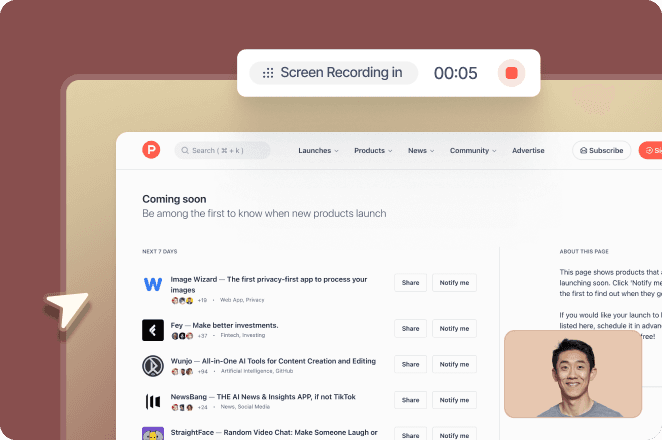
Trupeer's Process Documentation Software helps you create accurate, professional process documentation automatically using AI-powered screen recording and documentation generation. With Trupeer, you can record or upload a workflow and instantly generate step-by-step written documentation along with a polished video walkthrough.
Most process docs sit dead on a Confluence page nobody opens. Not because the team doesn't need them. The docs were written from memory three months after the work happened, by someone whose recollection was fuzzy on the part where things actually matter. So the docs end up vague. Hedged. Not quite right. Trupeer flips the order: do the work, hit record before you start, and the doc writes itself from what you actually did. The video captures the workflow. The AI generates the written guide alongside, with screenshots inline and numbered steps. Both come out of one recording, in one job. The team gets docs that match how the work actually happens. Not how somebody half-remembers it on a Wednesday afternoon.
Record or upload workflows to generate process documentation instantly.
Automatically create step-by-step written guides from real actions.
Generate video and documentation together in one workflow.
Apply templates and branding for consistent documentation.
Share, embed, or export process documentation across teams.
Same recording produces an MP4 video and a PDF or Word doc. Screenshots already inline. Numbered steps written.
Filler words and cursor jitter get cut automatically. Brand kit applied. No editing app to open.
Re-record one changed step when the process changes. The AI re-processes that segment. Everything else stays.
Visibility per article: public, organization-only, selected domains, or invite-only. Internal stays internal.
Translation across 65+ languages. Voiceover and written guide both, in the same job.
What Is Trupeer's Process Documentation Software?
Trupeer's process documentation software captures your workflows automatically as you work. Hit record, do your task, and watch it turn your actions into step-by-step guides with screenshots. No more writing docs from memory. Your screen recordings become polished business process documentation software output in minutes. It's the same idea behind the process document template capture the documentation once and reuse it instead of redoing the work.
Here's the practical version. Someone on the team needs to document the month-end close, the onboarding access provisioning, the deal handoff from sales to CS, the deploy procedure, the new vendor approval flow. Anything that gets done over and over but exists only in one person's head. They hit record. They do the work. They stop. Out comes a video of the workflow plus a written process doc with screenshots and numbered steps. Same source recording produces both. The total extra time spent on documentation: a few minutes to review the auto-generated draft and ship it. Maybe ten if the recording was longer or the team is picky about the voiceover pick.
What it isn't. Trupeer isn't trying to replace Confluence, Notion, or SharePoint as the place every process doc lives. The team's wiki, OKR tracker, meeting notes stay where they already are. What Trupeer covers is the layer most knowledge bases lack: walkthrough articles with matching video, generated from one screen recording instead of typed up from memory days later. So most teams paste Trupeer-generated docs into their existing wiki. Some host them as standalone pages on Trupeer's knowledge base. Either pattern works. Honestly, the choice usually comes down to whether the team already has a wiki everyone uses, or whether the process docs are currently scattered across Slack DMs and somebody's Google Doc from 2023.
How Does Process Documentation Software Work?
Getting started with Process Documentation Software takes just a few minutes.
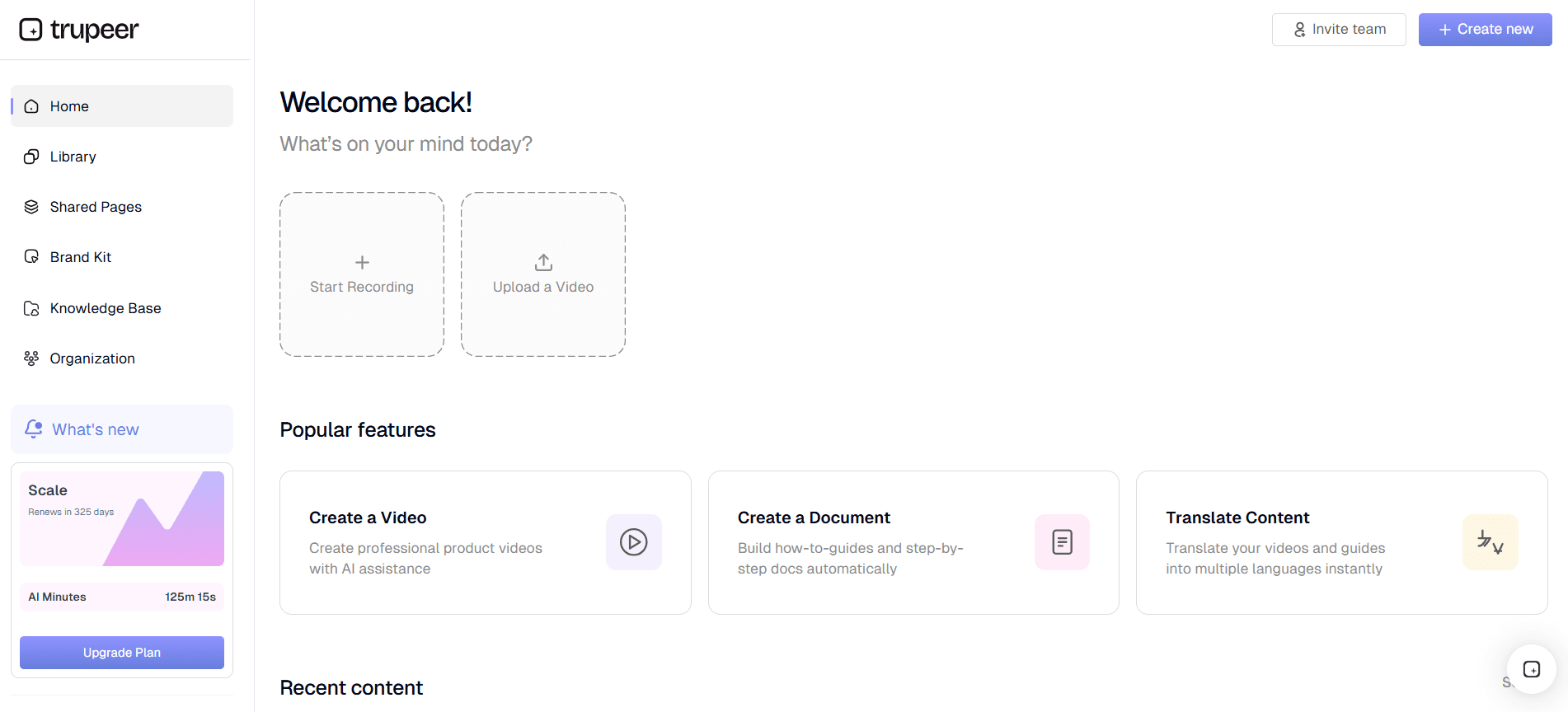
Step 1: Record or Upload
Start a screen recording directly in your browser, or upload an existing video file you want to transform.
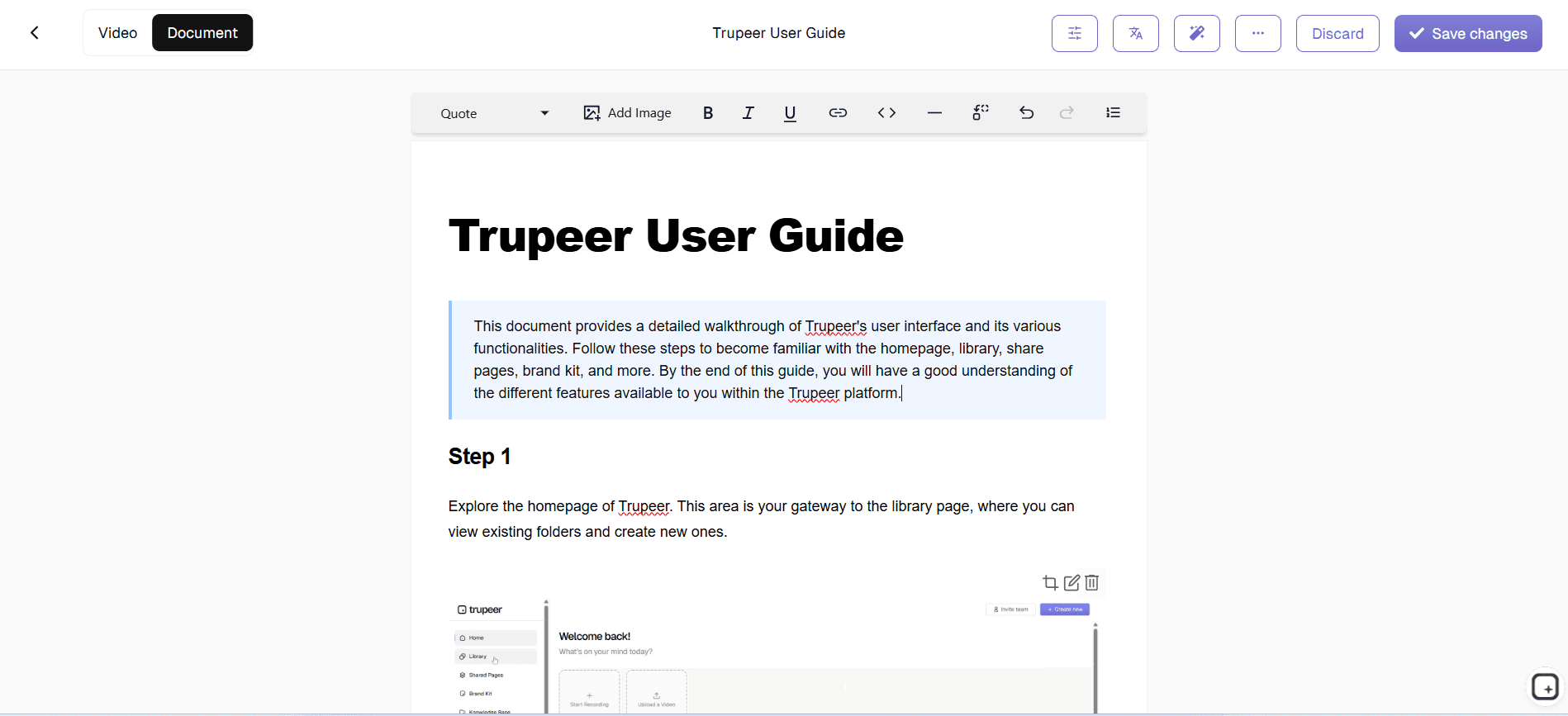
Step 2: AI Processing
The AI analyzes your recording, removes filler words, adds zoom effects, and generates written documentation automatically.
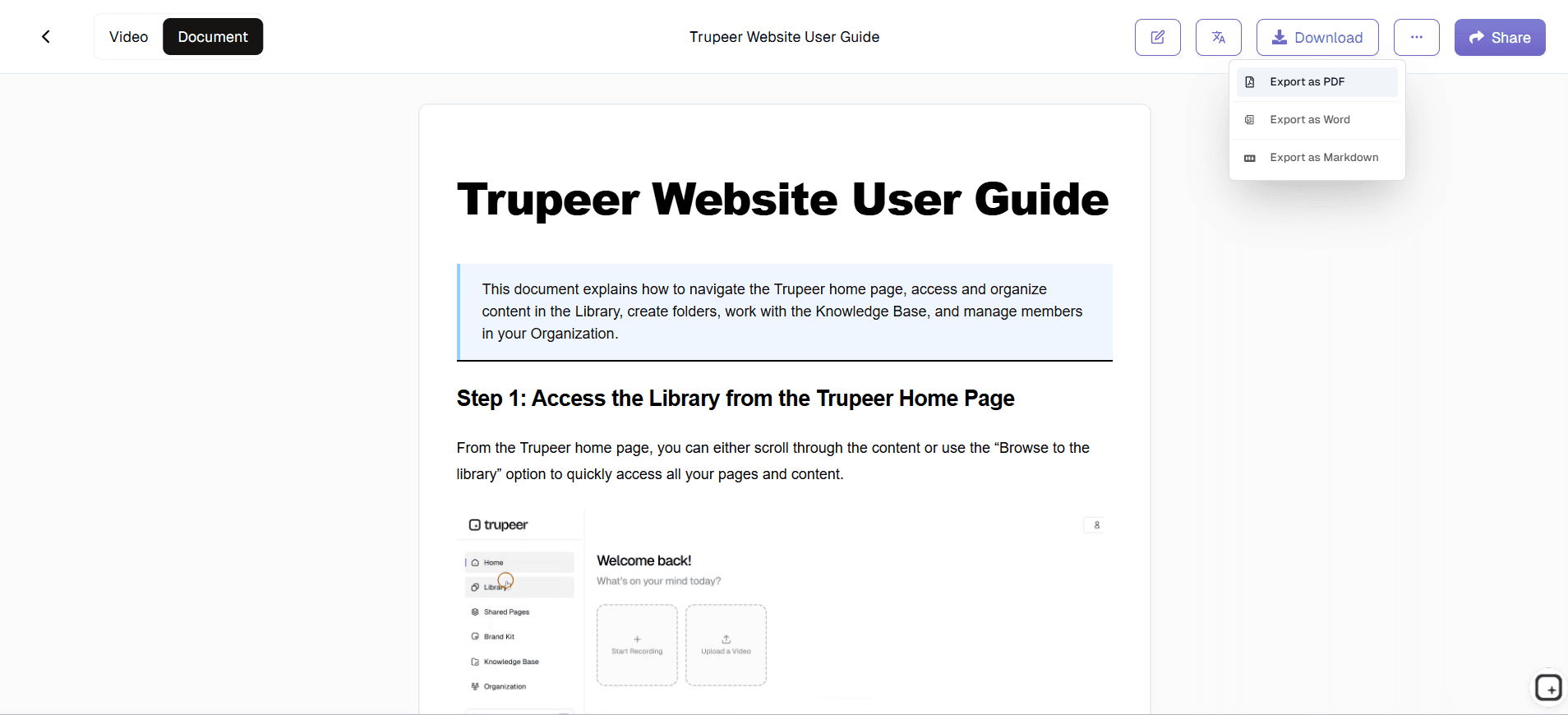
Step 3: Customize and Share
Edit the output, apply your brand kit, and share via link or embed on your website. Updates are just as easy.
Key Features of Trupeer's Best Process Documentation Software
One-Click Recording: Hit record before you start the work. No software install. No setup wizard. The extension captures whatever screen you're working on, with audio if you talk through it. Works on Mac, Windows, Linux, Chromebook. Anywhere Chrome runs.
AI-Generated Instructions: What this means in practice: the AI watches the click sequence. It picks up that you opened Settings, then clicked Export, then chose CSV, then hit Download. The doc that comes out lists those four steps with the right verbs and a screenshot at each one. Most teams ship the auto-generated draft as-is. Some do a 5-minute review pass for tone or to trim a step that's obvious. Either way, the writing time drops from a half-day to roughly zero.
Smart Screenshots: Each click moment becomes a screenshot in the written doc. Arrows or highlights mark the button or field that mattered. So the reader sees exactly where to click. Not a generic screenshot of the whole UI with the actual target buried in the corner.
Video + Text Combo: Some people pause a video for 30 seconds and figure out the workflow. Others skim numbered steps in a written doc and never watch the video at all. The same recording covers both audiences. So the team doesn't have to pick which format to invest in, or maintain two separate production pipelines for the same process.
Easy Updates: PWhen the UI changes (and it will, every quarter), re-record just the changed step. The AI re-processes that segment. Both the video and the written doc update in place. The rest stays. So a UI refresh that used to break the whole doc library now takes 10 minutes per affected doc. Worth it for SaaS companies shipping product updates every sprint and trying to keep 20-plus process docs current.
Team Sharing: Share via a Shared Page link with visibility set to public, organization-only, selected domains, or invite-only. Embed inside Notion or Confluence as an inline player. Or download the MP4 plus PDF and upload anywhere the team already shares files. The exports are real files. They work outside Trupeer if the team ever decides to move the docs somewhere else.
Why Choose Trupeer's Process Documentation Software?
Speed: Create documentation in the time it takes to do the task once. No more spending hours writing what you could show in minutes.
Accuracy: Record real workflows so documentation reflects exactly how things are done, not how someone remembers them.
Adoption: People actually use visual guides. New hires watch real examples instead of skimming text walls.
Easy Updates: When processes change, re-record just the updated parts. No rewriting entire documents from scratch.
No more "I'll document it later": Process docs have a thing where "later" never comes. The deal closed, the close completed, the onboarding finished. The doc didn't get written. Three months later the new hire is asking how the workflow works and the answer is "ask Sarah." Sarah's on vacation. The team improvises. Recording happens during the actual work, so the documentation arrives at the same time the work does. "Later" stops being a thing.
Docs that match how the work actually happens: Writing from memory weeks later means the docs reflect what somebody thinks should happen, not what does happen. Recording during the work captures the real procedure. Including the weird workaround at step 4 that nobody remembered to write down before, but that everyone on the team uses because the system has a bug nobody's fixed.
Free tier covers the basics: Record, generate the doc plus video, share via a link. No credit card. No 14-day trial timer that locks the team out at the worst possible moment. Paid tiers add brand kits, custom voice cloning, AI avatars, translation, and team workspaces when the team scales past the basics. Most small teams stay on free indefinitely.
Process Documentation Software for Internal Teams
1. Capture institutional knowledge before experienced employees leave. When your best people move on, their expertise goes with them unless it's documented. Turn years of know-how into searchable guides anyone can follow.
2. Cut new hire ramp-up time significantly. Instead of shadowing coworkers for weeks, new team members get clear visual walkthroughs from day one. They learn by watching real examples, not reading outdated manuals.
3. Keep every office and department aligned. When different locations handle the same process differently, mistakes creep in. Documentation ensures everyone follows the same proven approach.
4. Build a documentation library people actually use. When finding answers is faster than asking a coworker, people stop interrupting each other and productivity improves across the board.
Process Documentation Software for SaaS Teams
1. Document product workflows for your help center. When customers can find answers themselves, they stop submitting tickets for basic questions. Your support team focuses on complex issues instead of repetitive ones.
2. Keep engineering, product, and support aligned. Shared documentation stays current as your product evolves, so everyone knows how features work after each release ships.
3. Create customer-facing guides that reduce support burden. Self-service documentation improves satisfaction scores because customers get answers immediately instead of waiting for responses.
4. Track process changes across releases easily. When your product updates frequently, documentation needs to keep pace. Record changes once and distribute everywhere automatically.
Process Documentation Software for Startups
1. Document processes before they become tribal knowledge nightmares. Early-stage companies often have critical processes that only one or two people understand. Capture that knowledge now while you can.
2. Onboard new hires in days instead of weeks. Clear guides let people get productive fast without constant hand-holding from founders or senior team members who have other priorities.
3. Scale operations without senior people repeating themselves constantly. When the same questions keep coming up, documentation saves everyone time and frustration.
4. Build your documentation foundation before rapid growth makes it impossible. Companies that wait until they have 50 employees to start documenting rarely catch up.
Process Documentation Software for Enterprises
1. Standardize processes across departments, regions, and business units. When thousands of employees need to follow the same procedures, documentation is the only way to ensure consistency.
2. Meet compliance and audit requirements efficiently. Documented procedures prove how your organization operates. Auditors can see exactly what processes exist and how they're followed.
3. Reduce training costs with reusable documentation. Creating content once and deploying it across locations saves significant money compared to running live training sessions repeatedly.
4. Support digital transformation with clear change documentation. When employees need to learn new systems, visual guides help them adapt faster than text-heavy manuals ever could.
Process Documentation Software for Remote Teams
1. Bridge time zone gaps with async documentation. Team members access answers whenever they need them, without waiting for colleagues in different time zones to come online.
2. Show context that gets lost in text communication. Chat messages and emails miss nuance that visual walkthroughs capture. People understand processes better when they can see exactly how things work.
3. Reduce meeting fatigue by documenting once. Instead of scheduling calls to explain the same thing to different people, record it once and share everywhere.
4. Keep distributed teams aligned regardless of location. When everyone references the same documentation, remote work doesn't create knowledge silos or inconsistent practices.
Process Documentation Software for Developers
1. Document deployment processes, debugging workflows, and code review procedures properly. Critical knowledge often lives in Slack threads or people's heads. Put it somewhere searchable.
2. Create technical documentation without breaking your coding flow. Record your screen as you work through a process, and AI handles the writing so you can stay focused on code.
3. Onboard new developers faster with real examples. Instead of theoretical documentation, show actual workflows from your codebase and development environment.
4. Keep runbooks current for on-call engineers. When incidents happen at 3am, clear documentation helps people resolve issues without escalating to senior teammates.
Process Documentation Software for Onboarding & Support Teams
1. Build onboarding guides new hires can follow independently. When training content is clear and visual, people need less hand-holding from managers and get productive faster.
2. Document escalation processes so support teams know exactly what to do. Every situation should have clear steps, so agents don't have to guess or ask supervisors constantly.
3. Reduce ticket volume with self-service documentation. When customers can answer their own questions, your team handles fewer repetitive tickets and focuses on complex issues.
4. Train new team members without pulling senior people away. Experienced staff stay productive while new hires learn from documentation that captures institutional knowledge.
The pattern across every one of those audiences: nobody has time to write process docs after the work is done. The work happens. Documentation gets postponed. The new hire joins and the docs still don't exist. Recording during the work itself collapses both steps into one. The doc exists by the time the work finishes. Most teams that adopt this pattern produce more process documentation in the first month than they did in the previous six. Not because they tried harder. Because the production cost dropped to nearly zero.
Where Trupeer fits next to Scribe, Tango, Guidde, and the team's existing wiki
The process documentation tool space has a few distinct shapes. Scribe and Tango capture clicks and produce step-by-step written guides automatically. Fast. Lightweight. They do one thing well. But they don't generate a matching video, so if the team needs both formats (the help center wants both, the LMS wants the video, the wiki wants the written article), the team has to use a second tool for the video work. Guidde sits closer to Trupeer: both video and written guides from one source recording. The editing experience, brand kit treatment, and translation handling differ across tools, so it's worth running both on the same workflow before committing.
A different cluster: Confluence, Notion, SharePoint, Slab. Those are wikis. They host process docs but don't help produce them. So most teams using a wiki end up pairing it with a production tool. Same goes for Process Street, Pipefy, Tallyfy. These are workflow execution platforms that run live processes but don't generate the walkthrough content explaining how to do each step. Trupeer feeds into all of these. The MP4 and PDF outputs upload anywhere. The Shared Page link embeds inside any wiki article as an inline player. So picking Trupeer doesn't mean replacing the team's existing stack. It means adding a production layer in front of it. Worth checking the specific export formats and embed support for whichever wiki the team already runs.
Why Teams Choose Trupeer's Documentation Tools
Instant Capture
Record any process and get docs in minutes not hours
AI-Powered Writing
Automatic step-by-step instructions from your recordings
Video + Text Output
Docs that work for visual and text learners alike
How to Use Trupeer's Process Documentation Software
Step 1
Install Chrome extension and click record
Step 2
Run through your process normally
Step 3
Edit and share your auto-generated guide
Frequently Asked Questions
What should be included in workflow documentation?
This varies based on your team's specific needs and workflows. We recommend starting with a clear understanding of what processes need documentation, then choosing a tool that makes it easy to create and maintain that documentation over time.
How do I get team buy-in for documenting workflows?
Start by identifying the processes you need to document. With Trupeer, you can record your screen as you work through the process, and the AI automatically generates step-by-step documentation. No manual writing required.
How do I document workflows that change frequently?
Start by identifying the processes you need to document. With Trupeer, you can record your screen as you work through the process, and the AI automatically generates step-by-step documentation. No manual writing required.
What makes documentation easy to maintain?
This varies based on your team's specific needs and workflows. We recommend starting with a clear understanding of what processes need documentation, then choosing a tool that makes it easy to create and maintain that documentation over time.
What's the best documentation tool for my team?
The best option depends on your specific needs. For teams focused on process documentation software, look for tools that offer easy recording, AI-powered editing, and flexible export options. Trupeer combines screen recording with automatic documentation generation.
More Tools