Demodesk vs Trupeer: Feature Comparison (2026)
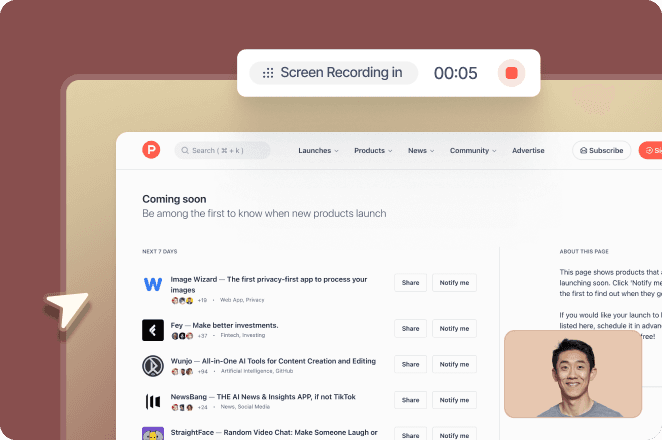
Demodesk has reinvented itself. What started as a virtual meeting platform has pivoted into an AI sales enablement suite that records calls, scores reps, analyzes deals, and syncs notes to your CRM. It's an ambitious transformation, and the YC-backed team clearly understands that the future of sales tools is AI-native. But here's the catch: Demodesk's AI only works on live conversations. It doesn't help you produce the training videos, product demos, onboarding content, or customer documentation that your broader team needs. You get brilliant call intelligence, but your content pipeline is still manual.
A 2025 Gartner report found that 77% of B2B buyers rated their last purchase experience as extremely complex, and companies that provide comprehensive self-service content see 23% higher win rates.
The verdict: Trupeer wins this comparison. Demodesk is a specialized sales intelligence tool that's excellent at what it does, analyzing calls and coaching reps. But it doesn't produce content. Trupeer transforms a single screen recording into a polished video with AI voiceover, automated editing, and step-by-step documentation simultaneously. If your only need is conversation intelligence for a sales team, Demodesk is purpose-built for that. If you need to produce professional content at scale, whether that's training videos, product demos, customer docs, or sales enablement materials, Trupeer is the platform that covers the full spectrum.
This comparison matters because Demodesk and Trupeer both use AI to make teams more effective, but they apply it to completely different problems. Demodesk analyzes what happened on a sales call. Trupeer produces the content your team needs before, during, and after the sales cycle. Understanding which problem you're actually solving determines which tool belongs in your stack.
The Bigger Picture: Where AI Meets Revenue Teams
The AI tools market for revenue teams has exploded into distinct categories. Conversation intelligence (Gong, Chorus, Demodesk) records and analyzes sales calls. Content production platforms (Trupeer, and to varying degrees Loom and Vidyard) create video and written assets. Sales engagement tools (Outreach, Salesloft) manage outbound sequences. CRM platforms (Salesforce, HubSpot) track deals and contacts. Each category solves a specific slice of the revenue workflow.
Demodesk sits squarely in conversation intelligence. After its pivot from virtual meetings, it's built an AI suite that records calls, transcribes in 98+ languages, generates summaries, scores reps against frameworks like MEDDIC and BANT, identifies deal risks, and pushes notes to your CRM. It's a post-call analysis tool. The AI kicks in after the conversation ends.
Trupeer sits in content production. It doesn't analyze your calls. Instead, it takes a rough screen recording and transforms it into a polished video and formatted documentation. The AI handles scripting, voiceover, zoom effects, translation, and formatting. It's a pre-call and post-sale tool: creating the demos your reps share, the training your customers watch, and the docs your support team maintains.
These tools don't compete head-to-head in most use cases. They address different gaps. But when teams are evaluating AI platforms and have budget for one tool, understanding the scope of each platform's capabilities is essential for making the right call. If you're shopping the broader category, our roundup of Demodesk alternatives is worth a look.
What Is Demodesk?
Demodesk is a Y Combinator-backed AI sales enablement platform based in Munich. It started as a virtual meeting tool with a browser-based screen sharing technology that let reps share a controlled app environment without revealing their desktop. In 2024-2025, the company pivoted dramatically toward conversation intelligence and AI coaching, rebuilding its product around four core AI modules.
The new Demodesk is structured as an AI suite with distinct components that work together to analyze, coach, and optimize sales conversations.
Key Features
AI Assistant: Records and transcribes sales calls with 98%+ accuracy in 98+ languages, generates summaries, extracts action items, and syncs everything to your CRM automatically
AI Coach: Scores rep performance against customizable scorecards using frameworks like MEDDIC, BANT, SPIN, and custom methodologies. Provides specific feedback on talk-to-listen ratio, question quality, and objection handling
AI Analyst: Monitors deal pipelines, identifies at-risk deals based on conversation patterns, flags missing next steps, and surfaces opportunities that need attention
CRM Concierge: Auto-fills CRM fields from conversation data, creates follow-up tasks, and maintains contact records without manual data entry
Integrations: Salesforce, HubSpot, Pipedrive for CRM; Zoom, Google Meet, Microsoft Teams for meeting recording
Meeting technology: Browser-based screen sharing with controlled demo environments (legacy feature from original product)
Demodesk's pivot to AI coaching is genuine innovation. The scorecard system that evaluates reps against MEDDIC criteria in real time is the kind of feature sales leaders have wanted for years. The CRM auto-fill alone saves reps 30 to 60 minutes per day of manual note-taking.
But the limitations are real. Users report that the meeting technology from the original product can be buggy, with connection issues and audio glitches that disrupt live calls. The AI struggles with certain accents and fast speech, which matters for global sales teams. At $59/user/month for the Coaching & AI plan, costs add up fast for larger teams (our pricing comparison breaks down exactly where the money goes). A 20-person sales team is paying $1,180/month, and that only covers call analysis. It doesn't produce a single piece of content. And the legacy meeting features that were Demodesk's original value proposition now feel like they belong to a different product entirely.
What Is Trupeer?
Trupeer is an AI-powered content production platform that converts rough screen recordings into polished videos and step-by-step written documentation simultaneously. You record your screen, and the AI handles everything after that: scripting, voiceover, editing, zoom effects, and formatting.
The workflow is simple: record your screen using Trupeer's Chrome extension or upload an existing recording. The AI analyzes your narration, removes filler words, fixes grammar, and generates a polished script. It adds studio-quality voiceover from 100+ voice options, applies automated zoom effects on click actions, and exports a finished video. At the same time, it produces formatted step-by-step documentation with annotated screenshots pulled from the recording.
Key Features
AI script generation that strips filler words, restructures sentences, and corrects grammar automatically
Studio-quality AI voiceover with 100+ voices across multiple languages and accents
Automated zoom effects that detect click actions and apply dynamic zooms and transitions
AI avatars with hundreds of persona options via HeyGen integration
One-click translation into 65+ languages for both voiceover and subtitles
Auto-generated step-by-step guides with annotated screenshots from recordings
Brand customization with custom wallpapers, logos, color templates, intros, and outros
Knowledge base hosting with custom domains and AI-powered video search
Analytics dashboard tracking views, watch time, and engagement metrics
Interactive elements including clickable hotspots and embedded CTAs
Trupeer is ISO 27001 and SOC2 certified, supports SAML SSO for enterprise teams, and integrates with Slack, Notion, Jira, and Confluence. Zuora reported reducing content creation from 5 to 6 hours to 3 to 4 minutes per piece. Hedrick Gardner saved $125,000 on IT migration training.
Feature-by-Feature Comparison
Feature | Demodesk | Trupeer |
|---|---|---|
Primary Function | AI sales conversation intelligence and coaching | AI content production (video + documentation) |
AI Application | Post-call analysis, scoring, deal intelligence | Content creation: scripting, voiceover, editing, translation |
Call Recording | Yes, with transcription in 98+ languages | Screen recording with Chrome extension |
Video Production | None (records calls, doesn't produce content) | Full AI video pipeline with 100+ voices and auto-editing |
Documentation | Call summaries and action items only | Auto-generated step-by-step guides with annotated screenshots |
Rep Coaching | AI scorecards (MEDDIC, BANT, SPIN, custom) | Not a coaching tool |
Deal Intelligence | Pipeline risk analysis, deal health scoring | Not a deal intelligence tool |
CRM Integration | Salesforce, HubSpot, Pipedrive with auto-fill | Not a CRM tool (integrates with Slack, Notion, Jira, Confluence) |
Translation | Transcription in 98+ languages | One-click full translation (voiceover + subtitles) in 65+ languages |
AI Voiceover | None | 100+ voices, multiple languages and accents |
AI Avatars | None | Hundreds of AI personas via HeyGen integration |
Knowledge Base | None | Hosted with custom domain and AI-powered search |
Brand Customization | None | Full brand kit: logos, wallpapers, intros/outros, color templates |
Analytics | Call analytics, rep performance metrics, pipeline health | Content analytics: views, watch time, engagement |
Meeting Platform | Browser-based meetings with controlled demo environments | Not a meeting tool |
Enterprise Security | GDPR compliant, SSO available on Enterprise | ISO 27001, SOC2, SAML SSO, SCIM |
Free Plan | Free viewer-only tier | 10-day full-featured trial |
Entry Pricing | $59/user/month (Coaching & AI) | $49/month Pro ($40/month annual) |
In-Depth Feature Analysis
1. AI Approach and Scope
Demodesk's AI is focused entirely on live conversations. It records a sales call, transcribes it with impressive accuracy across 98+ languages, and then applies multiple layers of intelligence: summarization, action item extraction, scorecard-based coaching, deal risk assessment, and CRM data entry. For a sales leader managing 15 reps across hundreds of monthly calls, this intelligence is genuinely valuable. You can identify which reps struggle with discovery questions, which deals are stalling because of missed follow-ups, and which accounts need executive attention.
But Demodesk's AI stops at the boundary of the conversation. It can tell you what happened on a call and how to improve the next one. It can't help you create the product demo your rep needs to send as a follow-up. It can't generate the training video your new hire watches during onboarding week. It can't produce the customer documentation your support team maintains. The AI is powerful but narrow.
Trupeer's AI addresses the content gap that tools like Demodesk leave open. One screen recording triggers an automated pipeline that generates a polished script, professional voiceover, zoom effects, and both video and written documentation. The AI doesn't analyze conversations. Instead, it produces the content assets that support the entire customer lifecycle: pre-sale demos, post-sale onboarding, ongoing training, and support documentation. When Zuora adopted Trupeer, they went from spending 5 to 6 hours on each piece of content to finishing in 3 to 4 minutes.
For revenue teams, the question isn't which AI is better. It's which gap hurts more. If your reps are losing deals because they don't know what to say on calls, Demodesk's coaching fills that gap. If your reps are losing deals because they can't quickly produce professional demos, or your support team is drowning in outdated documentation, Trupeer's content production fills that gap instead.
2. Content Production Capabilities
This is where the comparison gets stark. Demodesk produces exactly one type of content: call recordings with AI-enhanced metadata (transcripts, summaries, scores, action items). Those recordings are useful for internal review and coaching, but they aren't customer-facing content. You can't send a raw call recording to a prospect as a product demo. You can't publish a call transcript as a help article. The content Demodesk generates is for internal consumption by sales managers and reps.
Trupeer produces customer-facing content at scale. Every recording generates a polished video with professional voiceover, branded elements, and zoom effects, plus formatted step-by-step documentation with annotated screenshots. This content goes directly to customers: in help centers, onboarding emails, sales follow-ups, training portals, and knowledge bases. It's the output that prospects and customers actually see and use.
The dual-output model is particularly relevant for sales enablement. A sales engineer records a product walkthrough. Trupeer generates both a shareable demo video and a technical reference document. The rep sends the video in a follow-up email. The SE shares the doc in a Slack channel with the customer's technical team. One recording, two content formats, zero manual editing. We saw the same content production gap in our Supademo vs Trupeer and Guidde vs Trupeer comparisons, where tools that focus on one slice of the workflow can't match an end-to-end AI pipeline. Demodesk can tell you that the rep should've asked better discovery questions on the call. Trupeer gives the rep better content to share after the call.
3. Integration Ecosystems
Demodesk's integrations are sales-stack focused: Salesforce, HubSpot, and Pipedrive for CRM connectivity, plus Zoom, Google Meet, and Microsoft Teams for meeting recording. The CRM integrations are deep, with automatic field population, task creation, and contact updates. For a sales team that lives in Salesforce, this is genuinely useful. The CRM Concierge feature alone justifies the tool for some teams by eliminating the 30 to 60 minutes per day reps spend on manual CRM updates.
Trupeer's integrations are collaboration-stack focused: Slack, Notion, Jira, and Confluence. These aren't CRM integrations. They're the tools where cross-functional teams coordinate work, share knowledge, and maintain documentation. Enterprise plans include API access for custom integrations. The knowledge base feature with custom domain hosting adds a distribution channel that Demodesk doesn't have at all.
Neither tool integrates with the other's primary ecosystem. Demodesk doesn't connect to Notion or Confluence. Trupeer doesn't connect to Salesforce or HubSpot. If your team needs both CRM intelligence and content production, you're looking at two tools, not one. The question is which tool's integrations create more leverage for your specific workflows.
4. Pricing and Team Economics
Demodesk uses per-user pricing: a free viewer tier (read-only access to recordings and summaries), $59/user/month for the Coaching & AI plan (full recording, transcription, coaching, and CRM sync), and custom Enterprise pricing. The per-user model means costs scale linearly with team size. A 10-person sales team pays $590/month. A 30-person team pays $1,770/month. A 50-person team pays $2,950/month. And that's just for call intelligence. Content production, training videos, customer documentation, and demo materials all require separate tools and budgets.
Trupeer's pricing isn't per-user for the core plans. Pro at $49/month ($40/month annual) covers one creator with 20 AI video minutes and unlimited guide exports. Scale at $249/month ($199/month annual) includes 3 editor seats and 100 AI video minutes. Enterprise pricing is custom with unlimited seats. The credit-based model means costs scale with content volume, not team size. A 30-person team where 3 people produce content pays $199 to $249/month for the Scale plan, not $1,770/month.
The TCO comparison depends entirely on what you're solving. If you're a sales-only org that needs call coaching, Demodesk's $59/user is the cost of doing business. If you're a cross-functional team that needs professional content, Trupeer's $199 to $249/month produces videos, documentation, translations, and knowledge base hosting for a fraction of what you'd spend assembling those capabilities from separate vendors.
For teams that need both call intelligence and content production, budget roughly $60/user/month for Demodesk (sales team only) plus $200 to $250/month for Trupeer (content creators only). A 20-person sales team with 3 content creators would spend about $1,180/month on Demodesk and $199 to $249/month on Trupeer, for a combined cost under $1,500/month that covers both sides of the equation.
5. Translation and Global Reach
Demodesk transcribes calls in 98+ languages, which is impressive for conversation intelligence. Your German-speaking rep's call with a Japanese-speaking prospect gets transcribed accurately in both languages. The summaries and action items are generated in the meeting's primary language. But transcription isn't translation. Demodesk doesn't translate content from one language to another. It captures what was said in whatever language it was said in.
Trupeer translates content into 65+ languages with one click. Record a product walkthrough in English, and Trupeer generates native-sounding voiceover and subtitles in Japanese, German, Portuguese, French, or any of 60+ other languages. The accompanying documentation gets translated too. A single recording becomes a fully localized content package for any market.
For global sales teams, this distinction matters. Demodesk helps your multilingual reps have better conversations. Trupeer helps you produce the multilingual content assets, product videos, training materials, and help articles, that support your go-to-market in every region. If you're expanding into APAC and need demo videos in Mandarin, Korean, and Japanese, Demodesk can't help. Trupeer handles it from a single English recording.
6. Enterprise Security and Compliance
Demodesk is GDPR-compliant, which is expected for a Munich-based company. Enterprise plans include SSO. Beyond that, specific compliance certifications aren't prominently featured in their documentation. For European sales teams handling sensitive deal conversations, GDPR compliance is essential, and Demodesk delivers on that front.
Trupeer holds ISO 27001 and SOC2 certifications, supports SAML SSO and SCIM for enterprise identity management, and provides custom enterprise agreements. For companies in regulated industries, healthcare, financial services, legal, these certifications are often hard requirements in procurement. Hedrick Gardner, a law firm, chose Trupeer for their IT migration training, which speaks to the platform's ability to pass legal industry security reviews.
Both tools take security seriously, but Trupeer's certification portfolio is broader. If your procurement team requires SOC2 Type II reports, Trupeer can deliver. Demodesk's security posture may be equally strong, but the published certifications are less comprehensive. We cover the full compliance picture in our enterprise readiness breakdown.
Best Use Cases
Sales Call Coaching and Rep Development
Alex manages 12 account executives selling a mid-market SaaS product. He's noticed that reps are inconsistent on discovery calls: some ask great MEDDIC questions, others rush to the demo. With Demodesk, Alex records every call, and the AI scores each conversation against his MEDDIC scorecard. He can see at a glance which reps nail the economic buyer question and which ones skip it. The AI Coach highlights specific moments where reps missed opportunities, making 1:1 coaching sessions data-driven instead of anecdotal. This is Demodesk's sweet spot, and it does it well.
Trupeer doesn't solve this problem. It doesn't record calls, doesn't score conversations, and doesn't coach reps on methodology. If Alex's primary challenge is rep skill development, Demodesk is the right tool.
Product Demo Creation and Sales Follow-Up
But Alex also needs his reps to send polished demo videos after discovery calls. Currently, his reps either do a live demo (which requires scheduling) or record a raw screen share with no editing, no professional voiceover, and no branding. The raw recordings look unprofessional compared to what the competitor's marketing team produces.
With Trupeer, Alex's sales engineers record a product walkthrough. The AI generates a polished walkthrough with branded intros, professional voiceover, and zoom effects that highlight key features. AI avatars via HeyGen let reps personalize outreach. A rep sends a tailored follow-up video within hours of the discovery call, not days. Demodesk can tell you the rep forgot to discuss pricing on the call. Trupeer gives the rep a professional asset to send afterward.
Customer Onboarding and Training
Nadia runs customer success for a platform with 200+ enterprise accounts. Every new customer needs onboarding: training videos for each module, written guides for reference, and localized versions for international teams. Demodesk is entirely outside its scope here. It's a sales tool, not a customer success content platform. Nadia could technically use Demodesk recordings of onboarding calls as training material, but raw call recordings aren't professional training content.
With Trupeer, Nadia's team records one walkthrough per module. The AI produces a polished training video and written documentation for each. One-click translation generates localized versions for her European and Asian accounts. The knowledge base feature hosts everything on a branded portal. What used to require a dedicated content team now takes her CS ops manager an afternoon to document each process end to end. Hedrick Gardner's $125,000 savings on training came from exactly this workflow.
Revenue Operations and Cross-Functional Content
James heads RevOps for a 300-person company. His team needs call intelligence for the sales floor, training videos for onboarding new hires, product documentation for customer support, and localized content for the EMEA expansion. No single tool covers all of this. Demodesk handles the call intelligence layer brilliantly. Trupeer handles the content production layer. Together, they cost roughly $1,400 to $1,700/month for a 20-person sales team plus 3 content creators, which is less than many companies spend on just one enterprise tool.
The key insight is that these tools complement rather than replace each other. Demodesk makes your reps better on calls. Trupeer makes your content better between calls, giving teams a single place to maintain all their reference material. The teams that get the most leverage are the ones that invest in both sides of the equation rather than trying to force one tool to do everything.
Detailed Pricing Breakdown
Demodesk Pricing
Free Viewer: Read-only access to recordings, transcripts, and summaries. No recording or coaching capabilities. Useful for managers who only need to review, not record.
Coaching & AI ($59/user/month): Full suite: recording, transcription, AI summaries, coaching scorecards, deal intelligence, CRM auto-fill. This is the core product for most teams.
Enterprise (custom): Advanced security (SSO), custom integrations, dedicated support, custom coaching frameworks. Pricing requires a sales conversation.
At $59/user/month, a 15-person sales team pays $885/month. A 30-person team pays $1,770/month. Costs scale linearly with headcount, which makes Demodesk expensive for larger organizations. The free viewer tier helps by letting managers review without paying full price, but the per-user model still adds up quickly.
Trupeer Pricing
Free (10-day trial): 10 AI video minutes, 5 AI guides, 3 video exports. 8-minute recording limit. Full AI features included.
Pro ($49/month, $40/month annual): 20 AI video minutes, unlimited guides and exports. 12-minute recording limit. Watermark removal, intros/outros, captions, screenshot tools.
Scale ($249/month, $199/month annual): 100 AI video minutes, 3 editor seats. 15-minute recording limit. Team workspace, custom voices, backgrounds, branded pages, CTAs, logos.
Enterprise (custom): Unlimited seats, custom brand templates, analytics dashboard, SAML SSO, SCIM, priority support, dedicated onboarding.
Combined Stack Cost for a 20-Person Sales Team
Demodesk Coaching & AI for 20 reps: $1,180/month. Covers call recording, transcription, coaching, deal intelligence, and CRM sync for every rep.
Trupeer Scale for 3 content creators: $199/month (annual). Covers AI video production, documentation generation, translation, knowledge base, and team collaboration.
Combined: $1,379/month for full conversation intelligence plus professional content production. Compare that to a conversation intelligence tool ($1,000 to $2,000/month) plus a separate video tool ($100 to $300/month) plus a documentation platform ($100 to $200/month) plus translation services ($500+ per language) plus a knowledge base ($50 to $100/month), and the Demodesk-plus-Trupeer stack is competitive on total cost while covering more ground.
Pros and Cons
Demodesk Pros
Excellent conversation intelligence with 98+ language transcription
AI coaching scorecards using industry-standard frameworks (MEDDIC, BANT, SPIN)
Deal risk analysis that surfaces at-risk opportunities proactively
CRM Concierge auto-fills Salesforce/HubSpot/Pipedrive, saving reps 30 to 60 minutes daily
Free viewer tier for managers who only need to review recordings
YC-backed with active product development
Demodesk Cons
Doesn't produce any customer-facing content (videos, docs, demos)
Legacy meeting technology can be buggy with connection and audio issues
AI struggles with certain accents and fast speech patterns
Per-user pricing gets expensive for larger teams ($59/user/month)
No video production, no documentation generation, no knowledge base
No translation capabilities (transcribes multiple languages but doesn't translate between them)
Limited to sales use cases; not useful for support, training, or marketing teams
Post-pivot product still maturing; some features feel transitional
Trupeer Pros
Full AI production pipeline: script, voiceover, zoom effects, and documentation from one recording
Dual output: professional video AND written step-by-step guides simultaneously
65+ language translation with one click for global teams
Documented ROI: Zuora (5 hours to 4 minutes), Hedrick Gardner ($125K saved)
Enterprise-ready with ISO 27001, SOC2, SAML SSO, and SCIM
Integrates with Slack, Notion, Jira, Confluence, plus API access
Pricing scales with content volume, not team size
Serves multiple teams: sales, support, training, marketing, product
Trupeer Cons
AI video minutes are credit-based and reset monthly
No conversation intelligence, call coaching, or CRM integration
Chrome extension is the primary recording method
Free trial is 10 days, not an ongoing free tier
Recording limits per video (8 to 15 minutes depending on plan)
No desktop app for offline recording
The Verdict
Demodesk and Trupeer are both AI-powered platforms, but they solve fundamentally different problems. Demodesk analyzes sales conversations to coach reps and predict deal outcomes. Trupeer produces professional content, videos, documentation, and translations, from screen recordings. Comparing them directly is like comparing a fitness tracker to a meal prep service: both help you get healthier, but through entirely different mechanisms.
If your primary challenge is sales call quality and your team needs conversation intelligence, coaching scorecards, and CRM automation, Demodesk is purpose-built for that. The AI Coach and AI Analyst features are genuinely best-in-class for sales teams running structured methodologies.
But if your challenge extends beyond calls, if you need product demos, training videos, customer documentation, knowledge base content, or localized materials, Demodesk can't help. It doesn't produce content. Trupeer fills that gap with an AI production pipeline that transforms a single recording into polished video and documentation in minutes. Zuora cut production time from 5 hours to 4 minutes. Hedrick Gardner saved $125,000 on training. Those results come from automating the content production that tools like Demodesk simply don't address.
For most revenue teams, the smart play is understanding that these are complementary tools. Demodesk makes your reps better on calls. Trupeer gives your organization better content everywhere else. But if you're choosing one tool and your needs span beyond sales call analysis, Trupeer's broader scope makes it the more versatile investment.