Trupeer Blog
Como Criar Documentação Personalizada por Implementação de Cliente
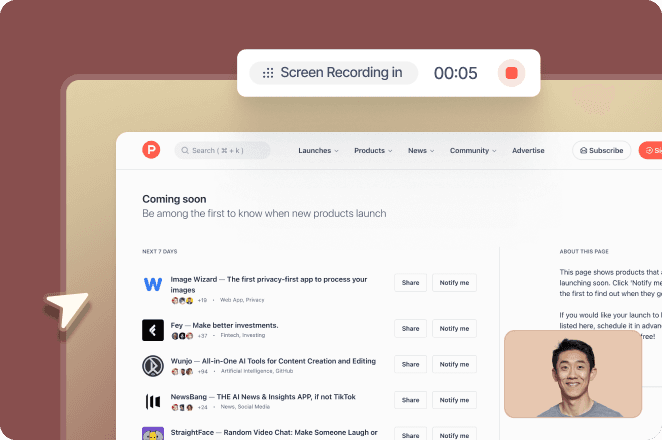
Creating customized documentation for each client implementation can seem daunting. But it's essential for enterprise SaaS businesses. Imagine you're managing documentation for a diverse client base. Each client has unique configurations and requirements. But you need to deliver tailored manuals efficiently. This isn't just a nice-to-have. It's a necessity to ensure smooth deployment and client satisfaction. According to a recent industry survey,
92% of enterprise clients expect documentation that reflects their specific configurations.
In this landscape, starting from scratch for each client isn't sustainable. You need tools and processes that allow you to produce client-specific documentation at scale without reinventing the wheel each time. If you're responsible for this task, you're likely looking for ways to simplify the process while maintaining quality. This guide will help you navigate the complexities of creating customized documentation efficiently. Teams weighing tools often start with a Loom alternatives comparison before standardizing on a workflow.
Why does creating customized documentation for each client implementation matter?
Customized documentation is crucial because it directly impacts the client's ability to effectively use your product. When documentation is tailored to a client's specific setup, it reduces the learning curve and increases user adoption. Imagine a scenario where a generic manual doesn't address a client's unique configurations. This oversight can lead to confusion, support tickets, and ultimately, dissatisfaction with the product. For large organizations, the stakes are even higher. A misstep in documentation can disrupt operations and lead to costly delays.
Also, having client-specific documentation demonstrates your commitment to their success. It shows that you understand their needs and are invested in helping them achieve their goals. This client-centric approach enhances your reputation and can lead to increased loyalty and long-term partnerships. In competitive markets, such as SaaS, where switching costs are relatively low, providing exceptional support through tailored documentation can be a key differentiator. As a result, creating customized documentation isn't just a matter of convenience, but a strategic imperative that can impact your company's bottom line. For those managing the operations workflow, ensuring that every client's documentation aligns with their specific setup is crucial for maintaining operational efficiency and client satisfaction.
What are the benefits of creating customized documentation for each client implementation?
Tailored documentation offers multiple advantages for both you and your clients. Here are some key benefits:
Improved client satisfaction. When clients receive documentation that directly addresses their unique needs, they're more likely to understand and effectively use the product. This leads to higher satisfaction levels and positive feedback.
Reduced support requests. Customized manuals can preemptively address common client-specific issues, reducing the volume of support tickets and freeing up your support team to handle more complex queries.
Faster onboarding process. With documentation that aligns with their setup, clients can onboard more quickly, reducing time to value. This is particularly important for enterprise clients with complex integrations.
Enhanced brand perception. Providing tailored documentation reflects a high level of professionalism and commitment to client success, enhancing your brand's reputation and trustworthiness.
Increased product adoption. When clients fully understand how to use your product, they're more likely to use it extensively, potentially uncovering more features and benefits that lead to upsell opportunities.
simplified training sessions. With specific guides in hand, training sessions become more efficient, as trainers can focus on deeper insights rather than covering basic configuration discrepancies. This ties into the effectiveness of product tour software that aligns learning with actual product use.
Teams ship this workflow end-to-end using Trupeer's AI video platform, which turns raw recordings into polished output without an editor.
Which Trupeer features help you create customized documentation per client implementation?
Trupeer offers several capabilities specifically designed to simplify the creation of customized documentation for each client. These tools ensure that your documentation is not only tailored but also efficient to produce.
Automatic SOP generation from any recording
Trupeer's automatic SOP generation feature is a big shift for creating client-specific documentation. By capturing a screen recording of a client's specific configuration, Trupeer can automatically generate an SOP document that's ready for editing and export. This eliminates the need for manual documentation creation, saving significant time and effort. The feature allows you to focus on fine-tuning the content rather than starting from scratch. With the ability to export in multiple formats, you can deliver the documentation in the format that best suits your client's needs, whether it's an MP4 video, HTML, or PDF. This capability is part of Trupeer's solid AI documentation platform, which simplifies the entire documentation process.
Auto-updating documentation tied to the underlying recording
One of the standout features of Trupeer is its ability to automatically update documentation based on changes in the underlying screen recordings. This means if a client changes their configuration, you don't need to manually update the entire document. Instead, Trupeer dynamically adjusts the content to reflect these changes. This ensures that the client always has access to the most up-to-date information, reducing the risk of errors and outdated instructions. It enhances the accuracy of the documentation and reduces the workload for your documentation team, allowing them to focus on higher-value tasks.
AI translation into 65+ languages with lip-sync
For global clients, language can be a barrier to effective communication and training. Trupeer's AI translation feature enables you to offer documentation in over 40 languages, complete with lip-sync capabilities. This ensures that the translated content is not only accurate but also engaging for non-English speaking clients. By providing documentation in their native language, you can enhance understanding and usability, leading to higher satisfaction and adoption rates. This feature is particularly beneficial for multinational clients who need consistent documentation across different regions.
Custom-domain hosting with SSO
Trupeer offers custom-domain hosting with single sign-on (SSO) capabilities, allowing you to create a smooth documentation experience for your clients. With custom-domain hosting, the documentation can be branded and integrated into the client's existing infrastructure, providing a cohesive user experience. SSO ensures that clients can access the documentation quickly without the hassle of multiple logins. This feature not only enhances security but also improves convenience, making it easier for clients to find and use the documentation they need.
AI-searchable knowledge base with timestamp deep-links
Trupeer's AI-searchable knowledge base is an invaluable resource for managing and accessing client-specific documentation. This feature indexes every recording and document with timestamp-level deep links, allowing clients to quickly find the information they need. Whether they're looking for a specific procedure or troubleshooting a particular issue, clients can navigate the knowledge base efficiently. This reduces the time spent searching for information and increases productivity. also, by providing a centralized repository of knowledge, you can ensure consistency and accuracy across all client documentation.
Multi-format export: MP4, HTML, PDF, SCORM
Trupeer's multi-format export capability allows you to deliver documentation in the format that best suits your client's needs. Whether they prefer video guides in MP4 format, web-based HTML documents, printable PDFs, or SCORM-compliant files for their learning management systems, Trupeer has you covered. This flexibility ensures that the documentation can be integrated into the client's existing systems without any compatibility issues. By offering documentation in multiple formats, you can cater to diverse client preferences and requirements, enhancing the overall user experience and satisfaction.
How do you create customized documentation per client implementation step by step with Trupeer?
Step 1: Capture the Client's Configuration
Begin by using Trupeer's AI screen recording with auto-zoom and click detection to capture the specific configuration of your client's setup. This tool allows you to record the screen effortlessly, highlighting important actions and interfaces without manual intervention. Simply select the screen you want to record, and Trupeer automatically identifies key interactions, zooming in on clickable elements for clarity. This step ensures that every detail of the client's unique setup is documented, providing a precise foundation for further customization. Typically, a session can be recorded in under 30 minutes, depending on the complexity.
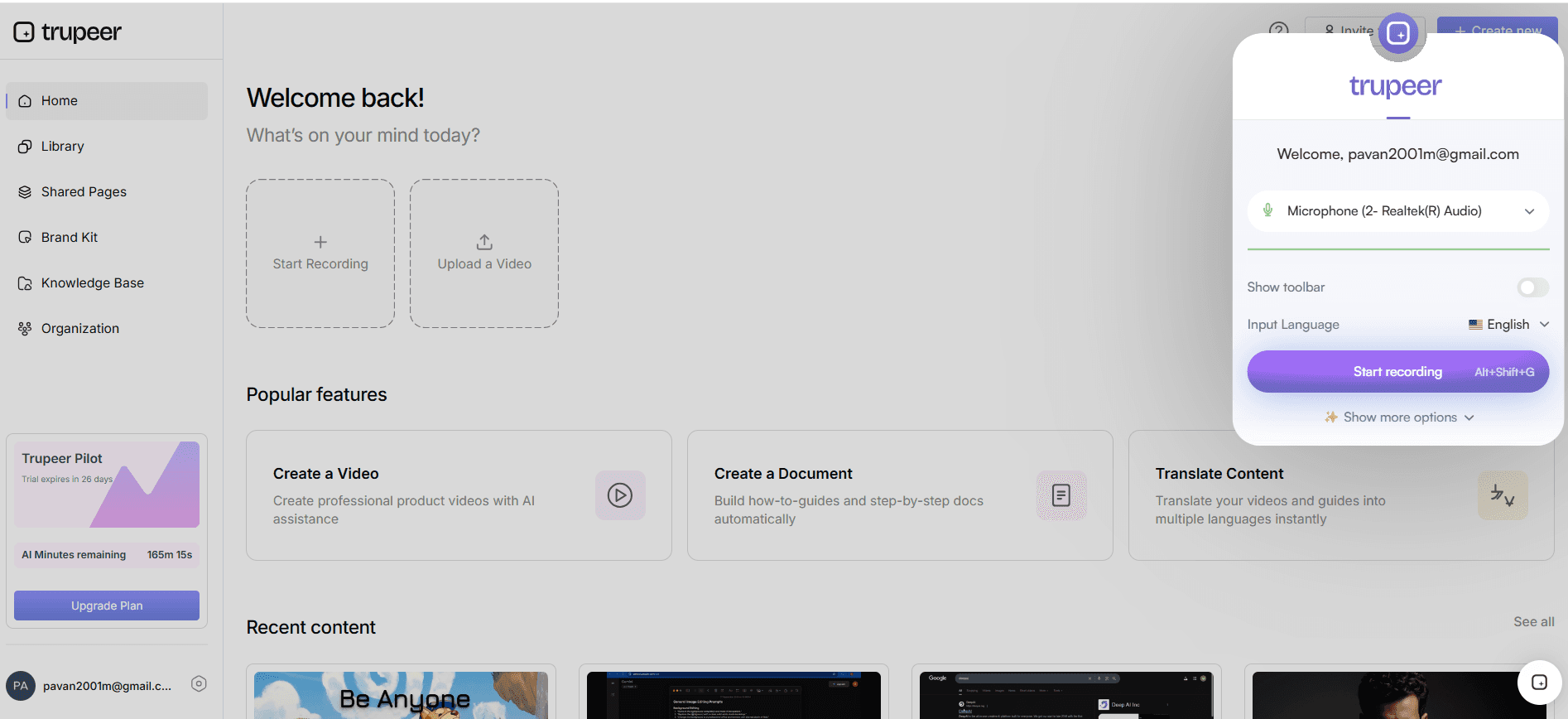
Step 2: Generate the Initial SOP
Once the recording is complete, use Trupeer's automatic SOP generation from any recording feature to produce an initial standard operating procedure. This feature automatically transforms the recorded session into a structured document that outlines each step taken during the recording. This document is edit-ready and can be exported in various formats, such as PDF or HTML. The process is efficient, taking only a few minutes to generate a comprehensive SOP, allowing you to focus on refining content rather than starting from scratch. Edge cases, such as minor configuration changes, can be easily adjusted in the document editor.
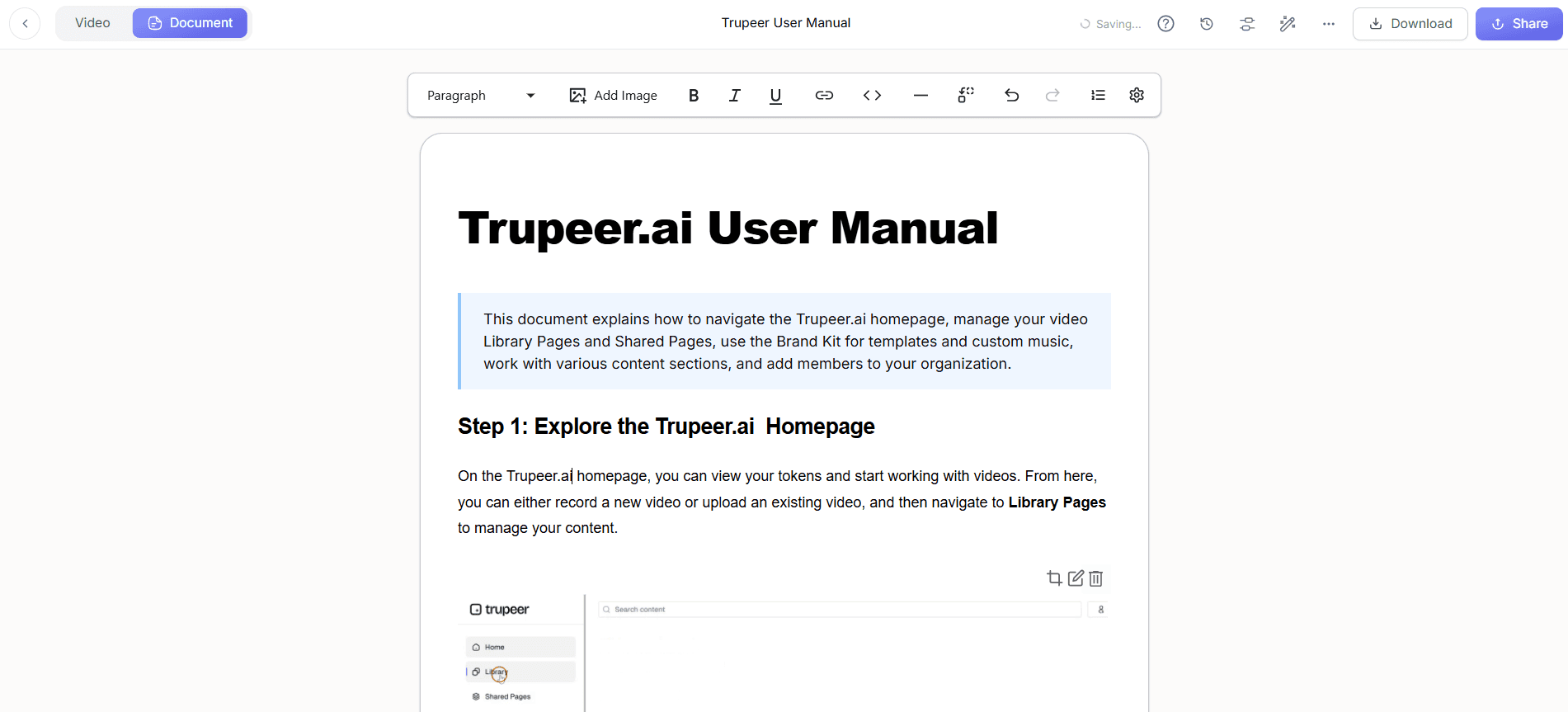
Step 3: Customize the Documentation
With the SOP generated, customize the content to fit the client's specific needs. Use Trupeer's brand kits and branded templates to ensure the documentation aligns with the client’s visual identity. This step involves editing text and visuals to reflect the client's processes, policies, and branding. Trupeer's intuitive editing interface allows you to modify elements quickly, ensuring consistency with the client’s brand guidelines. Typically, this customization can be completed in an hour, depending on the level of detail required.
Step 4: Translate Documentation if Necessary
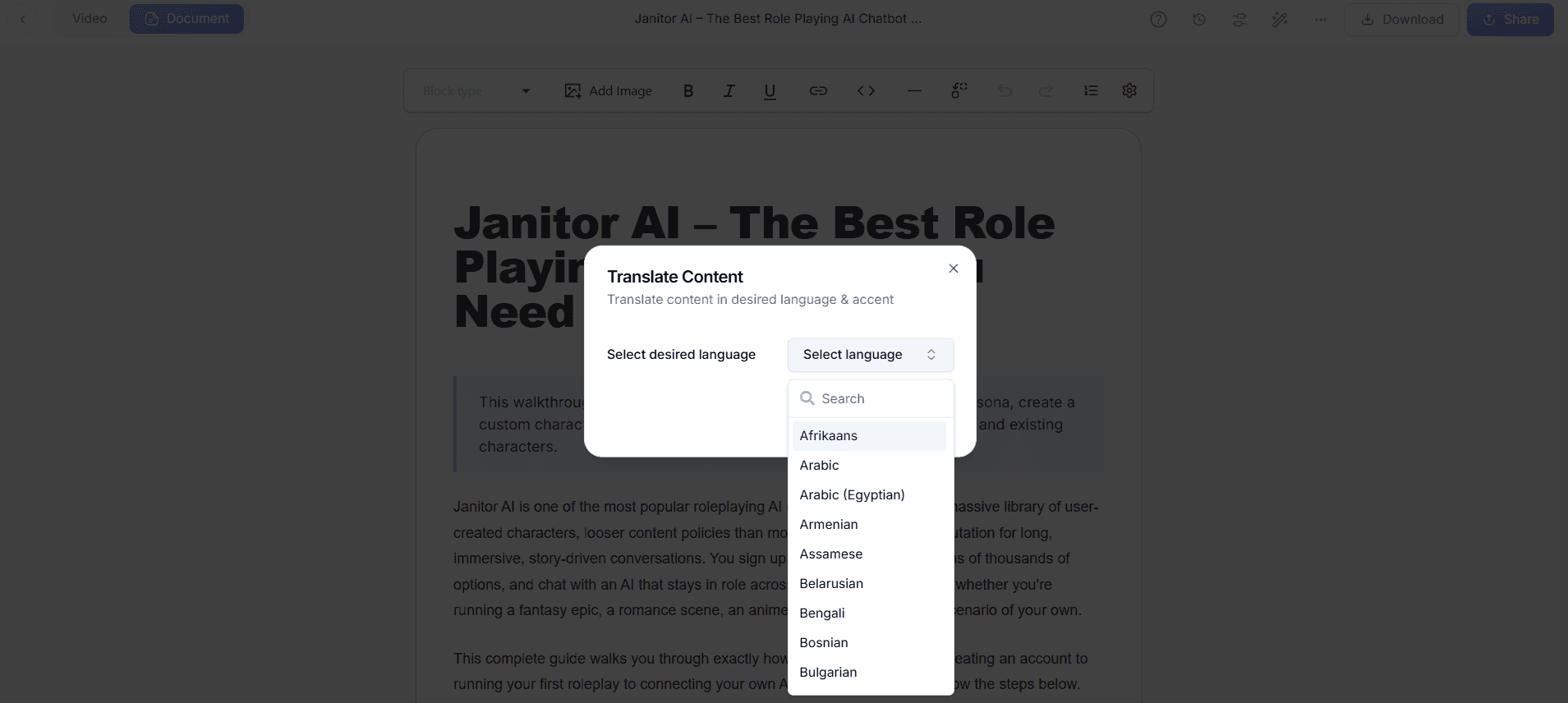
For clients with multilingual needs, use Trupeer's AI translation into 40+ languages with lip-sync to translate the documentation. This feature not only translates text but also adjusts video content to ensure it matches the spoken language, maintaining engagement and comprehension. Simply select the target language, and Trupeer handles the rest, delivering translated content in minutes. This ensures that non-English speaking users receive the same level of detailed guidance as their English-speaking counterparts, enhancing accessibility and user experience.
Step 5: Host and Share the Documentation
Once customization and translation are complete, host the documentation on Trupeer's custom-domain hosting with SSO. This ensures that the client can access the documentation via their branded portal, integrated smoothly with their existing systems. Set up is straightforward: configure the custom domain in Trupeer's settings, and enable SSO for secure, simplified access. This setup not only enhances security but also reinforces the client’s brand presence. Sharing documentation becomes as simple as providing a URL, making it readily accessible for all authorized users. For a deeper look, our guide on user manual generator covers the adjacent playbook.
Step 6: Monitor Usage and Feedback
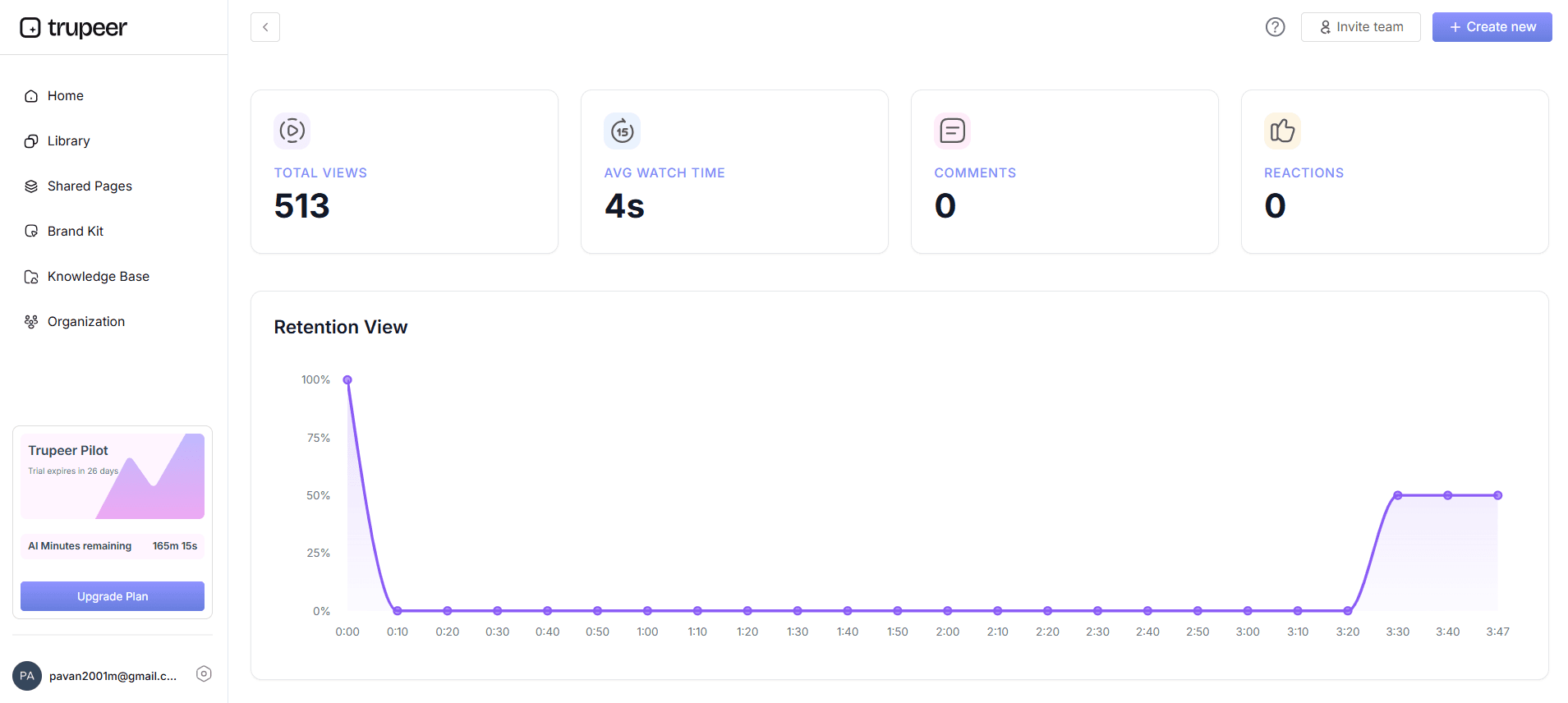
Finally, use Trupeer's viewer engagement analytics, drop-off, and heatmaps to monitor how clients interact with the documentation. This feature provides insights into which sections are most viewed, where users typically drop off, and how they navigate through the content. Access these analytics through Trupeer's dashboard, which offers detailed reports and visualizations. Use this data to refine future documentation, addressing common pain points and enhancing clarity where needed. The analysis typically reveals insights within the first weeks of deployment, allowing for timely adjustments.
What tips help you create customized documentation per client implementation?
Creating customized documentation efficiently requires strategic planning and execution. Here are some practical tips to enhance your documentation process:
Standardize processes. Establish a consistent methodology for capturing and documenting client configurations. This minimizes variations and ensures quality across all documentation.
use templates. Use Trupeer’s branded templates to maintain visual consistency. This saves time and reinforces brand identity in every document.
Engage with clients. Regularly consult with clients to understand their needs and expectations. This ensures that documentation aligns with their operational requirements and addresses their pain points.
Iterate based on feedback. Use analytics and client feedback to refine documentation. Continuous improvement ensures that your documentation remains relevant and effective.
Automate where possible. use Trupeer’s capabilities to automate repetitive tasks. This reduces manual effort and allows you to focus on strategic content creation.
Explore alternatives. Consider a Scribe alternative comparison to see how other tools stack up and identify additional features that might benefit your workflow.
Create visual aids. Enhance understanding by using Trupeer’s AI avatars and talking-head videos. Visual content can make complex instructions more accessible and engaging.
Frequently asked questions
How do you ensure documentation stays updated with client changes?
Trupeer's auto-updating documentation tied to the underlying recording ensures that documentation stays current with client changes. When a client updates their configuration, Trupeer adjusts the documentation accordingly, without requiring manual intervention. This feature works by linking documents to the original screen recordings, automatically reflecting changes as they occur. This dynamic updating is crucial for maintaining accuracy and relevance in fast-paced environments where client configurations can change frequently. The process is smooth, significantly reducing the time and effort typically associated with manual updates.
What formats can I export customized documentation in?
Trupeer allows you to export customized documentation in multiple formats, including MP4, HTML, PDF, and SCORM. This flexibility ensures that you can meet diverse client needs and integrate documentation into various systems. For instance, SCORM files are essential for learning management systems, while PDFs are ideal for print-ready versions. By offering multiple formats, Trupeer ensures compatibility with different platforms and user preferences, enhancing accessibility and usability. This multi-format capability sets Trupeer apart, providing comprehensive support for various documentation requirements.
Can Trupeer handle multilingual documentation needs?
Yes, Trupeer is equipped to handle multilingual documentation needs through its AI translation into 40+ languages. This feature not only translates text but also adjusts video content, ensuring that all users receive comprehensive and engaging instructions in their native language. The translation process is automated and efficient, providing high-quality outputs that maintain the original content's intent and clarity. This capability is particularly beneficial for global companies that require consistent documentation across multiple regions, enhancing understanding and user experience for non-English speaking clients.
Why is client-specific documentation important for user adoption?
Client-specific documentation is crucial for user adoption because it addresses the unique configurations and requirements of each client, making it easier for users to understand and use the product effectively. When documentation aligns closely with the client's setup, users encounter fewer obstacles and can quickly integrate the product into their workflows. This tailored approach reduces the learning curve and increases user confidence, leading to higher adoption rates. also, personalized documentation signals a commitment to client success, building trust and long-term loyalty, which are key to sustaining business relationships.
Does Trupeer provide analytics for documentation usage?
Yes, Trupeer offers comprehensive analytics for documentation usage, including viewer engagement metrics, drop-off points, and heatmaps. These insights allow you to understand how users interact with the documentation, identifying which sections are most engaging and where users typically lose interest. By analyzing this data, you can make informed decisions to improve the content, enhancing clarity and user experience. This proactive approach to documentation management helps you address potential issues early and optimize the impact of your documentation efforts. For more insights, ai/translation">video localization tool to extend your reach globally.